
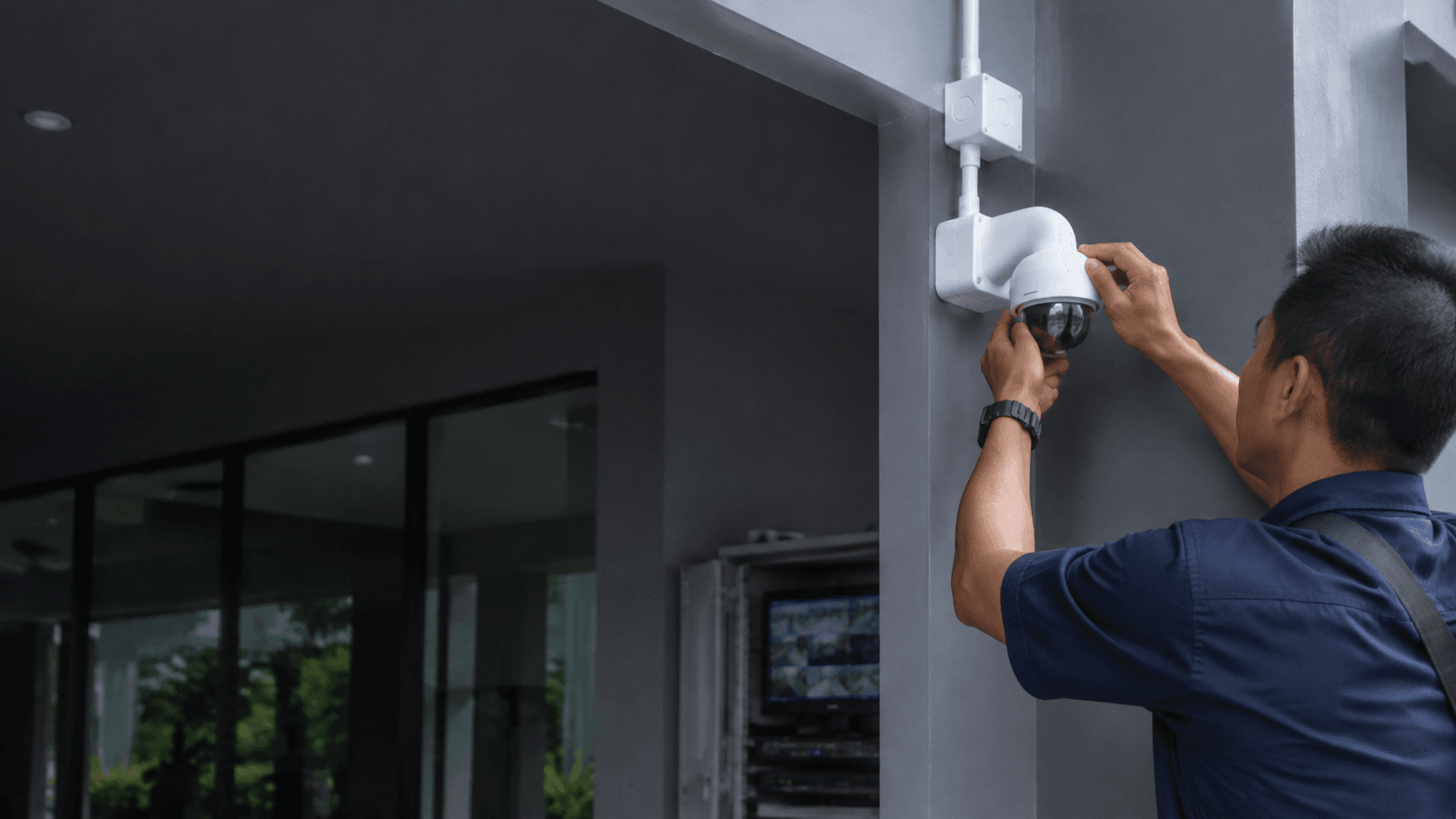
The format matters most to properties that already have coax run through walls and ceilings. Reusing that cabling can avoid the disruption of pulling new network cable, which is why AHD CCTV remains a practical conversation for Malaysian homes, shops and offices rather than a purely historical one.
What AHD CCTV means for existing coax cabling
AHD sits in the HD-over-coax family. Video travels down coaxial cable to a recorder, the same physical path older analog systems used. The difference is the signal carried on that path and the recorder that decodes it.
That single fact drives most of the decision. A building wired years ago for analog cameras already has the hardest part of the job in place: the cable route. Reusing it changes the scope of work from a full rewire to a camera-and-recorder change, which usually means less mess, less downtime and fewer surfaces opened.
Two conditions decide whether reuse is realistic. The first is cable condition. Coax that has been exposed to water ingress, rodent damage or years of heat cycling may not carry a clean HD signal, and a survey is the only reliable way to know. The second is recorder compatibility. Cameras and recorders must agree on the format they speak, and a recorder that only handles older analog signals will not display AHD video no matter how good the camera is.
Where both conditions hold, an AHD CCTV upgrade can be staged. Cameras can be replaced in groups rather than all at once, and the recorder swapped when the budget allows. Where either condition fails, the honest answer is that the cabling or the recorder needs attention first, and a supplier who says so early saves the property owner a second visit.
How AHD CCTV compares with other HD-over-coax formats
AHD is not the only way to send HD video over coax. HD-TVI and HD-CVI occupy the same territory, and hybrid recorders often accept several of these formats plus older analog signals on the same box. That flexibility is the practical point: the format label on a camera matters less than whether the recorder accepts it.
The trade-off against IP cameras is structural rather than cosmetic. IP systems carry video over network cable and typically offer more headroom for resolution, analytics and integration. They also usually require new cabling, network switching and more configuration. AHD keeps the existing coax and the simpler signal chain, which suits sites where the cabling is sound and the requirement is clear daytime and night-time coverage rather than advanced analytics.
For a reader weighing the two, the deciding questions are usually these. Is the existing coax in good condition? Is the priority lower disruption or higher ceiling for future features? Is there a network path to each camera position if IP is chosen? Answering those three honestly tends to settle the format question faster than any specification comparison.
Planning an AHD CCTV upgrade in Malaysia
Malaysian properties bring their own constraints to this work. Shophouses, terrace homes and older offices often have cable runs that were installed for a previous system and never documented. Ceiling voids, conduit routes and outdoor exposure all affect what can be reused.
Lighting is the other variable that gets underestimated. Eyonic recommends checking actual lighting conditions before confirming placement for ColorVu-style cameras, because a position that looks adequate in daylight can behave very differently after dark. The same discipline applies to any camera choice: placement should follow observed conditions at the site, not a floor plan alone.
Budget expectations should be set against real project ranges rather than camera prices alone. Eyonic's completed work for the Kuching Immigration Office, covering arrival flow, staff areas, visitor movement and dependable daily operation, carried an approximate budget of RM 12,000 to RM 28,000. A smaller office setup for KTA Sarawak Sdn Bhd, supporting staff movement, visitor handling, tidy cabling and clearer daily site control, sat at approximately RM 8,000 to RM 18,000. Those figures describe the scope of comparable work, not a quotation for any specific property.
Eyonic's published package pricing starts at RM 1,599 for a Hikvision CCTV package covering camera supply and setup, basic recording configuration and mobile viewing handover. Package pricing and project pricing answer different questions, and a site survey is what separates them.
Where Eyonic fits into an AHD CCTV project
Eyonic Sdn Bhd is a security system supplier based in Sarawak, working across CCTV and ELV systems for homes, offices, shops and industrial sites. The company was founded by Eric Yong, who has more than ten years in the industry and works on technical installation of digital security solutions for commercial businesses in Sarawak.
The installation process follows a defined sequence rather than an ad hoc visit.
- Site survey, to inspect cable routes, camera positions, lighting and recorder location.
- System proposal, setting out the recommended cameras, recorder and cabling approach.
- Installation, covering mounting, cabling, recorder setup and configuration.
- Handover, including mobile viewing setup and a walkthrough of the finished system.
That sequence matters for AHD work specifically because the survey is where cable reuse gets confirmed or ruled out. A proposal built without that check risks promising a reuse that the cabling cannot support.
Eyonic's project record includes government and engineering consultancy clients in Kuching, and the company also handles alarm systems, autogate packages, keyphone intercoms and Starlink internet installation. For a property already planning more than one of those, coordinating them under one supplier reduces the number of separate site visits.
Questions to settle before an AHD CCTV installation
Several decisions are cheaper to make before installation than after.
Recorder compatibility comes first. If an existing recorder is staying, its supported formats determine which cameras can be added. If it is being replaced, the channel count and storage approach need to match the number of camera positions and the retention period required.
Cable condition comes second, and only a physical inspection answers it. A run that looks intact from the outside may have a compromised section inside a wall.
Camera placement comes third, and it should follow observed lighting and coverage needs rather than symmetry. Entrances, cash handling points, staff areas and visitor routes usually justify different camera types and positions.
Remote viewing comes fourth. Mobile viewing handover is part of Eyonic's package scope, and confirming who needs access, on which devices, and with what permissions avoids a second configuration visit.
Finally, the scope boundary should be explicit. What is supplied, what is installed, and what is handed over are separate items, and Eyonic publishes terms covering that ground.
For a property in Sarawak weighing an AHD CCTV upgrade against an IP alternative, the practical next step is a survey that answers the cabling and recorder questions on site. Sharing the location, property type and required system with Eyonic on WhatsApp at +60 11-5111 7959 gives the team enough to advise on the right path.