
The phrase describes a setup where recording and playback happen without a recurring cloud plan. The cost sits in the equipment and installation instead. That distinction matters because two systems with identical cameras can differ completely in what happens after the first year.
What a Free Security Camera System Means in Malaysia
A free security camera system removes the subscription, not the cost. Buyers still pay for cameras, a recorder, cabling, and installation labour. What disappears is the monthly or annual fee that many consumer camera brands charge for cloud storage, extended history, or smart alerts.
In Malaysia, that fee structure is the main source of frustration. A camera bought cheaply online can end up costing more over three years than a locally installed system, once subscription charges are added. The trade-off is that subscription-free systems depend on local hardware that must be maintained, powered, and connected properly.
Eyonic Sdn Bhd plans, supplies, and installs monitoring systems with camera placement, recording, and remote viewing for homes, offices, shops, and industrial sites. The company is based in Sarawak and works across residential and commercial properties.
Why Monthly Fees Appear on Camera Setups
Subscription charges exist because cloud storage costs money to run. A camera that uploads footage to a remote server needs bandwidth, server capacity, and ongoing software maintenance. Manufacturers recover that cost through recurring plans.
Typical fee triggers include.
- Cloud video storage beyond a short free window
- Extended recording history
- Person, vehicle, or package detection alerts
- Multi-user access and shared viewing
- Warranty extensions tied to an active plan
Some brands keep basic live viewing free but lock playback behind a plan. That is the most common trap. A camera can show a live feed at no cost while refusing to store anything for later review, which defeats the purpose of a security system.
Local recording avoids this entirely. When footage is written to a recorder or memory card on site, no third party needs to be paid to hold it. The system owner controls the storage and the retention period.
Free Security Camera System Storage and Recording Options
Storage choice determines whether a system stays free of monthly charges. Three approaches dominate the market.
Network video recorder (NVR) with a hard drive. Cameras connect to a recorder that writes footage to an internal drive. This suits multi-camera installations in homes, shops, and offices. Retention depends on drive size, camera count, and recording settings. Eyonic includes NVR setup as part of its CCTV service.
Memory card in the camera. A single camera writes to a microSD card. This works for one or two cameras but becomes impractical at scale, because each card must be checked and replaced separately.
Hybrid approach. Local recording handles daily retention while a cloud plan stays optional. This keeps the base system free while leaving room to add cloud backup later if needed.
Remote viewing is separate from storage. A locally recorded system can still be viewed from a phone, provided the recorder is connected to the internet and configured correctly. Eyonic includes mobile viewing handover in its Hikvision CCTV Package, which covers camera supply and setup, basic recording configuration, and mobile viewing handover.
What to Check Before Installing Cameras
Placement decides whether footage is useful. A camera aimed at the wrong angle records nothing of value, regardless of how much it cost.
Eyonic recommends checking actual lighting conditions before confirming placement for ColorVu-style cameras. A position that looks adequate in daylight can produce unusable footage at night if ambient light is weaker than assumed. Testing the real conditions on site avoids that mistake.
Other practical checks include.
- Whether the entry point, walkway, or counter is fully inside the frame
- Whether cabling can be routed tidily and protected from weather
- Whether power is available at each camera position
- Whether the recorder sits somewhere secure and ventilated
- Whether the property has reliable internet for remote viewing
For commercial sites, the scope usually extends beyond cameras. The Kuching Immigration Office project focused on arrival flow, staff areas, visitor movement, and dependable daily operation. That kind of brief requires camera positions chosen around how people actually move through the building, not just around the perimeter.
A similar pattern appeared in the KTA Sarawak Sdn Bhd project, which needed a practical office setup in Kuching to support staff movement, visitor handling, tidy cabling, and clearer daily site control.
How Eyonic Plans a Free Security Camera System
Eyonic follows a defined sequence for CCTV installation in Sarawak. The order matters because each stage depends on the one before it.
- Site survey to assess the property, entry points, lighting, and cabling routes.
- System proposal covering camera positions, recorder placement, and storage approach.
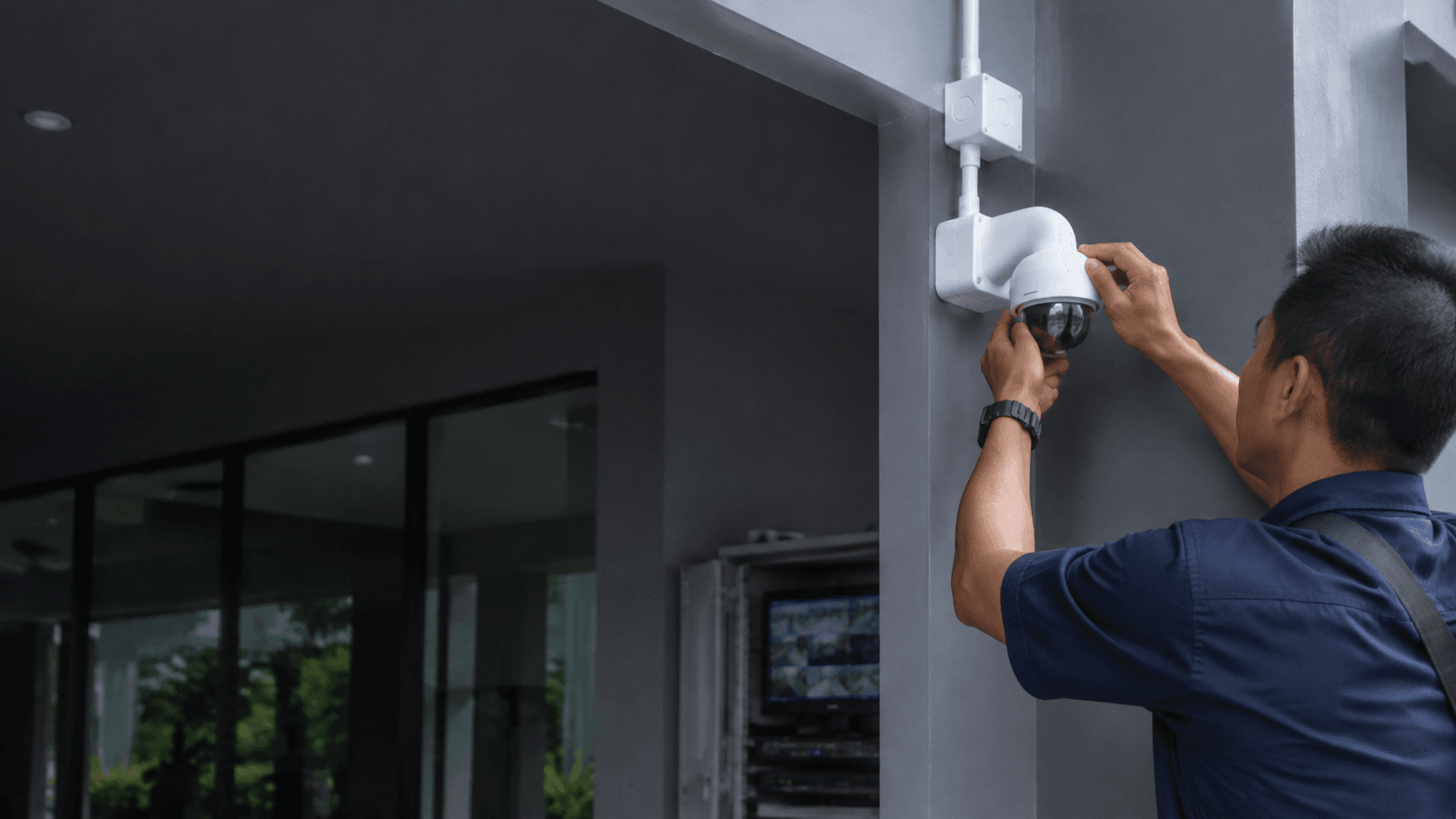
- Installation of cameras, recorder, cabling, and configuration.
- Handover with mobile viewing setup and user testing.
The site survey is where the free-of-fee decision gets made. If the property needs multi-camera coverage, an NVR with local storage keeps the system subscription-free. If it needs only one or two viewpoints, a simpler setup may be enough.
Eyonic's Hikvision CCTV Package is priced at RM 1,599 and includes camera supply and setup, basic recording configuration, and mobile viewing handover. The company also offers a Hikvision Alarm System at RM 1,599 and an Autogate Package at RM 1,599, each covering supply, setup, and handover.
Eric Yong founded Eyonic Security Systems and has worked in the industry for more than 10 years, with experience in technical installation of digital security solutions for commercial businesses in Sarawak.
Common Questions About Free Security Camera System Costs
Does a free security camera system need internet? Internet is not required for recording. It is required for remote viewing from a phone or computer. A system can record locally with no connection at all, though footage would only be accessible on site.
What happens if the hard drive fills up? Most recorders overwrite the oldest footage automatically once storage is full. Retention length depends on drive capacity, camera count, and recording schedule. Continuous recording fills storage faster than motion-triggered recording.
Can a subscription-free system still send alerts? Basic motion alerts are usually available without a plan when the recorder handles detection. Advanced detection features that rely on cloud processing may require a subscription, depending on the brand.
Is a free security camera system suitable for a shop or office? Yes, provided the installation is planned around actual movement and coverage needs. Commercial sites generally need more cameras and a larger recorder than homes, which raises the upfront cost but not the monthly cost.
What is the main limitation? Local storage can be lost if the recorder is stolen or damaged. Keeping the recorder in a secured location, and considering off-site backup for critical footage, reduces that risk.
Share your location, property type and required system with Eyonic on WhatsApp at +60 11-5111 7959 for the next practical step.