
The recorder is the part of the system that decides whether footage survives the week it matters. Cameras capture light; the recorder turns that signal into files, keeps them for a set period, and serves them back when someone needs to check what happened. In Malaysia, where a shop shutter, an office lobby and a factory gate all run on different schedules, the recorder is also the piece most likely to be bought wrong — matched to the wrong camera type, sized for too few channels, or installed without anyone confirming how long footage actually lasts.
What a CCTV camera DVR does with camera footage
A DVR sits between the cameras and the person reviewing the video. Wired cameras send a video signal down their cable to the recorder, which converts that signal into a digital file, compresses it, and writes it to an internal hard drive. The recorder also handles the parts most people only notice when they are missing: it stamps each file with a time and date, manages the menu used to search and play back footage, and pushes a copy out to a phone or computer for remote viewing.
That last function is why the recorder, not the camera, usually determines how useful the system feels day to day. A camera can produce a sharp image and still be useless if the recorder overwrites the footage before anyone reviews it, or if the playback menu is too slow to find the right ten minutes.
Recording is normally continuous, motion-triggered, or scheduled by time block. Continuous recording gives the most complete record and consumes storage fastest. Motion-triggered recording stretches the same drive much further but depends on the recorder correctly detecting movement, which is where placement and lighting start to matter as much as the recorder itself.
Where the footage physically lives
Footage is stored on a hard drive inside the recorder, not in the cloud, unless a separate cloud service is added. That local storage is the main practical difference between a DVR-based system and a camera that records to a memory card: one drive holds every camera's footage in one place, and one failure affects the whole record. It also means the recorder needs a secure, ventilated, powered location — not a shelf where someone can unplug it.
Camera and recorder compatibility
Compatibility is the single most common reason a recorder purchase goes wrong. A DVR is built for a specific family of camera signals, and a camera that does not speak that signal will either not appear at all or appear at reduced quality. Before choosing a recorder, the camera type already on site — or already planned — has to be confirmed against what the recorder accepts.
This matters most in two situations. The first is a replacement. an existing building may already have cameras and cabling in place, and the question is whether a new recorder can use them or whether the whole run has to be redone. The second is a mixed site, where an office wants to keep older cameras in low-priority areas while adding newer ones at the entrance. A recorder that accepts more than one camera type handles that transition; a single-type recorder forces a decision.
Eyonic's own installation process begins with a site survey and a system proposal before any installation work, which is the point where camera and recorder matching gets settled rather than guessed. The Kuching Immigration Office project is an example of that approach applied to a public building, where arrival flow, staff areas and visitor movement all had to keep working while the system was planned around them.
Why existing cabling changes the decision
Cable type constrains which cameras and recorders can be used together. Where suitable cable already runs to each camera position, a recorder swap can be far less disruptive than a full re-cable. Where the cable is unsuitable or damaged, the recorder choice is secondary to the cabling work. This is a physical inspection question, not a specification question, and it is one of the reasons a survey happens before a proposal.
Storage, channels and recording duration
Two numbers shape what a recorder can actually deliver: how many cameras it can accept, and how much footage it can hold.
Channel count is the ceiling on cameras. A recorder with spare channels can take additional cameras later without replacing the unit; a recorder filled to its limit cannot. Buying exactly enough channels for today's cameras is the most common way a system becomes expensive to expand.
Storage determines how far back the record goes. Retention depends on the number of cameras recording, the resolution and frame rate in use, how much of the day is recorded, and how efficiently the recorder compresses video. Because those variables differ from site to site, retention is best confirmed against the actual planned configuration rather than assumed from a drive size. A site that needs a month of history and a site that needs a week are buying different amounts of storage even with identical cameras.
There is a real trade-off here. Raising resolution improves the chance of identifying a face or a plate, and it shortens retention on the same drive. Lowering resolution extends retention and reduces detail. The right balance depends on what the footage is expected to prove — a shop watching for till disputes needs different settings from a warehouse watching a loading bay.
What to confirm before committing
Four things are worth settling in writing before a recorder is ordered: the camera type the recorder must accept, the number of channels needed now and later, the retention period the site actually requires, and where the recorder will be mounted and powered. Each of these is cheaper to change on paper than after installation.
Site survey and camera placement
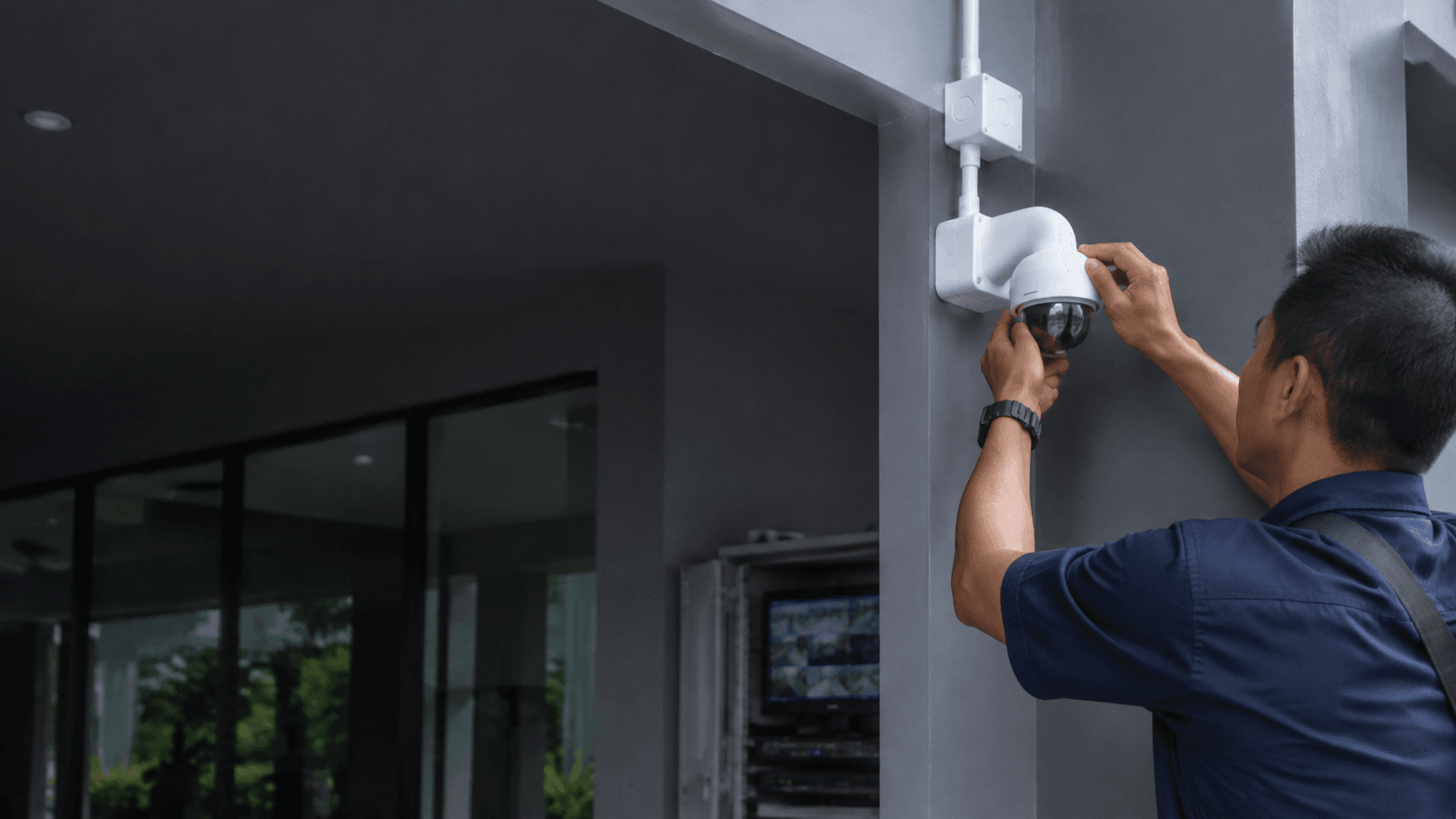
Placement decides whether recorded footage is usable. A camera aimed at a bright doorway will silhouette anyone walking through it; a camera mounted too high will record the tops of heads. Eyonic recommends checking actual lighting conditions before confirming placement for ColorVu-style cameras, because low-light performance depends on what the scene really looks like at night rather than what it looks like during a site visit in daylight.
A survey covers more than camera angles. It establishes where cable can run, where the recorder can sit with power and ventilation, which areas need coverage and which do not, and how the building is used across a working day. The KTA Sarawak Sdn Bhd project is an example of that scope: a practical office setup in Kuching supporting staff movement, visitor handling, tidy cabling and clearer daily site control.
Coverage and identification are different goals and often need different camera positions. A wide view of a car park shows that something happened; a tighter view of the entry point shows who did it. Sites that need both usually need more cameras than a first estimate suggests, which is another reason channel count is settled after the survey rather than before.
Installation and handover
Eyonic's CCTV installation process runs through four stages, in order:
- Site survey — the property is inspected for camera positions, cabling routes, recorder location, power and lighting conditions.
- System proposal — the camera and recorder combination, channel count and storage are set out for the site.
- Installation — cameras, cabling and the recorder are installed and configured.
- Handover — recording and remote viewing are set up and explained, so the system can be used without further help.
Handover is the stage most often treated as a formality and most often regretted. It is where playback gets tested, where the person who will actually review footage learns how to search by date and time, and where remote viewing is confirmed working on the devices that will be used. A system that records perfectly but cannot be searched quickly is only half installed.
For sites that need more than CCTV, Eyonic also plans, supplies and installs alarm systems, autogate systems, keyphone intercoms and Starlink internet, which matters when a recorder's remote viewing depends on a stable connection at the same premises. The Hikvision CCTV Package is listed at RM 1,599 and covers camera supply and setup, basic recording configuration and mobile viewing handover.
Questions that come up before a recorder is chosen
Can a DVR work without internet? Recording and local playback do not depend on an internet connection. Remote viewing does, so a site that only needs on-premises review can run without it.
Is a DVR the same as an NVR? No. A DVR is built around wired camera signals arriving on their own cable, while an NVR works with network cameras. The choice follows the cameras, not the other way round.
How long does footage last? It depends on camera count, resolution, frame rate, recording schedule and compression, so it is confirmed against the planned configuration for the specific site.
Can existing cameras be reused? That depends on the camera type and the condition of the cabling already installed, which is why the survey comes first.
Share your location, property type and required system with Eyonic on WhatsApp at +60 11-5111 7959 for the next practical step.