
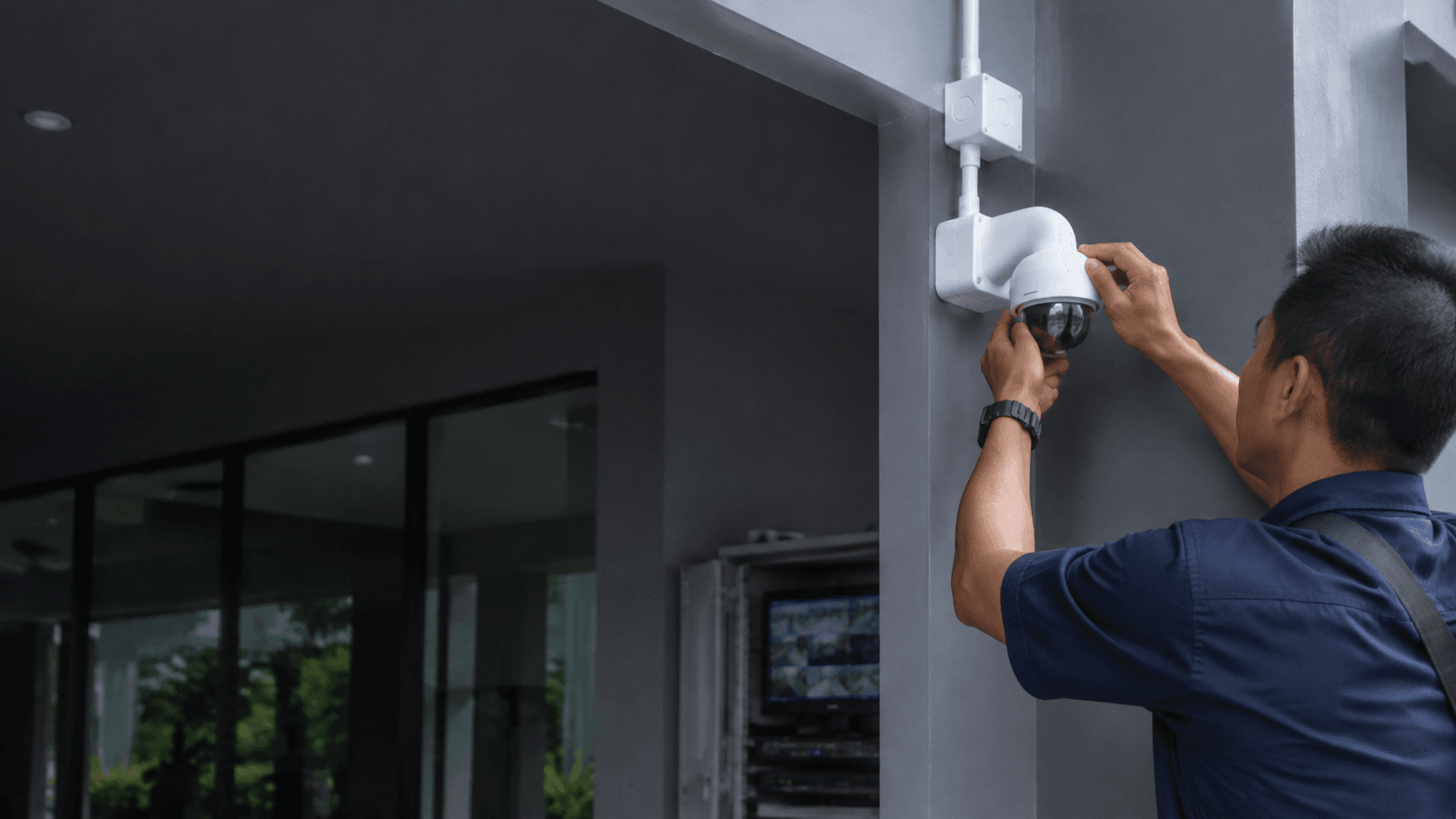
Dahua DVR 8 channel searches usually come from someone sizing a recorder for a property that is bigger than a single-camera setup but smaller than a full commercial deployment. The decision hinges on three things: how many cameras the site genuinely needs, where recording storage will sit, and whether remote viewing matters day to day. Eyonic Sdn Bhd plans, supplies, and installs monitoring systems with camera placement, recording, and remote viewing for homes, offices, shops, and industrial sites across Sarawak.
What an 8-channel Dahua DVR is used for
An eight-channel recorder accepts up to eight camera inputs on one box. That ceiling is the whole point of the category: it covers a property that needs more than four cameras but does not justify a larger chassis.
Typical uses cluster around a few property types. A terrace house might cover a front gate, a car porch, a back door, and a side lane. A shop might watch the entrance, the counter, the stockroom, and a rear service door. A small office might cover reception, a corridor, a server corner, and a staff entrance. In each case the camera count lands somewhere between four and eight, which is exactly the band an eight-channel unit is built for.
The recorder itself does not decide picture quality or night performance. Those come from the cameras and the lighting at each position. The recorder decides how many feeds can be captured at once, how footage is stored, and how the recorded video is reviewed afterwards.
When eight channels is the right size
Eight channels fits when the camera plan lands at six to eight positions with a little room to spare. It is the wrong size in two clear situations: when the plan needs more than eight cameras, and when the plan needs only two or three.
Buying above the requirement wastes money on unused inputs. Buying below it forces a second recorder later, which usually means a second storage device and a second point of failure. The practical test is to count camera positions honestly, including the ones that seem optional now but obvious after a break-in.
Growth is the other consideration. A property that may add a rear extension, a second entrance, or a small outbuilding within a few years benefits from spare channels. A property that is fully built out and unlikely to change does not need headroom it will never use.
Where eight channels stops being enough
Once the camera plan passes eight positions, the recorder has to change. Multi-storey buildings, larger shoplots with separate front and rear access, and sites with perimeter coverage on several sides usually exceed eight channels. That is a sizing decision, not a brand decision, and it is better settled before any equipment is ordered.
What to compare before choosing a Dahua DVR 8 channel
Comparison should start with the site, not the box. The recorder is one part of a system, and the parts have to match.
- Site survey. walk the property, identify camera positions, and check actual lighting conditions at each position before confirming placement.
- System proposal. match camera count, recorder channels, storage, and viewing method to what the site actually needs.
- Installation. mount cameras, run cabling, configure recording, and set up remote viewing.
- Handover. confirm the recording works, show how to review footage, and settle who manages the system afterwards.
Camera compatibility matters more than most buyers expect. A recorder accepts specific camera types, and mixing types without checking compatibility is a common source of frustration. The camera count, the recorder channel count, and the storage capacity all have to line up before installation day.
Storage is the second comparison point. Recording storage determines how far back footage can be reviewed, and that figure depends on camera count, recording settings, and how long the property needs to keep footage. A shop that wants a month of history needs different storage from a home that only wants a week.
Remote viewing is the third. Reviewing footage from a phone is a standard expectation now, and it should be confirmed as part of the proposal rather than assumed. The same applies to how footage is exported if it is ever needed for an incident report or an insurance claim.
Questions worth settling early
How many cameras are needed at handover, and how many might be added later? How many days of footage must be kept? Who reviews footage, and from where? Does the property have reliable power and network at the recorder position? Each answer narrows the equipment list before any purchase decision is made.
How a Dahua DVR 8 channel is installed in Sarawak
Installation follows the same sequence regardless of brand. Eyonic's CCTV installation process runs through site survey, system proposal, installation, and handover, and that order exists because each stage depends on the one before it.
The survey stage is where most problems are prevented. Camera placement is decided against real sightlines, not floor plans. Lighting is checked at each position, because a camera that performs well in daylight can behave very differently after dark, and placement confirmed on paper can fail once the actual light is measured.
Cabling is the least visible part of the job and the part most likely to cause trouble later. Tidy routing, protected runs, and sensible recorder placement reduce both failure rates and future maintenance. A recorder tucked somewhere convenient rather than somewhere sensible tends to be the first thing that fails in a hot, humid climate.
Handover is where the system becomes usable. Recording is confirmed, footage review is demonstrated, and remote viewing is tested on the devices the owner actually uses. A system that records correctly but cannot be reviewed by the people who need it is only half finished.
Local context matters in Sarawak. Power stability, humidity, and the distance between camera positions and the recorder all affect how a system should be laid out. Eyonic has completed work for a public office in Kuching focused on arrival flow, staff areas, visitor movement, and dependable daily operation, and for an engineering consultancy office in Kuching covering staff movement, visitor handling, and tidy cabling. Both cases show the same pattern: the recorder is chosen to fit the site, not the other way around.
Questions to settle before a handover
Handover is the point where assumptions surface. Settling a few questions beforehand avoids a system that technically works but does not match how the property is actually used.
Confirm the recording schedule. Continuous recording and motion-triggered recording produce very different storage outcomes, and the choice should match how the footage will be used. Confirm the review method, including who has access and from which devices. Confirm what happens if a camera goes offline, and how that would be noticed.
Confirm the storage position and its environment. A recorder in a closed cabinet in a warm room will not last as long as one in a ventilated position. Confirm the power arrangement, including whether the recorder sits behind any protection against outages.
Confirm the maintenance expectation. Firmware updates, storage health, and camera cleaning all affect how long the system performs as installed. None of these are complicated, but all of them are easy to skip once the installation is finished.
Finally, confirm the growth path. If the property is likely to add cameras, knowing which channels remain free and what the recorder can accept saves a second purchase later. That single question at handover often decides whether the system lasts three years or ten.
Share the location, property type, and required system with Eyonic on WhatsApp at +60 11-5111 7959 for the next practical step.