
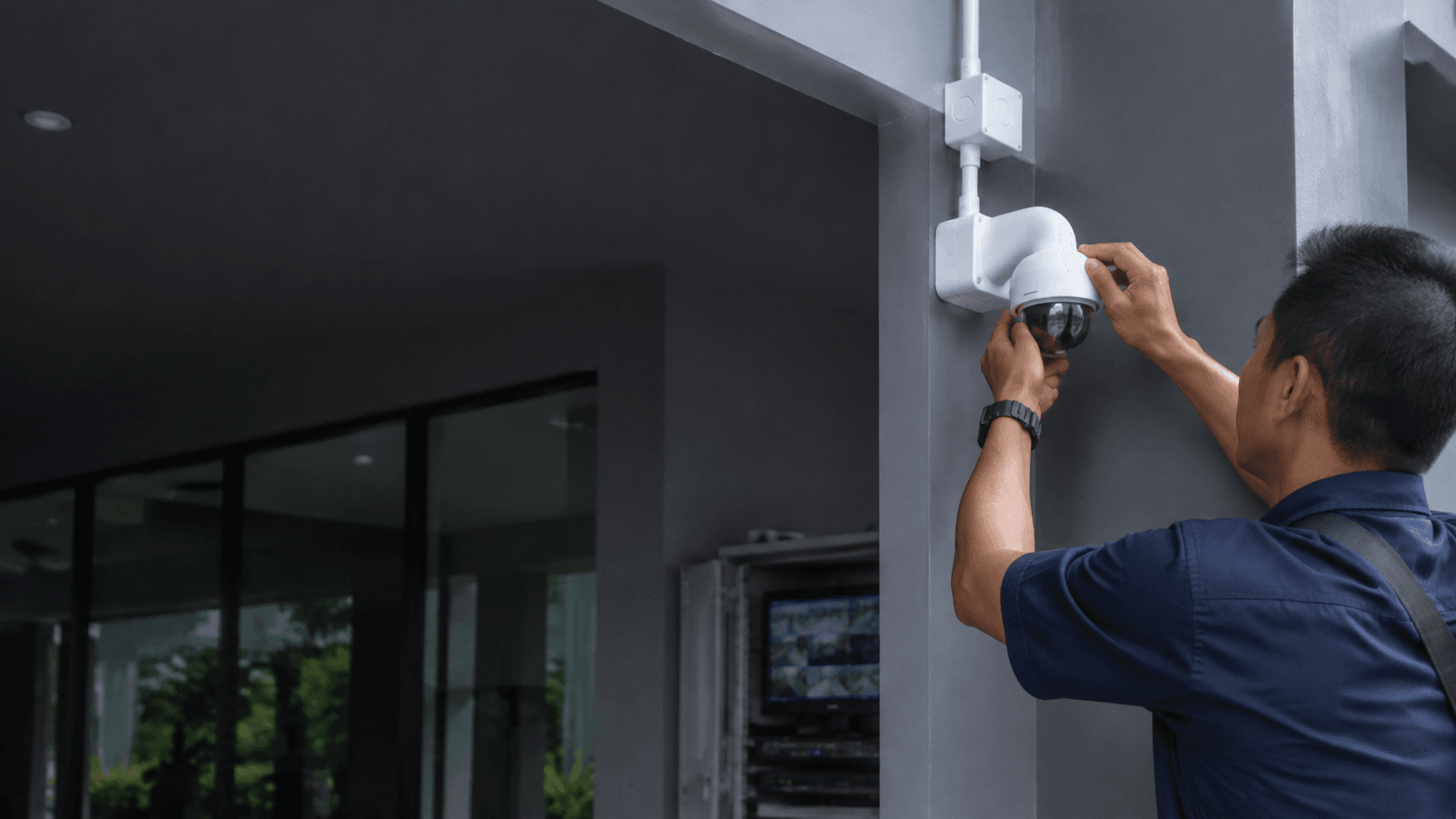
The phrase covers two different shopping journeys. One reader wants a brand shortlist and a rough sense of which manufacturer leads on image quality or price. Another reader already owns a building and needs cameras mounted, cabled, recorded and viewable on a phone. Both journeys end at the same practical question: what has to be true on site for the system to work every day.
Top Cctv. What Matters Before Choosing a Brand
Brand reputation travels well online, but it does not survive a bad installation. A well-known camera model mounted at the wrong height, pointed into a light source, or fed by undersized cable will underperform a modest model that was placed properly. That is why brand comparisons and installation planning should be read together rather than as separate decisions.
Competitor coverage of this topic clusters around three angles: manufacturer rankings, home camera reviews, and buyer guides that weigh features against price. Those pages are useful for understanding what the market offers. They are not evidence about any specific building, because lighting, entry points, cable routes and recording expectations differ from site to site.
What is cctv?
CCTV is a camera system that captures video for monitoring and later review rather than for broadcast. In practice, a working setup combines cameras, a recorder, storage, cabling or network links, and a viewing method such as a monitor or mobile app. The term is often used loosely to cover both wired analogue-style systems and network cameras, so it helps to confirm which type is being discussed before comparing prices.
How to work through a cctv decision
- Define what needs to be seen. entrances, counters, walkways, car parks or perimeter lines.
- Check the actual lighting at each point during the hours that matter, including night conditions.
- Decide where footage is stored and how long it must be kept.
- Confirm cable routes, power availability and whether the building allows surface trunking or concealed runs.
- Match camera type to each location instead of buying one model for the whole site.
- Agree who reviews footage, on what device, and who holds the account credentials.
- Test the finished system before handover, including playback and remote viewing.
Eyonic's own installation process follows a similar shape: site survey, system proposal, installation, and handover. The survey stage exists because the first two items on that list cannot be answered from a product page.
Choosing the Right Cctv for a Building
Camera selection is mostly a matching exercise. A wide-angle camera suits an open office floor but wastes resolution on a narrow corridor. A camera with strong low-light performance earns its cost at a gate or back lane where lighting is poor, while a standard model is often sufficient in a lit reception area.
Eyonic advises checking actual lighting conditions before confirming placement for ColorVu-style cameras, which are designed around low-light colour imaging. That advice generalises. any low-light claim should be verified against the real scene rather than the specification sheet alone.
Wired and network systems
Wired systems remain common where reliability and long cable runs matter, and they typically avoid recurring subscription costs because recording happens on local hardware. Network camera systems add flexibility in resolution and analytics but depend on stable network design and sensible cybersecurity practice. Neither approach is automatically better; the deciding factors are building layout, budget structure and who will maintain the system.
Where installation quality shows up
Two completed Eyonic projects illustrate the pattern. At the Kuching Immigration Office, the work focused on arrival flow, staff areas, visitor movement and dependable daily operation, with an approximate budget range of RM 12,000 to RM 28,000 for that type of work. For KTA Sarawak Sdn Bhd, an engineering consultancy office in Kuching, the requirement centred on staff movement, visitor handling, tidy cabling and clearer daily site control, with an approximate budget range of RM 8,000 to RM 18,000.
Both cases point to the same lesson. The camera list is the visible part of the job; cable tidiness, coverage of movement paths and reliable daily operation are what the building actually lives with.
Best Home Security Cameras Of 2026 Security.org
Review roundups such as Security.org's home camera coverage are useful for shortlisting consumer models, and they typically compare installation style, subscription requirements, storage options and app experience. Those criteria matter for a house, but they translate imperfectly to a shop, office or industrial site where multiple cameras must record continuously and be reviewed together.
A household buyer can often accept a single app and a cloud plan. A business usually needs local recording, defined retention, and a clear answer on who can export footage when something happens. Reading a home-focused roundup with that difference in mind prevents a consumer-grade choice from being stretched beyond its design.
Questions worth answering before purchase
Does the system keep recording when the internet drops? Where is footage stored, and for how long? Can more cameras be added later without replacing the recorder? Who resets the system if a password is lost? These are the questions that separate a smooth deployment from a frustrating one, and none of them are answered by brand ranking alone.
Practical Considerations for in Malaysia
Local conditions shape the specification. In Sarawak, heavy rain, humidity and direct afternoon sun affect housing choice, lens cleanliness and where cabling can safely run. Buildings with multiple tenants or shared walls need cable routes agreed in advance. Sites with existing alarm, autogate, intercom or internet infrastructure benefit from planning those systems together rather than treating each as a separate purchase.
Budget structure also matters. Eyonic lists a Hikvision CCTV package at RM 1,599 covering camera supply and setup, basic recording configuration and mobile viewing handover. A comparable figure applies to a Hikvision alarm system and an autogate package, each at RM 1,599. These are entry-level packages, so a larger site with more cameras, longer cable runs or stricter retention requirements should expect a different figure, as the two project ranges above show.
Common constraints and edge cases
Listed buildings and rented premises may restrict drilling and surface cabling. Very dark sites may need additional lighting rather than a more expensive camera. Sites with poor internet need local recording prioritised over remote viewing. Where a door needs controlled access, the choice between a standalone smart lock and an access-control panel depends on door condition, user roles and the backup entry method, which is why that decision is usually reviewed before installation rather than after.
Making an Informed Choice About
A sound decision rests on four things: what must be seen, how the site is lit, where footage is stored, and who maintains the system afterwards. Brand shortlists help narrow the field, but the survey and installation plan determine whether the chosen equipment performs as expected.
For readers in Sarawak, that work is local. Eyonic Sdn Bhd plans, supplies and installs monitoring systems with camera placement, recording and remote viewing for homes, offices, shops and industrial sites, and the founder, Eric Yong, has worked in technical installation of digital security solutions for commercial businesses in Sarawak for more than ten years.
Share your location, property type and required system with Eyonic on WhatsApp at +60 11-5111 7959 for the next practical step.