
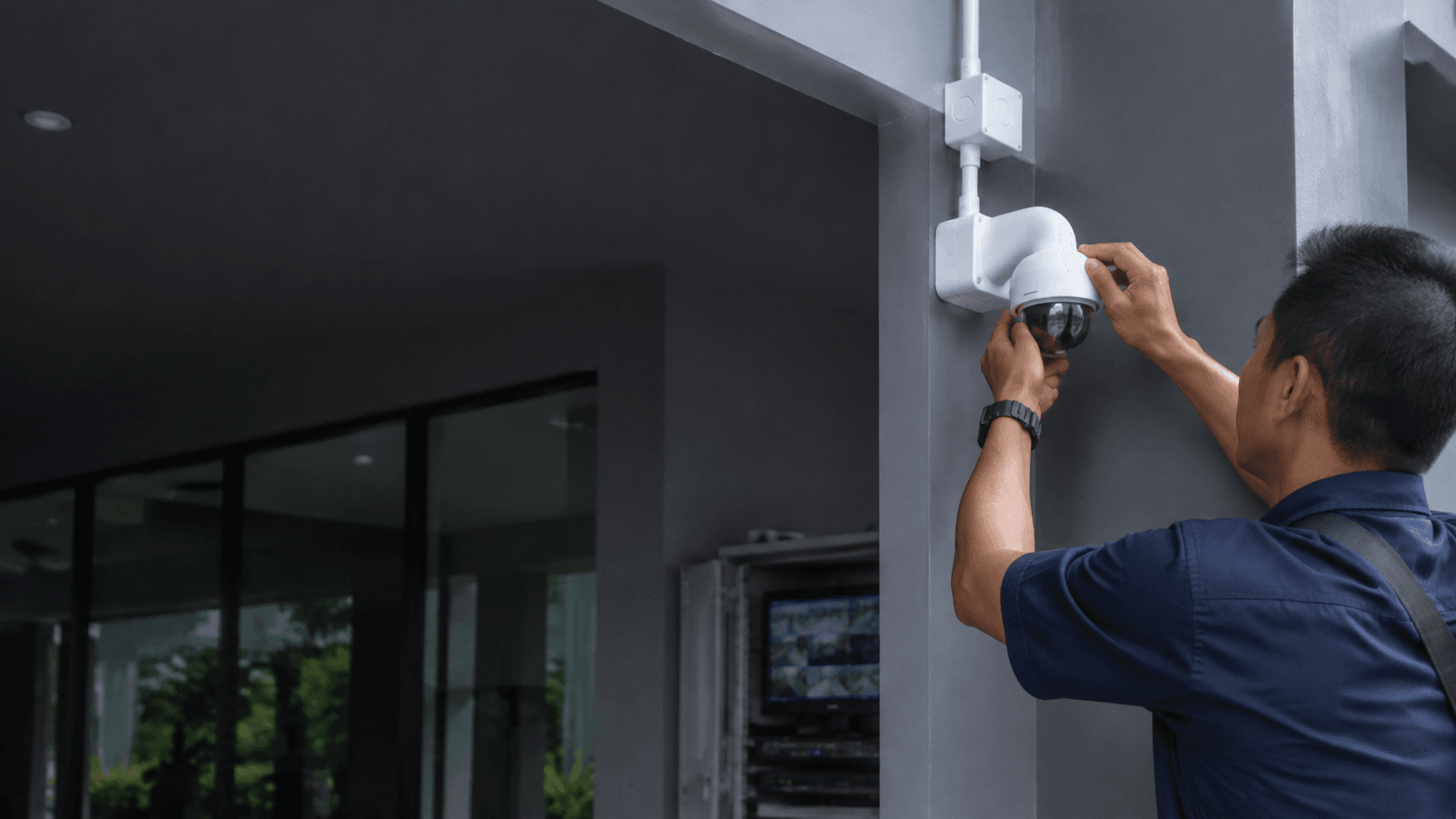
Those two routes differ in who installs the hardware, how the footage is stored, and how much of the setup a household or business controls. The sections below set out what each route covers, how installation and monitoring usually connect, and which local checks matter before money changes hands.
Adt Video Cameras across indoor, outdoor, and doorbell roles
ADT video cameras are not one product. Coverage splits by where a camera sits and what it is expected to capture. An indoor camera watches rooms, corridors, and counters. An outdoor camera watches entrances, perimeters, and parking areas. A video doorbell watches the approach to a door and the person standing at it.
Each role carries its own constraints. Indoor units sit close to power and network points, so cabling is usually short and tidy. Outdoor units face rain, heat, and glare, so housing and mounting height matter more than resolution alone. Doorbells sit at chest height on a narrow field of view, which makes them good at identifying visitors and poor at covering a wide yard.
| Camera role | Typical placement | Main viewing need |
|---|---|---|
| Indoor camera | Rooms, corridors, counters | Staff or family movement inside a building |
| Outdoor camera | Entrances, perimeters, parking areas | Approach routes and wider site coverage |
| Video doorbell | Door approach at chest height | Visitor identification at a single entry point |
The table is a planning aid, not a specification sheet. Model numbers, resolution, night vision performance, and Malaysian pricing for ADT video cameras are not confirmed by the evidence available for this article, so those figures should come from the supplier or manufacturer documentation at the point of purchase.
How ADT video cameras fit with installation and monitoring
Installation and monitoring are the two decisions that shape cost and daily use more than the camera body itself. ADT's published structure separates a professionally installed route from a self-installed route, and the two carry different implications for wiring, app setup, and who handles faults.
A professional installation route typically means a technician mounts the cameras, runs or conceals cabling, configures the recorder or cloud link, and hands over the mobile viewing setup. A self-install route shifts those tasks to the buyer, which suits a property where cabling already exists or where the camera is battery powered.
Monitoring sits on top of either route. Professional monitoring means an external party receives alerts and can respond. Self-monitoring means the property owner receives alerts and decides what to do. Video verification, where a monitoring centre checks footage before dispatching a response, depends on the camera being integrated with the monitoring platform rather than standing alone.
For buyers in Malaysia, the practical question is not which route is better in the abstract. It is whether a local party can install, configure, and support the chosen hardware. ADT availability, authorised dealers, installation partners, and monitoring services in Malaysia are not confirmed by the evidence available here, so those points need direct verification with the supplier before committing.
What to compare before choosing ADT video cameras
Comparison should start with the property, not the product page. A shophouse, a single-storey home, and a multi-level office generate different camera counts, different cable runs, and different viewing habits.
Eyonic's own installation process runs through site survey, system proposal, installation, and handover, which is the sequence that surfaces most of the mismatches early. A survey catches the difference between a camera that looks adequate on paper and one that actually covers the gate, the counter, or the loading bay.
Lighting deserves separate attention. Eyonic recommends checking actual lighting conditions before confirming placement for ColorVu-style cameras, because a position that performs well in daylight can behave differently once street lighting, headlights, or deep shade enter the frame. The same discipline applies to any camera being considered, including ADT video cameras.
Recording and storage terms also belong in the comparison. Cloud storage limits, subscription length, and contract terms for ADT video cameras are not confirmed by the evidence available here, so those details should be read from the supplier's own documentation rather than assumed from overseas pricing pages.
Lighting, placement, and daily viewing habits
Placement decisions outlast the hardware. A camera mounted too high captures heads and not faces. A camera aimed at a reflective surface produces glare at night. A camera covering a public walkway may raise privacy questions that a camera covering a private yard does not.
Daily viewing habits decide whether the system gets used. A camera that only records is checked after an incident. A camera that sends alerts is checked in the moment, which means alert accuracy matters as much as image quality. Too many false alerts and the notifications get ignored.
Remote viewing depends on the network at the property. Weak upload speed, a congested Wi-Fi band, or a router placed far from the camera all degrade the live view even when the recording itself is fine. That is a site condition, not a camera fault, and it is best identified during a survey rather than after installation.
Eyonic's project work shows the same pattern in practice. The Kuching Immigration Office project focused on arrival flow, staff areas, visitor movement, and dependable daily operation, which are coverage and reliability questions rather than specification questions. The KTA Sarawak Sdn Bhd project covered staff movement, visitor handling, tidy cabling, and clearer daily site control, where cabling quality and viewing routine mattered alongside the cameras themselves.
Questions to settle before any camera purchase
Buyers comparing ADT video cameras against other systems can reduce most of the risk by settling a short list of practical points first. The checks below are written as a sequence because each one changes the answers that follow.
- Confirm what the property actually needs covered, room by room and gate by gate, before looking at any model.
- Verify whether the chosen brand is sold, installed, and supported locally, including who handles a fault after handover.
- Check the real lighting at each proposed position at night, not only in daylight.
- Confirm where footage is stored, how long it is retained, and what happens if the subscription lapses.
- Read the monitoring terms, including contract length and any early termination conditions.
- Confirm the network can carry the live view and the recording upload without constant dropouts.
- Agree the handover step, including mobile viewing setup and a walkthrough of the recorded coverage.
Point two carries the most weight for buyers in Malaysia. A camera that cannot be serviced locally becomes an expensive ornament after the first hardware fault, regardless of how well it performed in a review written for another market.
Point four matters because storage terms change the value of the system over time. A camera with generous local recording behaves differently from one that depends entirely on a cloud plan, and the difference only becomes visible when a clip is needed.
Eyonic supplies and installs Hikvision cameras and related security systems across Sarawak, with packages starting at RM 1,599 for a Hikvision CCTV package that includes camera supply and setup, basic recording configuration, and mobile viewing handover. Buyers weighing ADT video cameras against that kind of locally supported package should compare the two on installation, handover, and after-sales support rather than on camera body alone.
Share your location, property type and required system with Eyonic on WhatsApp at +60 11-5111 7959 for the next practical step.