
Most search results for cctv online point at news channels, webcam directories, and public traffic portals. Very few explain how a privately owned recorder reaches a phone or a browser, which is the part that matters to a property owner in Malaysia.
Remote viewing is not a separate product. It is the last stage of an installation, and it only works when the recorder, the network, and the camera placement have already been set up correctly.
What cctv online actually covers
The phrase splits into two unrelated activities that share the same words.
The first is public viewing. Broadcasters stream news channels, tourism sites publish webcams, and some local government transport departments publish traffic cameras for anyone to open. Nothing is installed, nothing is owned, and the viewer has no control over what appears.
The second is private remote viewing. A camera records to a recorder on the property, and the owner opens that footage from somewhere else. This is the version that requires hardware, a network, and a configuration step at handover.
The two are often confused because both appear on a phone screen. The difference is ownership and control. A public stream is someone else's camera. A private remote view is a camera on a property the owner is responsible for.
Remote viewing on a Hikvision CCTV package
Eyonic lists a Hikvision CCTV Package at RM 1,599 that covers camera supply and setup, basic recording configuration, and mobile viewing handover. Those three items describe the sequence that makes remote viewing possible.
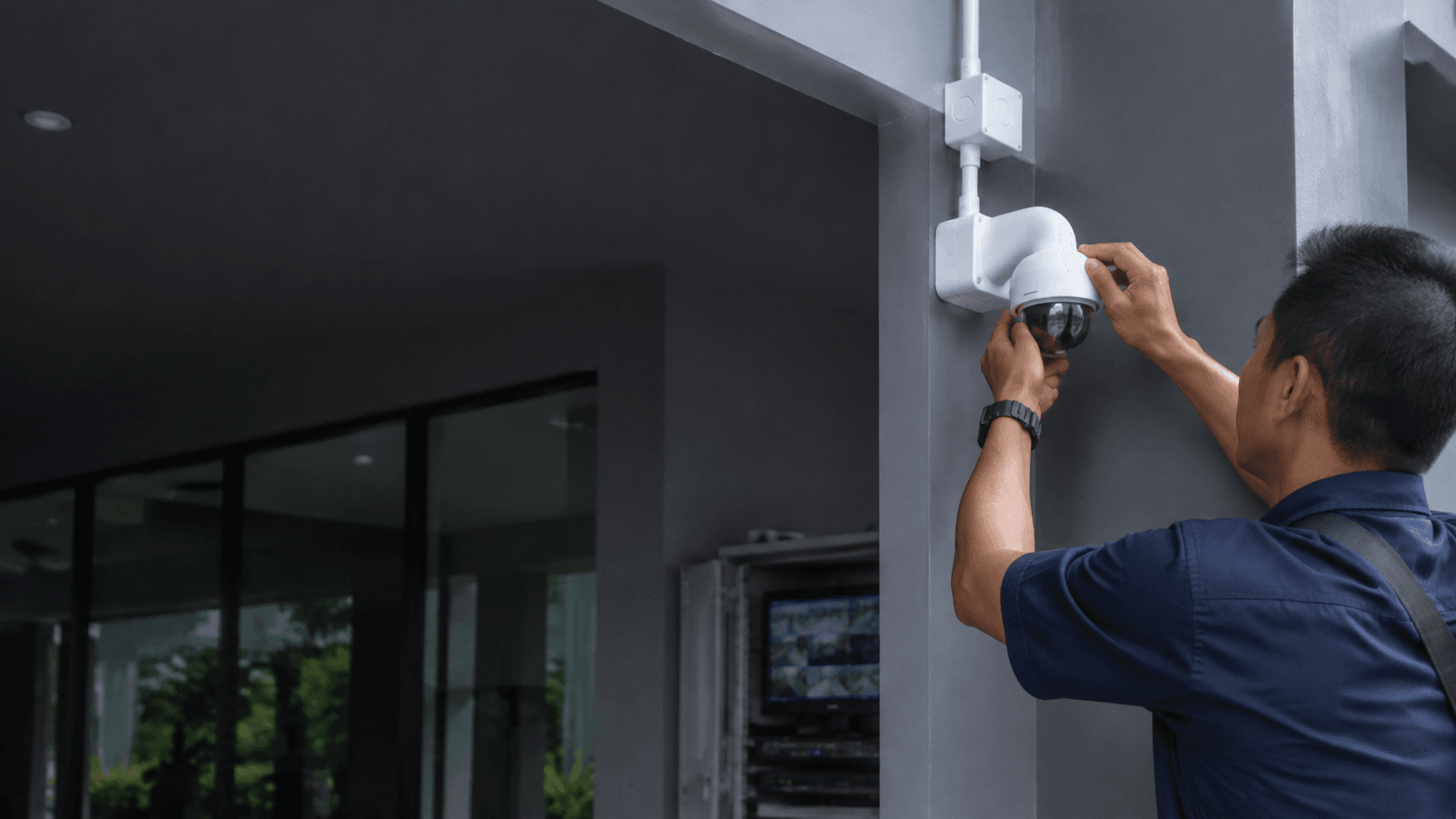
Camera supply and setup puts the cameras where they can see something useful. Basic recording configuration gives the recorder somewhere to write footage and a way to find it later. Mobile viewing handover is the step where the owner is shown how to open the live view and the recorded playback away from the property.
The order matters. Remote viewing configured before recording is stable produces a live picture with nothing behind it. A viewer can watch the present moment but cannot check what happened earlier, which removes most of the practical value of the system.
Remote viewing also depends on the property having a working internet connection at the recorder. A recorder with no connection, or a connection that drops regularly, will show an intermittent view regardless of how well the cameras were installed.
What Eyonic checks before remote viewing is handed over
Eyonic's published installation process runs through four stages, and remote viewing sits inside the final one.
- Site survey — the property is reviewed before any equipment is proposed.
- System proposal — the camera and recorder plan is put together from what the survey found.
- Installation — cameras, cabling, and the recorder are fitted and configured.
- Handover — recording is confirmed and mobile viewing is set up and explained.
The survey stage is where most remote-viewing problems are prevented. A recorder needs a stable power point and a network connection, and both are easier to plan before cabling is run than after.
Handover is where the owner learns the practical limits. Live view and recorded playback are different screens, and knowing which one to open saves time when something needs checking.
Cctv online across homes, shops and offices in Sarawak
Eyonic plans, supplies, and installs monitoring systems with camera placement, recording, and remote viewing for homes, offices, shops, and industrial sites.
The remote-viewing requirement changes with the property type. A home usually needs one person to check a phone occasionally. A shop often needs the owner to check in during trading hours while staff are on site. An office may need more than one person to have access, which raises the question of who holds the login and how it is shared.
Eyonic's project work in Kuching shows how the requirement shifts with the site. The Kuching Immigration Office project focused on arrival flow, staff areas, visitor movement, and dependable daily operation. That is a public office where the value of the system is in steady, repeatable coverage rather than in any single camera.
A second Kuching project for KTA Sarawak Sdn Bhd covered staff movement, visitor handling, tidy cabling, and clearer daily site control for an engineering consultancy office. Both projects point at the same idea: the camera plan follows the way people actually move through the building.
Coverage outside Sarawak is not something the available evidence establishes, so a property elsewhere in Malaysia should confirm service availability before planning around it.
Camera placement and lighting before remote viewing
A remote view is only as useful as the picture it delivers. A camera pointed at a blank wall streams perfectly and shows nothing.
Eyonic recommends checking actual lighting conditions before confirming placement for ColorVu-style cameras. The check matters because lighting at a doorway or a back lane changes through the day, and a position that looks clear in the afternoon may not be the position that works after dark.
Placement decisions also affect what the remote viewer can interpret. A camera covering an entrance shows who arrives. A camera covering a corridor shows movement but rarely identifies anyone. Choosing between those two is a decision about what the owner wants to know, not about which camera is better.
Cabling is the constraint that limits placement most often. A camera position that needs a long cable run through finished walls may cost more to reach than a slightly less ideal position closer to an existing route. The survey stage is where that trade-off gets settled.
Costs and next steps for a cctv online setup
The Hikvision CCTV Package is listed at RM 1,599 and includes camera supply and setup, basic recording configuration, and mobile viewing handover. That figure covers a package rather than remote-viewing work on its own, and no separate price for remote-viewing-only work is published.
Larger installations sit in a different range. Eyonic lists an approximate budget of RM 12,000 to RM 28,000 for work of the type carried out at the Kuching Immigration Office, and RM 8,000 to RM 18,000 for work of the type carried out for KTA Sarawak Sdn Bhd. Those ranges describe multi-camera office projects, not a single-property package.
Three things determine where a project lands within a range: how many cameras are needed, how far cable has to run, and how much of the building the system has to cover.
Before requesting anything, it helps to have three details ready. The property location establishes whether the work is serviceable. The property type establishes whether the requirement is closer to a home package or an office project. The required system establishes whether the job is CCTV alone or includes alarm, autogate, intercom, or internet work.
Eyonic's founder, Eric Yong, has worked in the industry for more than ten years and specialises in technical installation of digital security solutions for commercial businesses in Sarawak. That background is most relevant on commercial sites where camera placement has to account for staff and visitor movement rather than a single entrance.
Share the location, property type, and required system with Eyonic on WhatsApp at +60 11-5111 7959 for the next practical step.