
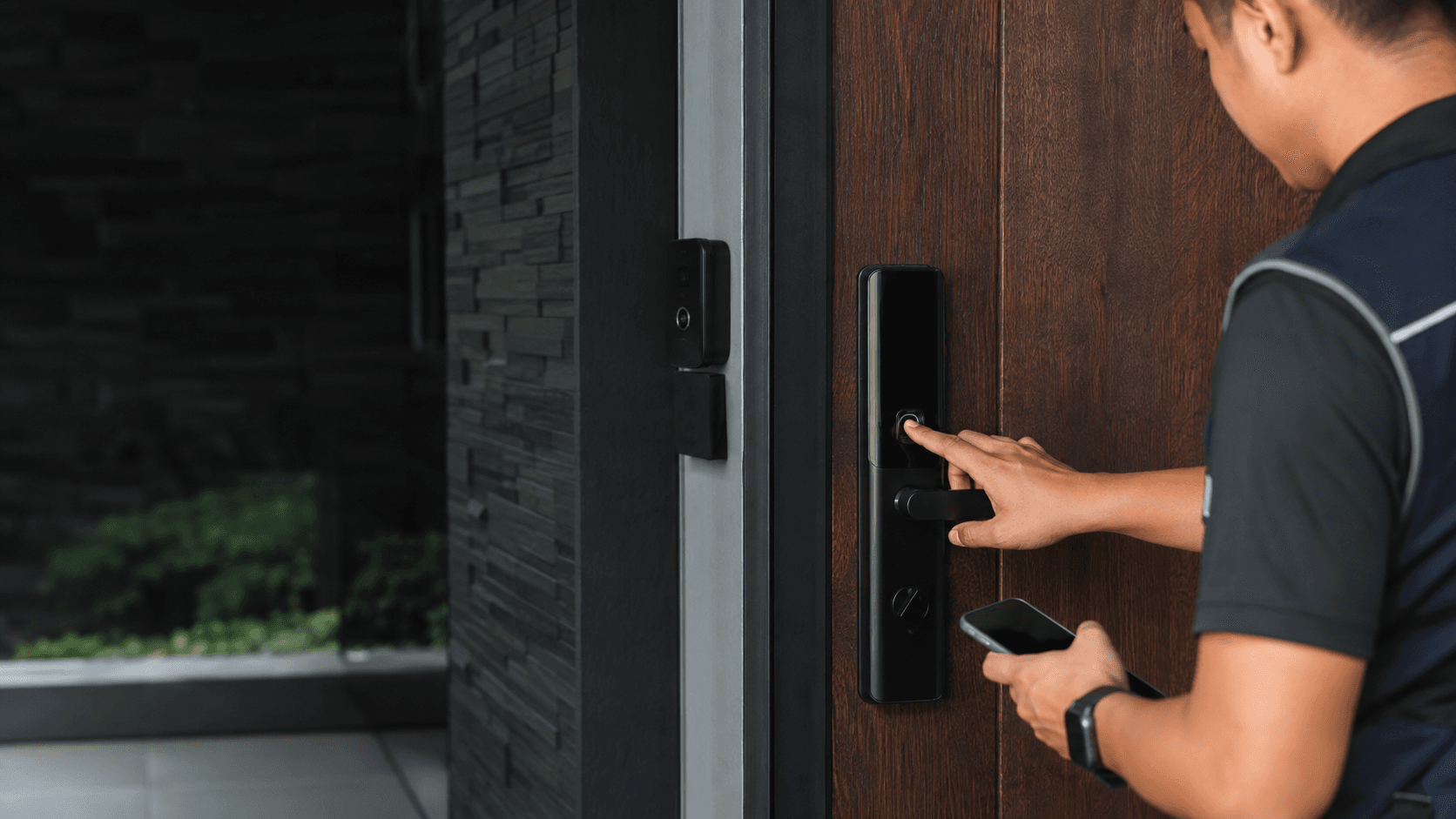
The brand sits in the wider smart lock market alongside keyless entry and fingerprint access products. Buyers in Malaysia usually arrive with the same three questions: will it fit the existing door, who should be able to enter, and what happens when the battery dies or the phone is out of reach.
Those questions matter more than the feature list. A lock that fits badly, or that leaves one person locked out during a power or network problem, creates daily friction. The checks below are the ones that decide whether an Ultraloq Door Lock suits a particular door.
What an Ultraloq Door Lock Does
A smart lock replaces or augments the mechanical hardware on a door so that entry can be granted without a cut key. The common entry methods across this product category are fingerprint, keypad code, smartphone app, and a physical key as fallback. Some models add auto-unlock as a person approaches, and some connect to a wider smart home platform.
The practical benefit is control over who enters and when. Instead of copying a key, an owner issues a code or a virtual credential to a family member, a staff member, or a short-stay guest, then removes it later. That is the same logic behind access control in offices, applied to a single door.
Eyonic's own product review describes smart lock door access as good for controlled convenience when user permissions and backup entry are planned properly. That phrasing is the honest summary of the category. The convenience is real, and it depends on planning.
Ultraloq Door Lock Checks Before You Commit
Five checks decide most installations. Working through them in order prevents the common outcome where a lock is purchased and then cannot be fitted, or is fitted and then fails the first time someone is locked out.
- Confirm the door condition and existing hardware, including whether the door is a deadbolt, a lever, or a handle set, and whether the frame and strike align cleanly.
- Decide the user roles. who needs permanent access, who needs temporary access, and who should be able to add or remove other users.
- Agree the backup entry method before installation, so a dead battery, a lost phone, or a forgotten code does not lock out the people who need to get in.
- Set expectations for power and network, including how the lock behaves when Wi-Fi is unavailable and how remote features are affected.
- Plan the installation handover, covering user setup, code changes, and who to contact when the lock misbehaves.
Eyonic's installation process follows a comparable sequence for security systems: site survey, system proposal, installation, and handover. The survey stage is where door condition and user roles get settled, before any hardware is ordered.
Door Condition and Access Roles
Door condition is the first filter. A smart lock needs a door that closes squarely, a frame that holds the strike plate firmly, and enough depth in the door edge for the lock body. A door that already sticks, or a frame that has been patched, will cause problems that no amount of app configuration can fix.
Access roles are the second filter. A family home typically needs a small number of permanent users plus occasional access for a cleaner, a contractor, or a relative. A shop or office needs a clearer split between staff who enter daily and visitors who should be admitted only with supervision.
Eyonic's review notes that for business use, the company usually checks whether a standalone smart lock or an access-control panel is more appropriate. That distinction matters. A single door with a handful of users suits a standalone lock. A building with multiple doors, shift patterns, and an audit requirement usually points toward a panel-based system instead.
Backup Entry and Daily Reliability
Backup entry is the check most often skipped and most often regretted. Every electronic lock depends on power, and every phone-dependent entry method depends on a charged device. A physical key kept somewhere sensible, or a mechanical override, is what keeps the door usable during a failure.
Daily reliability follows from the same planning. If the lock is expected to unlock automatically as someone approaches, that behaviour depends on the phone, the app, and the connection between them. If the household includes children, elderly residents, or staff who change frequently, a keypad code is often the more dependable everyday method.
Network expectations deserve a plain statement. Remote features such as issuing a code from another city, or checking an entry log, depend on the lock reaching the network. Local entry by fingerprint, code, or key does not. Separating those two categories prevents disappointment when the internet drops.
Where Eyonic Fits for Sarawak Properties
Eyonic Sdn Bhd is a security system supplier in Sarawak that plans, supplies, and installs monitoring and access systems for homes, offices, shops, and industrial sites. Smart lock door access sits within that range, alongside CCTV, alarm systems, autogate, and keyphone intercom work.
The company's completed work includes the Kuching Immigration Office, where the focus was arrival flow, staff areas, visitor movement, and dependable daily operation, and KTA Sarawak Sdn Bhd, an engineering consultancy office in Kuching that needed support for staff movement, visitor handling, and tidy cabling. Both projects show the same pattern: entry and movement are treated as one design problem rather than a single device purchase.
That pattern is useful for anyone weighing an Ultraloq Door Lock on a Sarawak property. A lock on a front door, a gate, and an office entrance should work as one access plan. Where a property already has CCTV or an alarm, the lock is one part of the setup rather than a separate purchase.
Eric Yong founded Eyonic Security Systems and has worked in the industry for more than ten years, with experience in technical installation of digital security solutions for commercial businesses in Sarawak. For a buyer comparing options, that background is most relevant at the survey stage, when door condition and user roles are assessed.
Questions Buyers Ask About Smart Locks
Does a smart lock work without internet? Local entry methods such as fingerprint, keypad code, and physical key do not depend on the network. Remote management, remote code issuing, and remote entry logs do. A lock can be perfectly usable day to day while its remote features are unavailable.
Can a smart lock be fitted to an existing door? Often, but it depends on the door type and the existing hardware. A deadbolt replacement and a lever or handle replacement are different jobs. The door edge, frame alignment, and strike position all need checking before a model is chosen.
Is a smart lock suitable for a shop or office? For a single entrance with a small number of users, yes. For multiple entrances, shift-based access, or a requirement to review who entered and when, a dedicated access-control setup is usually the better fit. Eyonic's review makes that same distinction between a standalone lock and a panel.
What happens when the battery runs out? This is why backup entry is agreed before installation. The specific backup method varies by model, so it should be confirmed against the actual product documentation rather than assumed.
How many people can use one lock? User capacity varies by model and is not something to estimate. It should be confirmed from the manufacturer's documentation for the specific lock under consideration.
Can access be removed when someone leaves? Yes, that is one of the main reasons to choose a smart lock over a copied key. Removing a code or credential is faster and more certain than recovering a physical key, provided the person who manages users knows how to do it.
Planning the Purchase
The decision comes down to three things: whether the door can take the hardware, whether the user roles are clear, and whether backup entry is settled. Get those right and a smart lock is a practical upgrade. Get them wrong and the lock becomes a daily annoyance.
For properties in Sarawak, the survey stage is where those three questions get answered against the actual door. Eyonic's process runs site survey, system proposal, installation, and handover, which puts the assessment before the purchase rather than after it.
Share the location, property type, and required system with Eyonic on WhatsApp at +60 11-5111 7959 for the next practical step.