
The name appears across two very different kinds of page: manufacturer and distributor catalogues that list hardware, and setup guides that publish RTSP addresses. Knowing which one answers a real question saves time. A buyer in Malaysia weighing uniarch cctv against better-known brands needs to know what the range actually contains, how it connects, and where the practical limits sit.
Uniarch Cctv. What Matters Before You Choose
Uniarch sits under Uniview, a manufacturer of professional IP video surveillance devices and solutions. Distributor listings describe Uniarch as the value-oriented line aimed at small-to-medium business applications such as residential premises and retail stores, while Uniview-branded hardware covers the wider professional range.
The practical consequence is that Uniarch is an IP-first family. Cameras and recorders communicate over network cable, usually with PoE, rather than analogue coax. That shapes everything downstream: cabling, recorder choice, storage, and how the system is viewed remotely.
- Confirm the site type and camera count, because recorder channel count and PoE port count follow from it.
- Check the resolution and lens options available in the series being considered.
- Verify how the recorder and cameras will be powered and cabled.
- Confirm the viewing method. mobile app, browser, or desktop client.
- Check firmware update path and third-party compatibility if the system must integrate.
- Confirm who supplies, installs, and hands over the working system.
What is uniarch cctv?
Uniarch CCTV is the surveillance product line sold under the Uniarch brand and built by Uniview, covering IP cameras, network video recorders, PoE switches, and related accessories. Distributor descriptions place it as the cost-effective option for smaller commercial and residential installations rather than the flagship professional tier.
Product naming follows a recognisable pattern. Camera model codes such as IPC-T1E6-AF28K and IPC-B1E8-AF28K indicate form factor and resolution, with T-series turrets and B-series bullets appearing repeatedly in distributor catalogues. Recorder codes such as NVR-108B-P8 indicate channel count and PoE provision. Reading the code is faster than reading the marketing copy.
Two capability themes recur across listings. The first is low-light performance, marketed under Starlight naming, with some models adding warm-light illumination for colour images after dark. The second is on-camera filtering, described as AI filtering, which is intended to reduce false triggers from non-human movement.
Where the range sits in the market
Uniarch is positioned below Uniview's own professional series. Distributor copy describes it as the optimal option for small-to-medium business applications, and the model mix reflects that: fixed-lens turrets and bullets in 4MP, 6MP, and 8MP, paired with 4, 8, and 16-channel recorders. Larger or more complex sites typically move up to the Uniview range, where varifocal lenses and additional analytics appear.
Uniarch, Life In Focus
That phrase is the brand's own tagline, and the product structure behind it is straightforward. The manufacturer groups hardware into named series, including Entry, Halo, Vari-focal, Panda, and Basic, alongside switches and network video recorders. The series names matter less than the specifications inside them, because the same series can span several resolutions.
What the tagline does signal is the intended experience: simpler setup and lower cost than the professional tier, without dropping to consumer-grade hardware. Distributor descriptions support that reading, noting plug-and-play style setup, cloud connectivity for firmware updates, and multiple viewing routes.
How the system is accessed
Distributor documentation lists several access methods for Uniarch equipment: a web browser, a mobile application, and desktop client software for Windows and Mac. A cloud peer-to-peer option provides remote access without manual port forwarding. For third-party integration, at least one 6MP turret model is documented as compatible with ONVIF profiles S, G, and T.
Compression support matters for storage planning. Listings reference H.265 and H.264 on camera models, and Ultra 265 on the platform side, with claimed bandwidth and storage reduction. Those figures come from vendor and distributor marketing rather than independent testing, so they are best treated as directional when sizing a hard drive.
Practical Considerations for Uniarch Cctv
Three constraints decide whether this range fits a given site.
Network dependency. IP cameras need network cabling and, in most deployments, PoE. A site without existing cable routes faces the same cabling work regardless of brand, and that work often dominates the total cost. Where cabling is impractical, Wi-Fi and 4G models exist in the wider range, but wireless links introduce their own reliability questions.
Recorder and storage sizing. Channel count, PoE port count, and drive bays are separate decisions. A recorder with eight PoE ports and one drive bay behaves very differently from a 16-channel unit with the same single bay once retention targets rise. Retention depends on resolution, frame rate, compression, scene activity, and hours recorded per day, so any storage figure quoted without those inputs is an estimate at best.
Lighting conditions. Low-light claims are common across the industry and depend heavily on the actual scene. Eyonic's own guidance on colour night-vision cameras is to check real lighting conditions before confirming placement, because a specification sheet cannot predict how a specific doorway or car park behaves after dark. The same caution applies to any Uniarch model marketed on night performance.
Integration and firmware
ONVIF support on some models means third-party recorders and software can often connect, and community camera databases publish RTSP addresses for a limited number of Uniarch models. That compatibility is model-specific rather than brand-wide, so it should be verified against the exact unit before purchase. Firmware updates are documented as available through the recorder menu via cloud connectivity, which keeps cameras and recorder aligned without manual file handling.
Where a local installer changes the outcome
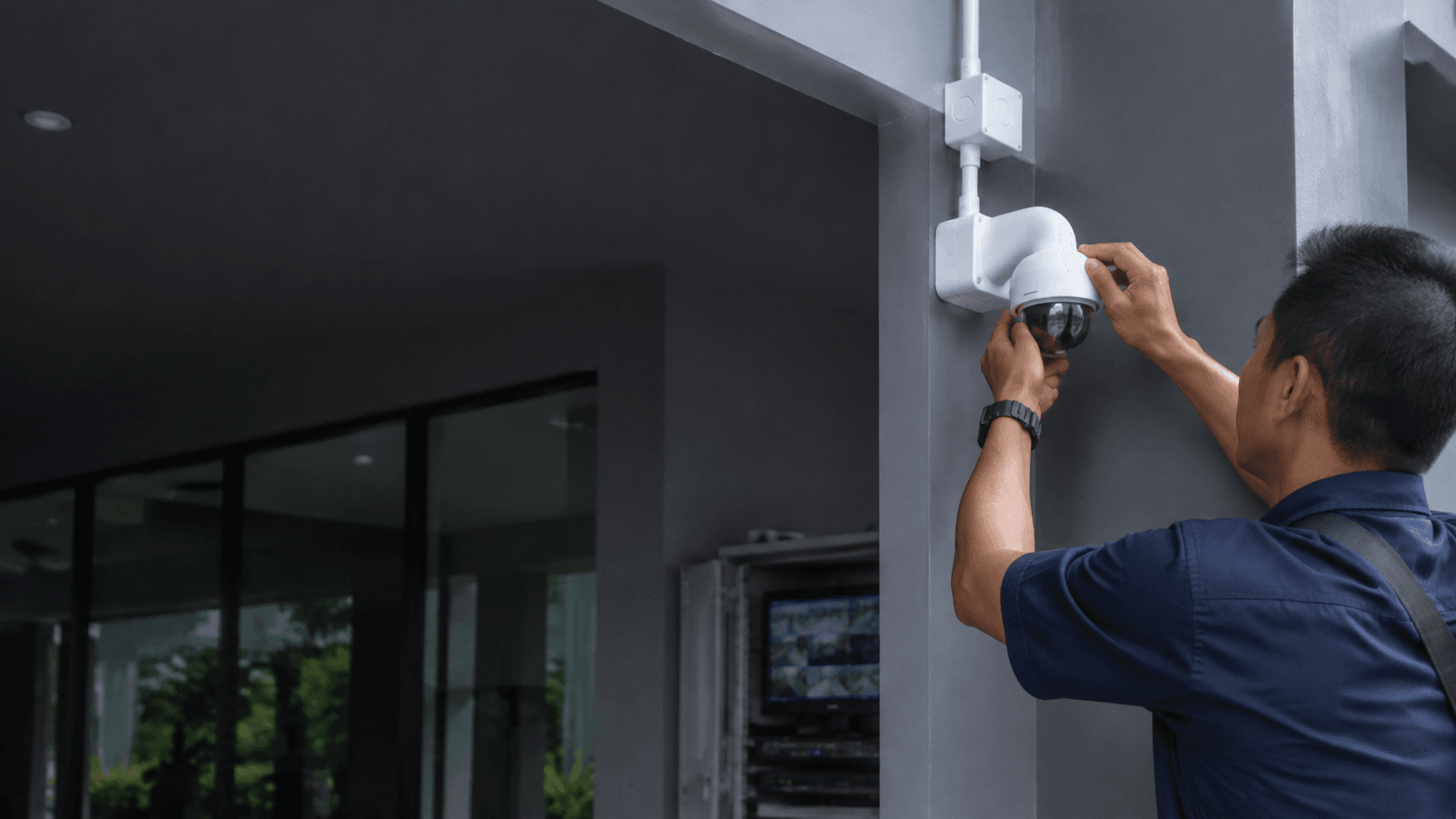
Hardware choice is only part of a working system. Eyonic Sdn Bhd, a security system supplier in Sarawak, plans, supplies, and installs monitoring systems with camera placement, recording, and remote viewing for homes, offices, shops, and industrial sites. The company's installation process runs through site survey, system proposal, installation, and handover, which is the sequence that catches cabling constraints and lighting problems before hardware is fixed in place.
Completed work includes the Kuching Immigration Office, where the focus was arrival flow, staff areas, visitor movement, and dependable daily operation, and KTA Sarawak Sdn Bhd, an engineering consultancy office in Kuching where the requirements covered staff movement, visitor handling, tidy cabling, and clearer daily site control. Both are the kind of mid-sized site where a value-oriented IP range is a reasonable starting point.
Making an Informed Choice About
The range is a credible fit when the site is small to medium, network cabling is feasible, and the requirement is straightforward recording with remote viewing. It is a weaker fit when the site needs varifocal flexibility, extensive analytics, or integration with an existing system of another brand, because those requirements push toward the professional tier or toward careful model-by-model verification.
Two checks reduce risk before committing. First, confirm the exact model codes against the site's resolution and lens needs rather than choosing by series name. Second, confirm the recorder's channel count, PoE ports, and drive bays against the camera count and retention target, since those three numbers are independent and all three bind.
For sites in Sarawak, the practical next step is a site survey that establishes camera positions, cable routes, and lighting conditions before hardware is specified. Sharing the location, property type, and required system with Eyonic on WhatsApp at +60 11-5111 7959 is one way to start that process.