
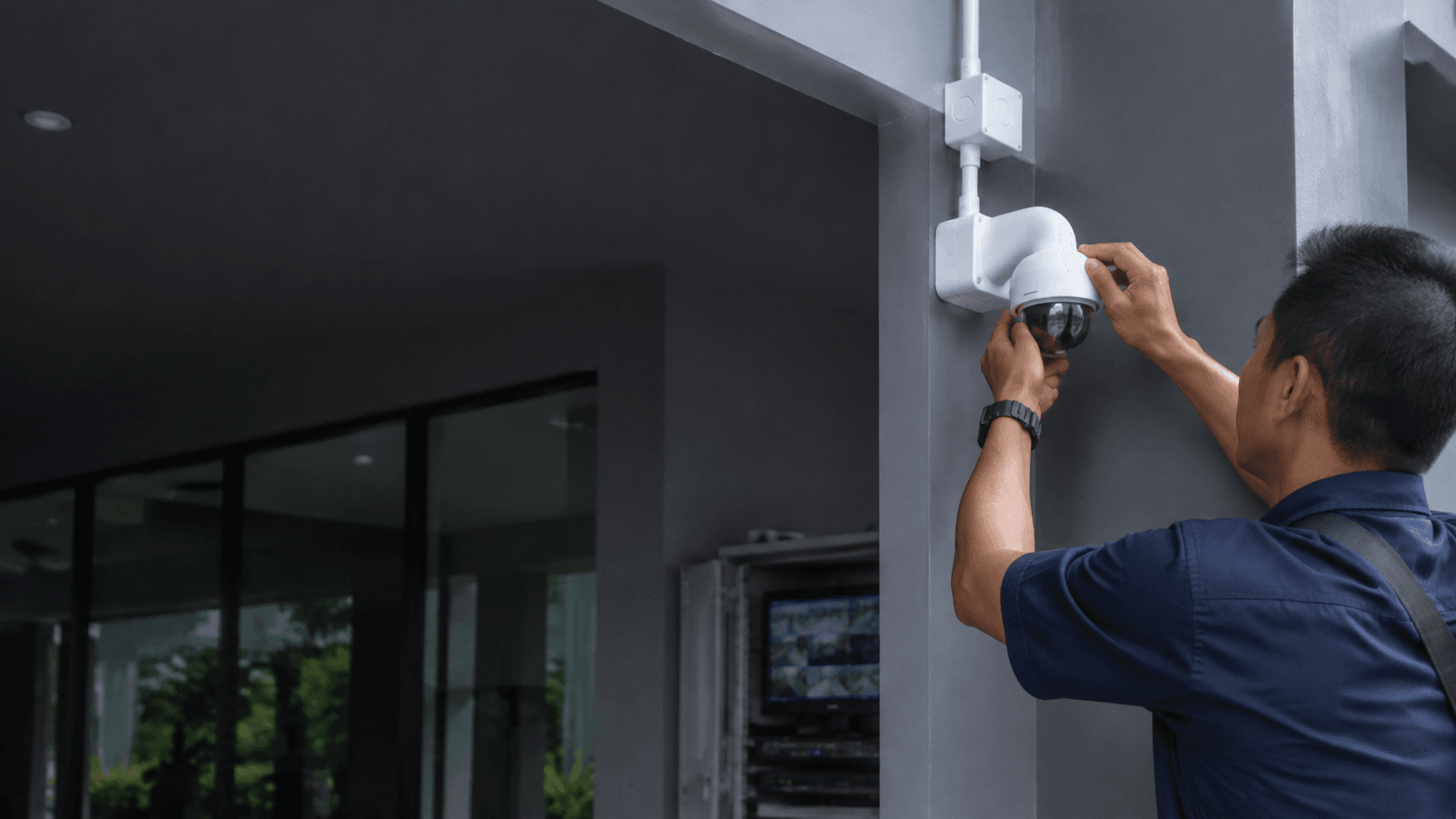
Both routes pair cameras with a monitoring plan, and the choice between them shapes who installs the equipment, what the property owner supplies, and how the monthly cost is structured. The sections below cover what a camera package contains, how the two routes differ, what to check before confirming camera positions, and which questions to settle on cost and contract terms.
Adt Packages With Cameras. Two Platform Routes
ADT's camera offering splits into two distinct platforms. The professionally installed route uses Google Nest cameras and requires an ADT technician to handle setup. The self-setup route uses ADT-branded cameras that arrive ready for the property owner to mount and connect.
The two routes are not interchangeable mid-contract. Equipment, app experience, and monitoring tiers differ between them, so the platform decision comes before camera count or placement. A reader comparing ADT packages with cameras should treat the platform choice as the first decision, not the last.
Neither route is a single fixed bundle. Camera count, indoor versus outdoor mix, and whether a doorbell camera is included all vary by package tier, so the equipment list should be confirmed in writing before installation is scheduled.
What a Camera Package Usually Contains
A camera-inclusive package typically combines three elements: the cameras themselves, a hub or base station that connects them to the monitoring service, and a subscription tier that governs recording, storage, and remote viewing.
Cameras are usually sold as indoor units, outdoor units, or a doorbell camera. Outdoor units generally need weather-rated housing and a mounting point with a clear sightline. Doorbell cameras replace or supplement an existing doorbell and depend on the wiring or battery arrangement at the door.
The hub connects cameras to the wider security system, which may also include door and window sensors, motion detectors, and a siren. A camera package that sits inside a broader security system shares one app and one monitoring plan rather than running as a separate system.
Storage and remote viewing are subscription-dependent on most camera platforms. Without an active plan, cameras may still record locally or to a memory card, but cloud storage, video history, and app-based playback are typically tied to the monitoring tier. That distinction matters when comparing a camera package against a standalone CCTV setup, where recording often sits on a local recorder with no recurring fee.
Professional Install Route Versus Self-Setup Route
The professional route suits properties where cabling, mounting height, and power access need planning. The self-setup route suits renters, small premises, and anyone willing to handle mounting and app configuration directly.
| Route | Who installs | What the property owner supplies |
|---|---|---|
| Professional install | ADT technician | Access to the property, mounting locations, and power or network points |
| Self-setup | Property owner | Mounting tools, a stable Wi-Fi network, and time for app configuration |
The professional route carries an installation cost and a scheduled visit. The self-setup route removes that cost but shifts the labour and the risk of a poorly placed camera onto the property owner. A camera mounted too high, angled into a light source, or pointed at a blank wall produces footage that is technically recorded but practically useless.
Self-setup also depends on network quality. Cameras that stream to the cloud need consistent upload bandwidth; a weak signal at the mounting point shows up as dropped footage rather than a clear error message.
Camera Placement and Lighting Checks Before Confirming
Placement decides whether a camera package delivers usable footage. The checks below follow the same sequence used for CCTV installation work, where a site survey and system proposal come before any drilling or mounting.
- Survey the site and identify entry points, walkways, and areas where movement needs to be captured.
- Check actual lighting conditions at each proposed position, including how the scene looks after dark.
- Confirm camera positions against the survey findings and adjust for glare, obstructions, and coverage gaps.
- Install and configure the cameras, including recording settings and remote viewing access.
- Hand over the system with a walkthrough of live view, playback, and alert settings.
Lighting is the step most often skipped. A position that looks clear in daylight can face a streetlight, a reflective surface, or a dark corner that defeats the camera at night. Checking the actual lighting conditions at each position before confirming placement avoids a re-mount later.
Coverage gaps are the other common failure. Two cameras aimed at the same doorway leave a side path unwatched, while a single camera covering too wide an area captures detail too small to identify anyone. The survey stage exists to catch both problems before equipment is fixed in place.
Costs, Monitoring and Contract Terms to Compare
Camera package cost has three parts: equipment, installation, and the recurring monitoring fee. Comparing only the headline equipment price hides the monthly commitment, which usually runs for the length of the contract.
Contract length is the term most worth reading closely. A lower monthly fee tied to a longer term can cost more overall than a higher fee on a shorter commitment, and early termination terms determine what happens if the property changes or the system no longer fits.
Monitoring tiers differ in what they include. Basic tiers typically cover alarm monitoring, while camera features such as cloud video storage, extended video history, and video verification sit in higher tiers. Video verification, where a monitoring centre checks camera footage before dispatching a response, is a feature worth confirming explicitly rather than assuming it is included.
Equipment ownership is a separate question from monitoring. Some packages include equipment in the monthly fee, while others sell equipment outright and charge monitoring separately. The answer affects both the upfront cost and what happens to the hardware at the end of the contract.
For readers in Malaysia weighing a camera package against a locally installed CCTV system, the comparison usually comes down to recurring cost versus local support. A subscription-based camera package bundles monitoring and cloud storage into one monthly figure. A locally supplied and installed CCTV system typically carries a one-time equipment and installation cost, with recording held on a local recorder and no monthly monitoring fee unless one is added separately.
Local installation also matters for service response. A system installed by a supplier within reach of the property can be serviced, adjusted, or expanded without waiting on a remote support queue. Eyonic, a security system supplier based in Sarawak, handles planning, supply, and installation for homes, offices, shops, and industrial sites, with a documented process covering site survey, system proposal, installation, and handover. The company's project work includes the Kuching Immigration Office, where the focus was arrival flow, staff areas, visitor movement, and dependable daily operation, and KTA Sarawak Sdn Bhd, an office setup supporting staff movement, visitor handling, and tidy cabling.
For a like-for-like starting point, Eyonic's published package pricing lists a Hikvision CCTV package at RM 1,599, covering camera supply and setup, basic recording configuration, and mobile viewing handover. An alarm system package and an autogate package are listed at the same RM 1,599 figure. These are local supply-and-install packages rather than subscription monitoring plans, so they suit a property that wants camera coverage without an ongoing monitoring commitment.
Choosing a Package for a Malaysian Home or Business
The deciding factors are usually property type, whether anyone is on site to respond to alerts, and how much recurring cost the owner wants to carry.
A home that is empty during working hours benefits from remote viewing and alerting, which both routes provide. A small business with staff on site may place more value on local recording and a system that can be expanded as the premises changes. An office handling visitor movement needs coverage of entrances and reception rather than wide perimeter sweeps.
Where local installation and support carry weight, a supplier within reach of the property is the practical choice, since camera placement, lighting checks, and later adjustments all depend on someone being able to attend the site. Where the priority is a bundled monitoring service with cloud storage, a subscription camera package fits that model.
Before confirming any package, the equipment list, camera count and types, monitoring tier, contract length, and termination terms should all be in writing. For readers who want a local assessment of camera placement and lighting at a specific property, Eyonic can be reached on WhatsApp at +60 11-5111 7959 with the property location, type, and required system.