
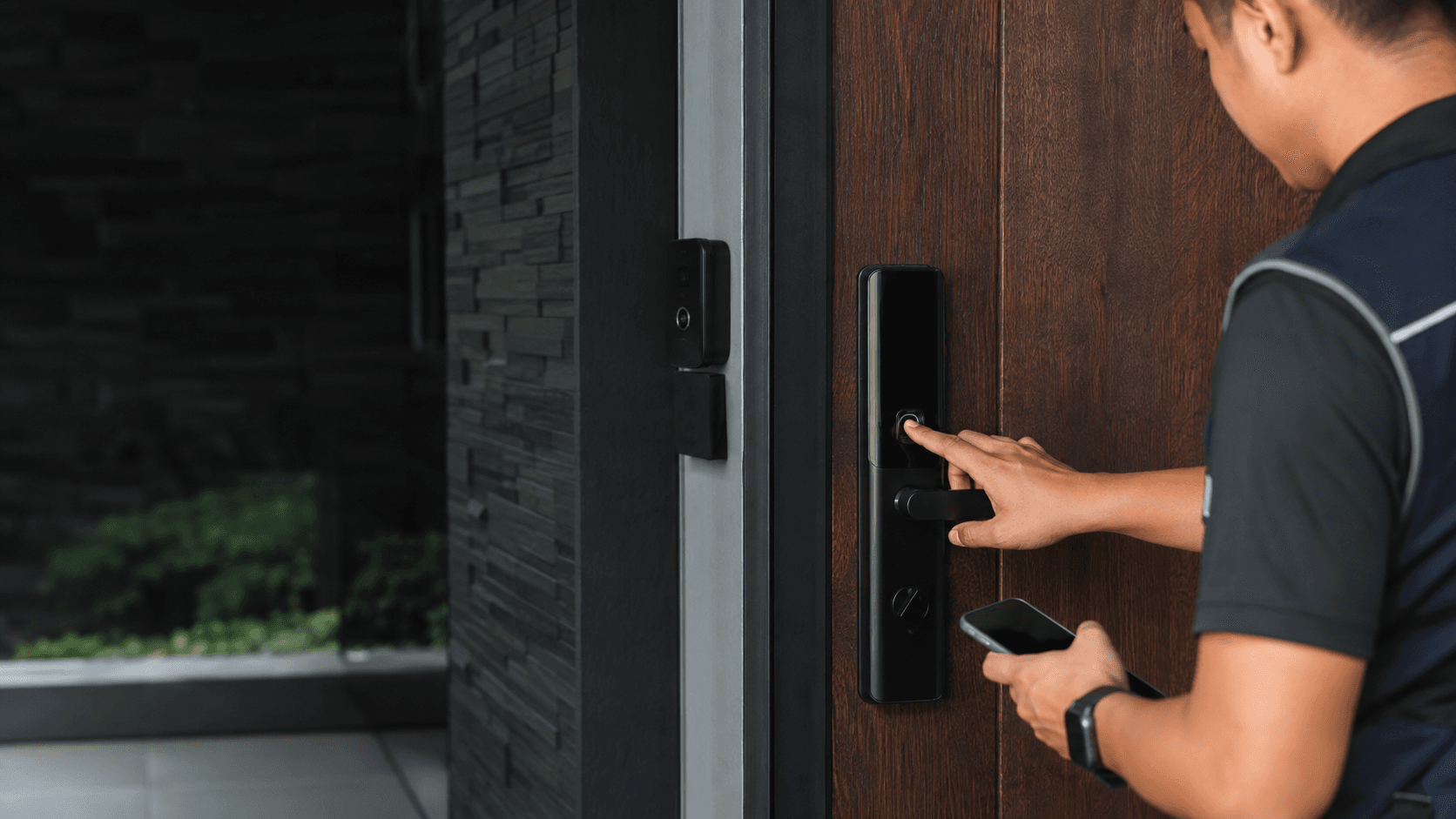
That single idea drives most landlord lock decisions. A rental unit changes hands, a key goes missing, or a contractor needs temporary access, and the question becomes how quickly and cheaply the cylinder can be reset. Kwikset's property manager material describes re-keying in seconds and pairs that with two-cylinder key control deadbolts that give a master key plus unique tenant keys. Those are the two supported pillars behind the Kwikset Landlord Locks conversation.
Malaysian landlords and property managers face the same turnover arithmetic as landlords elsewhere, but with local constraints on door thickness, gate configuration, and who actually carries out the installation. The sections below work through what the category offers, how the three common keying approaches differ, and what must be checked on site before any order is placed.
Kwikset Landlord Locks. What Landlords Are Actually Choosing
Landlords researching Kwikset Landlord Locks are usually not shopping for a single lock. They are shopping for a repeatable system that survives tenancy changes without a locksmith visit every time.
Kwikset's own property manager page frames the pitch around three things: fast re-keying, key control through a master key arrangement, and keyless entry convenience for units where handing over a physical key is impractical. The page names SmartKey Security, two-cylinder Key Control Deadbolts, and the SmartCode 915 electronic deadbolt as the products carrying that message.
What that means in practice is a decision between mechanical key control and electronic access. A mechanical deadbolt with a resettable cylinder keeps the door hardware simple and the key handover familiar. An electronic deadbolt removes the physical key from the tenant side entirely and moves access control into codes and permissions.
Neither approach is automatically better. The choice depends on how many units are managed, how often tenants turn over, whether the property has reliable power and network coverage at the door, and whether a backup entry method exists when a battery dies or a code is forgotten.
Why Key Control Matters More Than Lock Brand at Turnover
Key control is the practical measure of how much a lock costs over its life, not what it costs at purchase.
A conventional deadbolt requires either a new cylinder or a locksmith visit each time a key needs to be retired. That cost repeats at every turnover and every lost key. A lock with a resettable cylinder collapses that into a short manual procedure using a reset tool, which is the mechanism Kwikset markets under SmartKey Security.
A master key system changes the economics differently. One master key opens every unit in a portfolio, while each tenant holds a key that opens only their own door. That structure suits landlords managing several units in one building or a cluster of nearby properties, because a single keyring covers routine inspections and maintenance visits.
The trade-off is concentration of risk. A master key that is lost or copied compromises every door it opens, so master key handling discipline matters as much as the lock hardware itself. Where a portfolio is large or spread across sites, that discipline is harder to maintain than it looks.
Electronic access shifts the problem again. Codes can be issued, expired, and revoked without any physical key changing hands, which removes the lost-key scenario almost entirely. The cost is dependence on batteries, and on a documented backup method for the day the electronics fail or the tenant is locked out.
Kwikset Landlord Locks Options Landlords Compare
Three broad approaches appear repeatedly in landlord lock discussions: mechanical re-keyable deadbolts, keyed-alike or master-keyed mechanical sets, and electronic or smart deadbolts.
Mechanical re-keyable deadbolts keep the door's existing footprint in most cases and require no power. They suit landlords who want the lowest ongoing complexity and who are comfortable with a physical key handover at the start of each tenancy.
Keyed-alike and master-keyed sets suit portfolios where one key should open several doors. They reduce the number of keys a landlord carries and simplify maintenance access, at the cost of the concentration risk described above.
Electronic deadbolts suit short-stay arrangements, units with frequent contractor access, and situations where issuing and revoking codes is faster than meeting a tenant to hand over a key. They require a plan for battery replacement and a backup entry route.
Eyonic, a Sarawak-based security system supplier, notes in its smart lock review material that smart locks work best when door condition, user roles, and backup method are reviewed before installation, and that for business use the choice between a standalone smart lock and an access control panel should be checked first. That framing applies directly to rental units, where the door is often older than the lock being considered.
Re-Keying Versus Keyed-Alike Versus Master Key Setups
The table below contrasts the three approaches on the attributes that matter at turnover. Cells are left blank where no supplied evidence supports a specific claim.
| Approach | Effort at turnover | Key control | Handling multiple units |
|---|---|---|---|
| Re-keying a resettable cylinder | Short manual reset with a reset tool | Old key stops working once reset | Repeated per unit |
| Keyed-alike sets | No change unless a key is retired | One key opens the grouped doors | Suits small clusters |
| Master key system | No change unless a key is retired | Master key plus unique tenant keys | Suits larger portfolios |
| Electronic or smart deadbolt | Code issued or revoked remotely | Access managed by code and permission | Scales with code management |
Re-keying is the cheapest per event but the most repetitive. Keyed-alike and master key setups front-load the planning and then run quietly until a key is compromised. Electronic access front-loads the configuration and then depends on battery and network reliability.
A common mistake is mixing approaches across one property without documenting which key opens what. A unit on a master key system sitting next to a unit on a standalone cylinder creates exactly the confusion the system was meant to remove.
Door, Gate and Access Conditions to Check Before Buying
Lock specifications are only half the decision. The door decides the other half.
Door thickness, backset, and the existing bore hole determine whether a replacement deadbolt fits without modification. Older wooden doors, metal grille doors, and gate-mounted locks each present different constraints, and a lock that fits one will not necessarily fit another.
Gate and perimeter access deserve separate attention. A rental property with a gate, a grille door, and a main door has three separate access points, and key control only works if all three are considered together. A master key plan that covers the main door but not the gate leaves a gap.
Fire door requirements are a further constraint. Locks fitted to fire-rated doors must not compromise the door's rating, and this is a specification question for the door supplier or the building's requirements rather than something a lock listing answers.
Power and network availability at the door matter for any electronic option. A unit with no nearby power and weak wireless coverage at the door will behave differently from one with both, and that difference shows up in daily use rather than at installation.
Eyonic's own installation process begins with a site survey before any proposal is written, which reflects the same principle: the door and the site are assessed before the hardware is specified.
What to Confirm With a Local Installer Before Ordering
Several things cannot be settled from a product page, and they are worth resolving before any order is placed.
- Measure the door thickness and backset on every door that will receive a lock, and note the existing bore diameter.
- Confirm whether the door is fire-rated and whether the building imposes any restriction on lock replacement.
- List every access point on the property, including gates and grille doors, so key control covers all of them.
- Decide the keying structure in advance: standalone per unit, keyed-alike groups, or a master key system.
- For any electronic option, check power availability and wireless signal strength at the door position.
- Agree the backup entry method before installation, covering battery failure, lost codes, and lockouts.
- Confirm local availability, warranty terms, and who carries out the installation and any future service.
Local availability and warranty coverage for Kwikset Landlord Locks in Malaysia are not established by the product documentation alone, so those points need direct confirmation from a supplier or distributor before committing to a multi-unit rollout.
Installation capability matters as much as the product. A lock fitted to a misaligned door will bind, wear, and generate callbacks regardless of how good the cylinder is. Where a property already has CCTV, alarm, or intercom systems, coordinating the lock work with the existing setup avoids a second visit and keeps the access plan coherent.
For landlords in Sarawak weighing lock changes alongside wider property security work, Eyonic handles site survey, system proposal, installation, and handover, and can be reached on WhatsApp at +60 11-5111 7959 with the property location, property type, and required system.
The practical conclusion is that Kwikset Landlord Locks are one option within a decision that is really about key control strategy. The lock brand matters less than whether the chosen approach matches the number of units, the turnover rate, the door conditions on site, and the discipline available for handling master keys or access codes.