
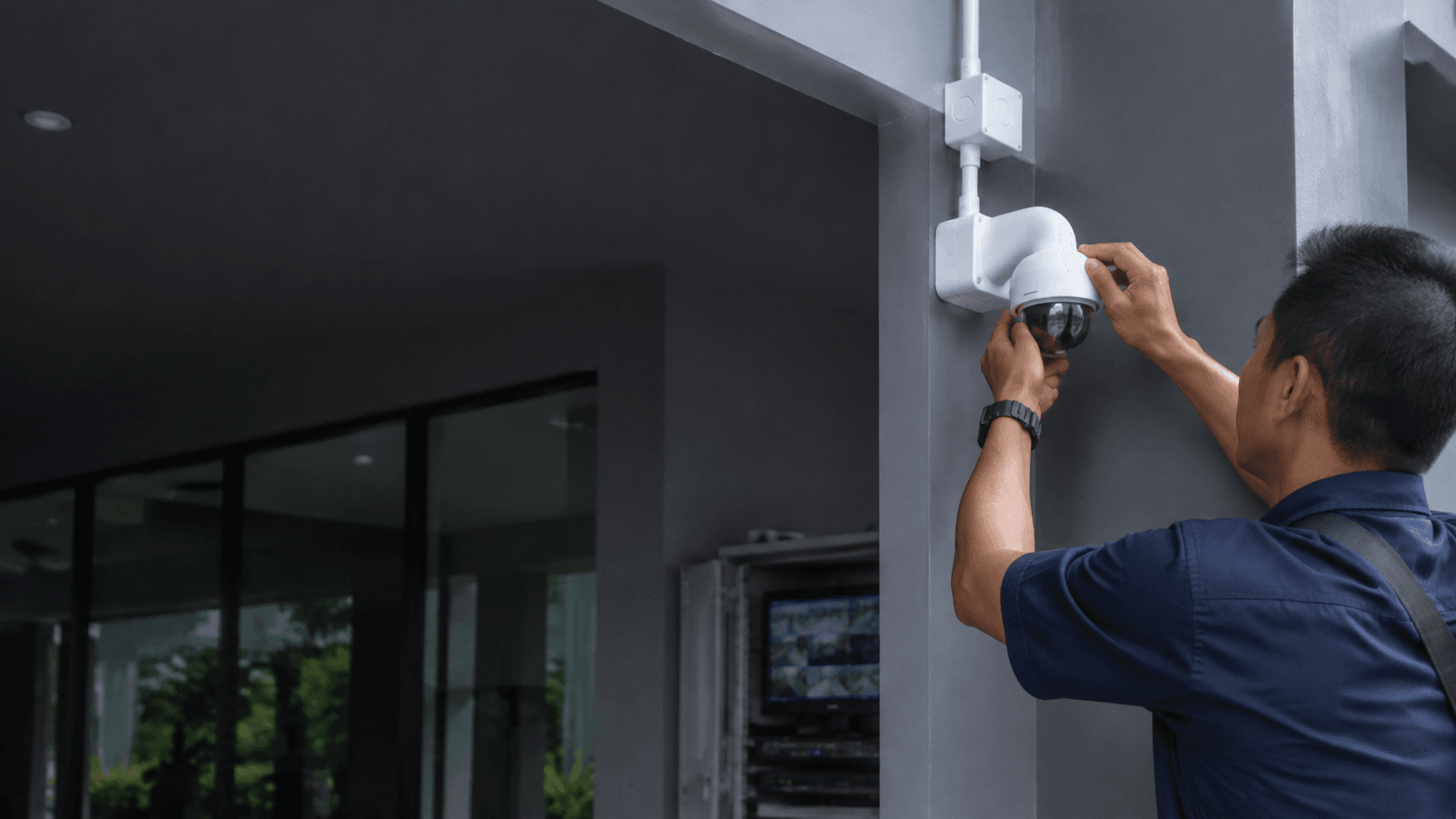
The term covers two different things that are often mixed together. One is a dedicated appliance shipped with a Linux-based operating system and vendor video management software already installed. The other is general-purpose Linux NVR software installed on a server, mini PC, or single-board computer that the operator supplies. Both record streams from IP cameras over the network, but they differ sharply in who controls updates, hardware choice, and troubleshooting.
Most Linux NVR software connects to cameras through ONVIF for discovery and configuration and RTSP for the video stream itself. That pairing is what allows a recorder to pull footage from cameras it was never specifically written for, provided the camera exposes a standards-compliant stream.
Nvr Linux software options seen in current results
Current search results for this topic cluster around a small set of named projects rather than a long list. Frigate is presented as an NVR with real-time local object detection for IP cameras, with processing kept on the local device and integration points for Home Assistant, MQTT, and similar automation platforms. LightNVR is published as a lightweight network video recorder written in C with a modern JavaScript front end, and its documentation covers Docker deployment, ONVIF motion events, WebRTC and HLS streaming, and object detection zones.
Xeoma appears in a long-form review describing installation on a Linux server, a Linux desktop client, mobile apps, and light resource use. ZoneMinder, Shinobi, and Blue Iris are named in that same review as alternatives the author considered. A roundup of free and open-source NVR solutions lists OS-NVR, ZoneMinder, Shinobi, Camera.ui, Viseron, Frigate, Moonfire, Motion, and others. A commercial appliance line, the VIGIL 2U Series, is marketed as a Linux NVR solution pre-configured with vendor VMS software.
Two patterns matter when reading that list. First, open-source projects and commercial appliances sit in the same results but serve different buyers. Second, several of the projects are documented primarily for Docker deployment, which changes what the host operating system needs to provide.
Open-source projects versus vendor appliances
An open-source project typically expects the operator to choose hardware, install an operating system, and manage updates. A vendor appliance arrives configured, with support attached to the purchase. The trade-off is control against responsibility: the open path allows hardware reuse and avoids licence fees, while the appliance path reduces the number of decisions and puts a support contact behind failures.
What the evidence does not establish
No verified technical specifications, camera-count figures, throughput numbers, or licence prices for any specific Linux NVR build were available for this article. Compatibility lists confirming which camera brands work with a given platform were also unavailable. Those details belong in the vendor's own documentation for the exact version under consideration, not in a general overview.
Hardware and camera checks before choosing Nvr Linux
The practical checks below follow the order that avoids wasted purchases. Each one can eliminate a candidate before money is spent on storage or a server.
- Confirm the camera exposes RTSP and, where discovery is wanted, ONVIF, and note the video codec each camera streams.
- Check the recorder's documented operating system support and whether installation is native or container-based.
- Match the host hardware to the number of camera streams and the resolution being recorded, using the project's own requirements.
- Size storage from retention days, camera count, resolution, and frame rate rather than from a rule of thumb.
- Verify how remote viewing is delivered and whether it depends on a cloud relay, a port forward, or a virtual private network.
- Decide who performs updates and what happens to recordings during a failed upgrade.
Camera compatibility is the check most likely to be skipped. A camera that streams H.265 may behave differently from one streaming H.264, and a recorder that handles one codec well may need transcoding for the other, which consumes processor time. Motion events delivered over ONVIF also vary by manufacturer, so a recorder that relies on camera-side events can behave inconsistently across a mixed-brand installation.
Hardware fit and its limits
Lightweight projects are documented for modest hardware, including single-board computers, while object detection workloads lean on additional processing. Where detection runs locally, the accelerator available on the host determines how many cameras can be analysed at once. That is a constraint to confirm against the project's documentation rather than assume from a product description.
Camera-side settings that change outcomes
Resolution, frame rate, and codec settings on the camera directly affect storage growth and processor load on the recorder. Lowering frame rate on cameras that only need presence detection reduces both. Where a site needs identification at a specific point, such as an entrance, that camera can keep higher settings while others are reduced.
Recording storage and remote viewing on
Recording behaviour is usually defined by schedule and trigger. Continuous recording captures everything and consumes the most space. Motion-triggered recording saves space but depends on the trigger being reliable, which is where camera-side ONVIF events and recorder-side detection diverge. Object detection adds a filter so that movement from shadows, rain, or foliage produces fewer stored events, and detection zones restrict analysis to defined areas of the frame.
Storage planning starts with a simple relationship: more cameras, higher resolution, higher frame rate, and longer retention all increase the required capacity. Retention requirements often come from an operational or contractual need rather than a technical one, so the retention period should be agreed before storage is purchased. Recording to a single disk without redundancy means a disk failure removes footage, which is a risk decision rather than a software limitation.
Remote viewing is where Linux NVR setups differ most in daily experience. Some projects provide a web interface plus mobile apps, others rely on a browser interface, and some integrate with home automation platforms for notifications. Latency varies by streaming method, with WebRTC generally delivering lower latency than segmented streaming approaches. Where remote access is exposed to the internet, the security of that exposure deserves the same attention as the cameras themselves.
Retention and storage trade offs
Extending retention is usually cheaper through storage than through reduced image quality, but only up to the point where the recorder's storage interface becomes the limit. Reviewing actual footage needs, such as how far back an incident is typically investigated, prevents overbuilding.
Remote access and its constraints
Remote viewing depends on the upload speed at the site, not the download speed quoted on a consumer plan. A site with limited upload bandwidth will struggle to serve multiple simultaneous remote streams regardless of how capable the recorder is.
Where fits in a Malaysia installation
In Malaysian installations, the practical questions are usually about maintenance and support rather than about the operating system itself. A Linux-based recorder that nobody on site can update becomes a liability if it is left unpatched, and a recorder that depends on a cloud service becomes a liability if that service changes terms or becomes unreachable.
Eyonic's CCTV work in Sarawak follows a sequence of site survey, system proposal, installation, and handover, and that sequence applies to recorder selection as much as to cameras. A survey establishes camera positions, cabling routes, and the recording and viewing expectations before equipment is chosen. Eyonic's completed work for the Kuching Immigration Office focused on arrival flow, staff areas, visitor movement, and dependable daily operation, which illustrates how recording priorities follow from how a site is actually used rather than from a specification sheet.
Camera placement decisions interact with recorder settings. Eyonic recommends checking actual lighting conditions before confirming placement for ColorVu-style cameras, and the same principle applies to detection zones: a zone drawn on a floor plan may not match what the camera sees once installed.
Support and maintenance expectations
An open-source recorder places update responsibility on the operator or the installing contractor. A vendor appliance places it on the vendor. Either way, the question to settle before purchase is who responds when recording stops, and how quickly.
Network and power realities
Recorders, cameras, and network switches all depend on stable power. Where outages are frequent, an uninterruptible power supply for the recorder and network equipment protects both recordings and remote access. Cabling quality and switch capacity also affect whether cameras stream reliably at the chosen settings.
What to confirm before committing to
Before committing, confirm the camera models and their stream formats, the recorder's documented hardware requirements, the storage plan and retention target, the remote viewing method, and who owns updates and troubleshooting. Confirm also whether the chosen platform is actively maintained, since an abandoned project leaves security fixes unissued.
Where a site needs predictable support and a single point of contact, a vendor appliance or a professionally installed system is usually the lower-risk choice. Where the operator already runs Linux infrastructure and wants to reuse hardware, an open-source recorder can fit well, provided the compatibility and maintenance questions are answered first.
Eyonic plans, supplies, and installs CCTV systems with camera placement, recording, and remote viewing for homes, offices, shops, and industrial sites, and handles NVR setup as part of that work. Share your location, property type and required system with Eyonic on WhatsApp at +60 11-5111 7959 for the next practical step.