
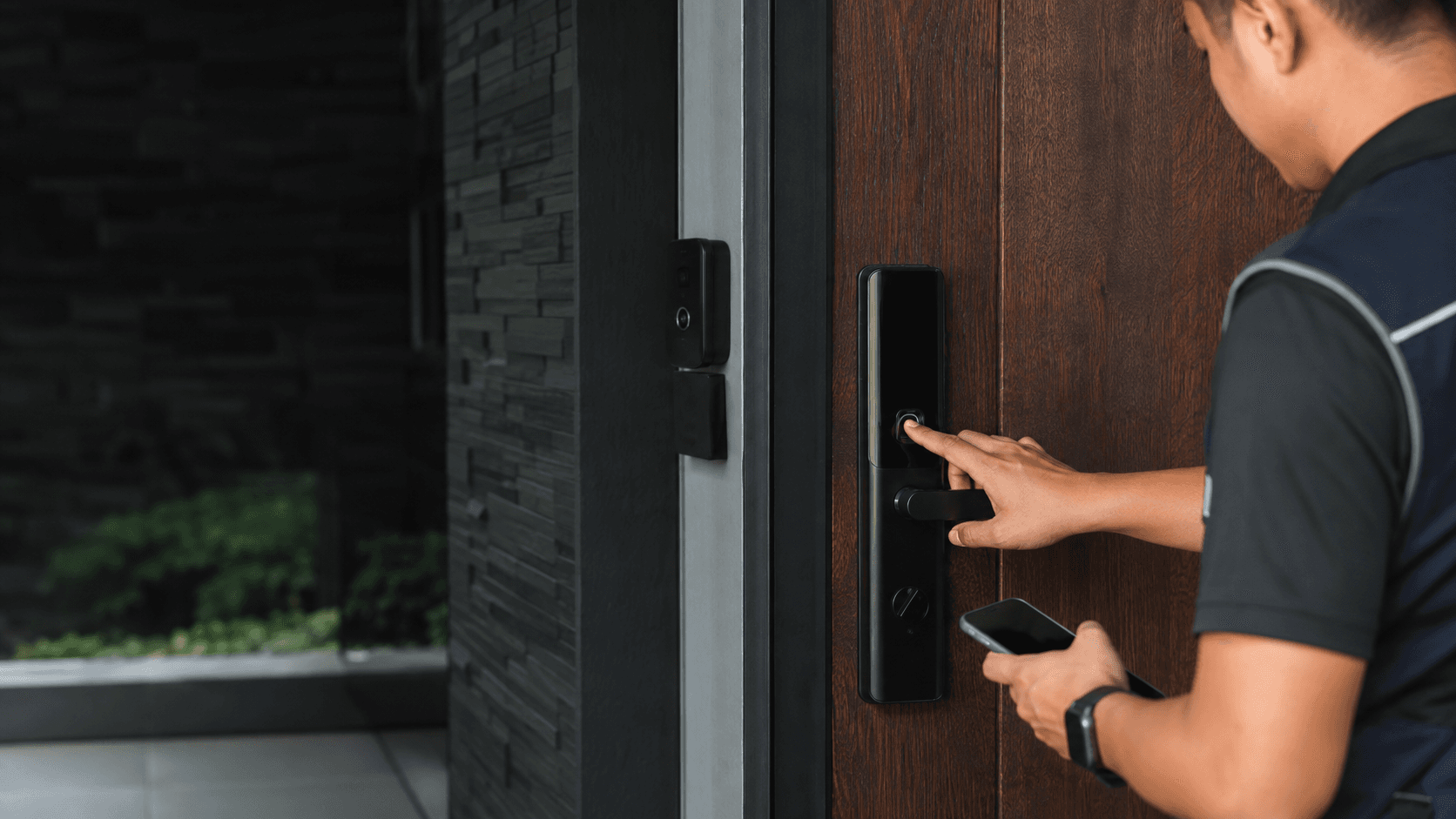
What Is a Keyless Entry Door Lock?
A keyless entry door lock is an electronic locking mechanism that grants access through credentials other than a physical key. Common credential types include numeric PIN codes, fingerprint biometrics, RFID cards, mobile apps, and remote fobs. The lock body replaces the standard deadbolt or handleset on the door, and the electronic components control the locking bolt when a valid credential is presented. These locks fall into two broad categories. Standalone units manage access locally on the device itself, storing user codes and fingerprints without network connections. Smart locks add Wi-Fi, Bluetooth, or Zigbee connectivity, enabling remote locking, activity logs, and integration with home automation systems. For business use, an access-control panel with multiple readers often makes more sense than a standalone residential unit, since user permissions and audit trails become more complex.Types of Keyless Entry Door Locks
The Malaysian market offers several distinct formats, each with different trade-offs for installation and daily use.Keypad and Touchscreen Locks
Keypad locks are the most straightforward keyless entry door lock option. Users enter a numeric code on a physical keypad or touchscreen to unlock the door. These units are generally affordable, reliable, and easy to manage, making them a strong fit for rental properties, service entrances, and homes where multiple users need access. The main drawback is that codes can be observed over shoulders, and frequent users may share codes informally, reducing security over time.Fingerprint and Biometric Locks
Biometric locks read a fingerprint to grant access, offering faster entry than typing a code and eliminating the need to remember anything. These units suit homeowners who want convenience and a higher perceived security level. However, fingerprint readers can struggle with wet, oily, or very dry fingers, which matters in Malaysia's humid climate. Sensor quality varies widely between budget and premium models, and a poor sensor becomes a daily frustration rather than a convenience.Card and Fob Locks
Card-based locks use RFID technology, where a card or fob is tapped against the reader to unlock. Hotels and offices commonly use this format because cards are cheap to issue and easy to revoke. For residential use, cards are less common, but they work well for domestic helpers, contractors, or regular visitors who should not receive a permanent code or fingerprint registration.Smart Locks with App Control
Smart locks add remote management through a smartphone application. Owners can issue temporary digital keys, check entry logs, and lock or unlock the door from anywhere with an internet connection. These features are genuinely useful for monitoring a holiday home or managing service access. The trade-off is dependence on Wi-Fi reliability, app updates, and the security of the connected platform itself.Key Features to Compare Before Buying
Comparing a keyless entry door lock requires looking beyond the access method. The following features determine whether the unit performs reliably over years of daily use in a Malaysian setting.- Access methods supported, since a lock with only one credential type offers no fallback if that method fails.
- Connectivity options such as Bluetooth, Wi-Fi, or Zigbee, which determine remote features and smart-home integration.
- Battery life and power management, including low-battery warnings and emergency power ports for backup.
- Build quality and materials, particularly the lock body, keypad, and bolt construction for weather resistance.
- Backup entry options, including mechanical key override, external battery terminals, or emergency power connections.
Access Methods and User Management
A lock that supports multiple credential types offers practical redundancy. A fingerprint lock with a keypad backup lets a user enter by code when the sensor fails. User capacity matters too; a household may need only ten codes, while a small business might require fifty or more with individual deletion. Check how easily the lock removes a single user without resetting the entire system, since this becomes critical when an employee leaves or a tenant moves out.Connectivity and Smart Features
Connectivity transforms a basic keyless entry door lock into a smart device, but it also introduces complexity. Wi-Fi locks allow remote access and notifications but consume more battery. Bluetooth locks pair directly with a phone for local control, while Zigbee or Z-Wave versions connect through a hub for broader automation. Consider whether the lock needs to integrate with an existing alarm system or CCTV setup, since a standalone smart lock may not communicate with other security equipment.Battery Life and Power Management
Battery life varies significantly between models, from a few months to over a year depending on usage frequency and connectivity. High-traffic doors, such as office entrances, drain batteries faster than residential front doors. Look for clear low-battery warnings, ideally with enough lead time to replace cells before failure. Emergency power options, such as a 9V battery terminal on the exterior, provide a critical fallback when the main batteries die and the user is locked out.Build Quality and Weather Resistance
Malaysia's tropical climate exposes exterior locks to intense sun, heavy rain, and high humidity. A keyless entry door lock with poor weather sealing will develop keypad failures, corrosion, or internal condensation. Check the ingress protection rating and the materials used for the exterior assembly. Zinc alloy and stainless steel bodies generally withstand the climate better than plastic housings. For covered entrances, weather exposure is lower, but for fully exposed doors, weather resistance becomes a primary selection criterion.Installation and Maintenance Considerations
Installing a keyless entry door lock requires more preparation than swapping a standard deadbolt. Door thickness, existing bore holes, and edge alignment all affect whether a chosen unit fits properly. Eyonic's installation process for security systems follows a structured sequence: site survey, system proposal, installation, and handover. The same principle applies to smart lock installation, where a pre-installation assessment prevents avoidable problems.Door Compatibility and Preparation
Most keyless entry door locks are designed for standard residential doors, typically between 35mm and 55mm thick. Older Malaysian doors, particularly those with wooden cores or unusual bore patterns, may require additional drilling or adapter plates. The latch and strike plate must align correctly for the bolt to engage smoothly; a misaligned door causes the lock to jam or fail to latch, which is a common source of complaints about electronic locks. Before purchasing, measure the door thickness, backset, and cross-bore diameter, and compare these against the lock's specifications.Professional Installation vs. DIY
Some keyless entry door locks are marketed as DIY-friendly, with straightforward mounting and standard screw patterns. Others require precise drilling, wiring, or modifications to the door frame. For a main entrance lock, professional installation reduces the risk of damage to the door and ensures the lock functions reliably. Eyonic's project experience includes practical support for offices in Kuching, such as the Kuching Immigration Office and KTA Sarawak Sdn Bhd, where tidy installation and dependable daily operation were priorities. A professional installer can also advise on whether a standalone smart lock or an access-control panel is more appropriate for business use.Maintenance Routines
Electronic locks need periodic attention. Keypads accumulate grime and oils, which can affect touch sensitivity. Fingerprint sensors require regular cleaning to maintain reading accuracy. Battery contacts should be checked for corrosion, especially in humid environments. Lubricating the latch mechanism with a suitable dry lubricant prevents sticking, but using the wrong lubricant can attract dust and cause more harm. Establishing a simple maintenance schedule, such as checking batteries and cleaning sensors every few months, extends the lock's service life.Security and Backup Options
Security concerns around keyless entry door locks often focus on hacking or electronic bypass, but the practical risks are usually more mundane. Physical security of the lock body matters as much as the electronic components. A lock with a flimsy exterior housing can be pried or drilled more easily than a solid mechanical deadbolt. Look for locks with hardened steel bolts and reinforced strike plates, since these resist physical attacks.Backup Entry Methods
A keyless entry door lock without a backup entry method is a lockout risk. The most reliable backup is a mechanical key override, where a traditional key cylinder is hidden within the lock body. This provides access when batteries die, electronics fail, or a user forgets the code. Some locks omit the key override for aesthetic reasons, relying instead on external battery terminals or emergency power connections. These work only if the user has access to the required power source, which may not be available during a lockout. Eyonic's review of smart lock door access notes that these products work best when the door condition, user roles, and backup method are reviewed before installation.User Permissions and Audit Trails
For business settings, the ability to manage user permissions and review entry logs is a significant security feature. A keyless entry door lock with audit trails records who entered and when, which supports accountability and investigation after incidents. Residential users benefit from temporary codes that expire automatically, allowing domestic helpers or contractors access only during specified periods. The granularity of these controls varies between models, so matching the lock's management capabilities to the actual number of users and security requirements is essential.Cost and Professional Installation in Malaysia
Pricing for keyless entry door locks in Malaysia spans a wide range, from entry-level keypad units to premium smart locks with full connectivity. The lock itself is only part of the total cost; installation, potential door modifications, and ongoing maintenance all contribute. Eyonic's project budgets provide a reference point for professional security installations in Sarawak. The Kuching Immigration Office project, focused on arrival flow, staff areas, and dependable daily operation, carried an approximate budget of RM 12,000 to RM 28,000. The KTA Sarawak Sdn Bhd office setup, supporting staff movement and visitor handling, was estimated at RM 8,000 to RM 18,000. These figures reflect complete security system installations rather than a single lock, but they indicate the scale of professional work in the region.Budgeting for a Single Lock Installation
For a single keyless entry door lock, the cost breakdown typically includes the hardware, installation labor, and any necessary door preparation. A basic keypad lock may cost a few hundred ringgit, while a premium smart lock with fingerprint and app control can exceed RM 2,000. Installation labor varies by complexity; a straightforward replacement on a standard door is less expensive than drilling a new bore or reinforcing the door frame. Requesting a site survey before purchase helps identify hidden costs, such as non-standard door thickness or the need for additional hardware.Choosing Between Residential and Commercial Solutions
The right keyless entry door lock depends on the setting. A residential unit with a few user codes and basic backup suffices for a family home. A commercial office with dozens of employees, shift changes, and security requirements needs a more robust solution, often an access-control panel rather than a standalone lock. Eyonic's approach for business use involves checking whether a standalone smart lock or an access-control panel is more appropriate, since the management overhead and security requirements differ substantially. For a keyless entry door lock in a commercial context, consider the total cost of user management, the ability to integrate with existing security systems, and the reliability of the hardware under heavy daily use. The decision to install a keyless entry door lock in Malaysia comes down to matching the technology to the door, the users, and the environment. A well-chosen lock with proper installation and a reliable backup method delivers genuine convenience. A poorly matched unit, installed without preparation, creates frustration and security gaps. Reviewing the door condition, user roles, and backup method before installation, as Eyonic recommends, remains the most practical path to a lock that works dependably for years.