
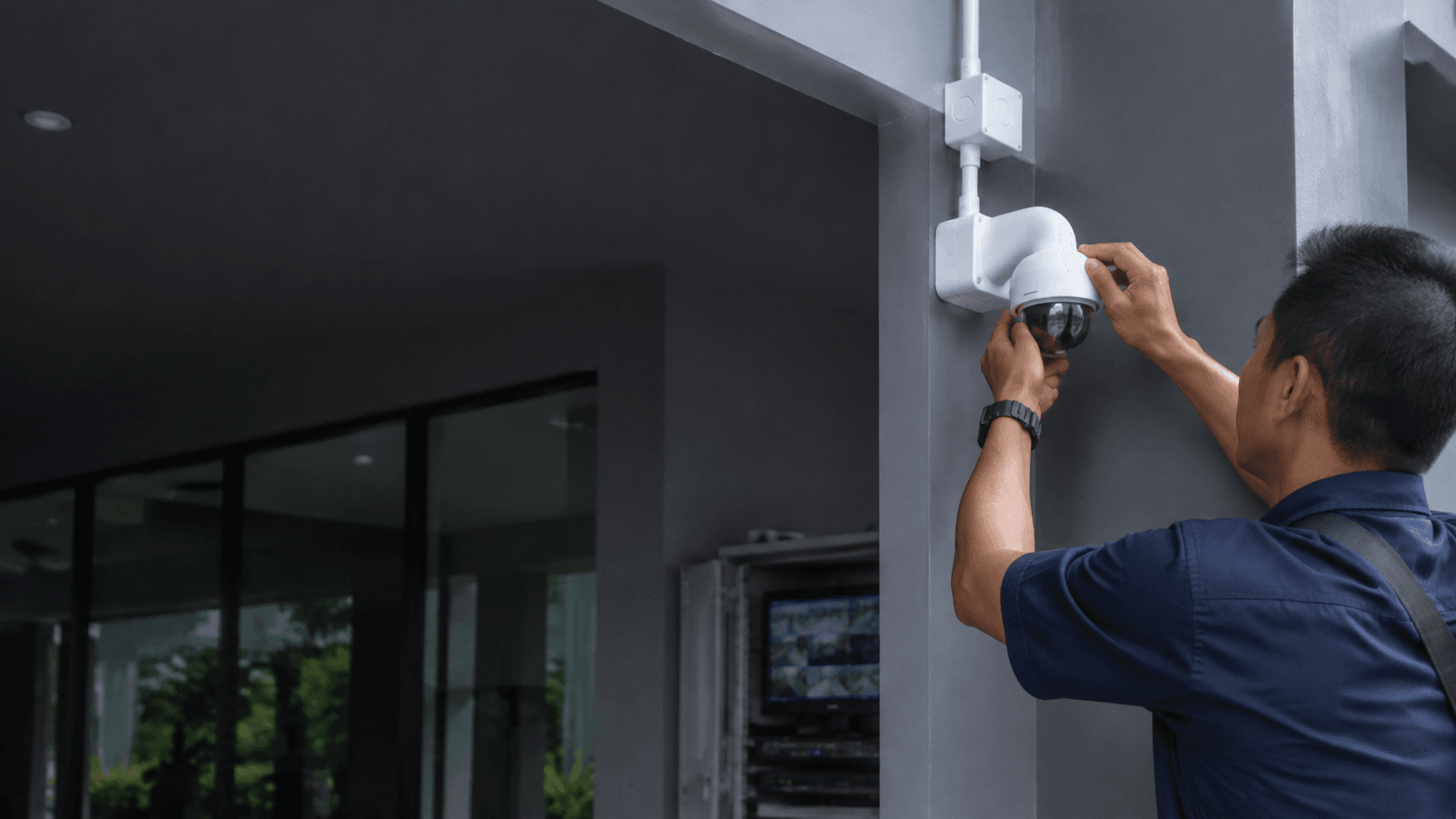
The appeal is simple. no video cable to each camera, no recorder box in a cupboard, and a phone app that shows live view and motion clips. The trade-offs are equally simple, and they matter more in Malaysia than in the marketing pages. Battery cameras sleep between events, they depend on Wi-Fi reaching the mounting point, and most useful features sit behind a subscription. This guide covers what the kit contains, how placement and power work, what to verify before buying, and where a wire-free setup fits a Malaysian home, shop, or office.
What a Blink Outdoor Camera System includes
A Blink Outdoor Camera System is a bundle, not a single device. The core parts are the outdoor cameras, a Sync Module that links them to the home network, and the Blink Home Monitor app for live view, motion alerts, and clip playback. Multi-camera packs sold by retailers typically list the camera count and the included Sync Module in the product name, which is the quickest way to confirm what arrives in the box.
Two practical points follow from that structure. First, the Sync Module is not optional in the usual setup; it is the hub the cameras talk to. Second, the system is designed for self-monitoring. Clips are viewed in the app rather than on a wall monitor, and there is no control room watching the feed.
Cameras, hub, and app
The cameras handle capture, motion detection, and night vision. The Sync Module handles the link between cameras and the network. The app handles viewing, alerts, and settings. Storage sits either in a cloud plan or on local storage attached to the module, depending on the model and the plan chosen.
What the kit does not include
Mounting hardware varies by model and pack, so the fixings for a concrete wall or a metal shopfront frame are a separate consideration. A power source is not part of a battery camera's kit because none is needed at the camera. Network coverage at the mounting point is assumed, not supplied.
How wire-free cameras are placed and powered
Wire-free means no video cable runs from the camera to a recorder. Each camera runs on its own batteries, so the mounting decision is about view, signal, and reach rather than cable routes. That freedom is real, and it changes what a site survey needs to check.
- Confirm the coverage points. entrances, gate, driveway, back door, counter, or stock area, and decide what each camera must actually show.
- Check power and signal at each position: battery condition for the camera, and Wi-Fi strength at the exact mounting height rather than at floor level.
- Mount and pair the cameras. fix each unit, then add it to the Sync Module and app so it appears in the device list.
- Test alerts and viewing before handover: walk the coverage area, trigger motion, and confirm clips arrive and play on the phone.
Signal is the constraint that catches people out. A camera mounted on a far gate post may show full bars at the front door and nothing at the post itself. Testing at the mounting point, before drilling, avoids a camera that records only when someone stands directly beneath it.
Battery behaviour and cold or hot spots
Battery cameras trade continuous recording for long battery life. They wake on motion, record a clip, and sleep again. Busy scenes drain batteries faster because the camera wakes more often, and a position facing a moving tree, a road, or a walkway with constant foot traffic will trigger far more than a quiet side entrance. Sensitivity zones and activity zones in the app exist to reduce that load.
Night vision and lighting
Night vision performance depends on how much ambient light reaches the scene. A position with a porch light, a street lamp, or shop signage nearby behaves differently from a pitch-dark back lane. Checking actual lighting conditions at the position before confirming placement is the same discipline Eyonic applies to ColorVu-style cameras, and it applies here too.
What to check before choosing a
Four checks decide whether the system suits the property: network reach, mounting surfaces, who will manage the app, and what happens when the internet drops.
Network reach comes first. A wire-free camera is only as reliable as the Wi-Fi at its mounting point, and Malaysian homes with thick walls, extended layouts, or a shop with a metal roller shutter at the front often have weak coverage exactly where a camera is most useful. Mounting surfaces come second. brick, plaster, timber, and metal frame each need different fixings, and a rented premises may restrict drilling.
App management is the third check. Someone has to own the account, respond to alerts, and manage who else can view. For a shop or office, that is a staff responsibility, not a one-off setup task. The fourth check is the internet. A cloud-dependent camera system stops delivering remote viewing when the line drops, so a site that cannot tolerate that gap needs a different design.
Subscription and storage decisions
Cloud storage plans are sold separately from the hardware, and the plan determines how long clips are kept and what features are available. Local storage through the Sync Module is an alternative on supported models. The decision is not only cost; it is also whether footage must be retained for a set period, and who can access it.
Privacy and access control
Cameras pointed at a neighbour's window, a shared corridor, or a public walkway raise issues that no app setting resolves. For business premises, the account holder list should be deliberate, and former staff should be removed when they leave.
Recording storage and app viewing
Recording is event-based by default. The camera captures a clip when motion is detected, and the clip is stored according to the chosen storage method. Live view is available on demand through the app, and two-way audio lets someone speak through a camera that supports it.
Remote viewing is the feature most buyers actually want, and it is also the one most dependent on the home internet upload speed. A slow upload makes live view stutter even when the camera and the phone are both fine. Motion alerts arrive as phone notifications, which means alert settings need tuning: too sensitive and the phone becomes noise, too loose and a real event is missed.
Where the limits show up
Wire-free battery cameras are not built for continuous 24/7 recording. A site that needs a permanent record of every minute, or that needs footage reviewed across weeks, is better served by a wired system with a recorder. That is a design difference, not a fault in either product.
Where a fits in Malaysia
The fit is a small property with reasonable Wi-Fi coverage and a need for occasional monitoring: a terrace house entrance, a small shop counter, a back door, or a rented unit where drilling and cabling are limited. Setup is within reach of a competent DIY owner, and there is no recorder to house or maintain.
The fit is weaker for larger or more demanding sites. A factory, a multi-storey office, or a premises needing continuous recording and centralised review is usually better served by a wired CCTV system with an NVR, planned around camera placement, recording, and remote viewing. Eyonic's own installation process follows that pattern: site survey, system proposal, installation, and handover. The Kuching Immigration Office project is an example of that approach applied to a public building, covering arrival flow, staff areas, visitor movement, and dependable daily operation.
Local availability, warranty terms, and support arrangements for Blink hardware in Malaysia are not confirmed by the evidence behind this article, so those points need checking with a local seller before purchase. The same applies to any comparison between Blink hardware and the Hikvision-based systems Eyonic supplies; no verified comparison data was available, so no claim is made either way.
For a property that needs a planned, wired installation rather than a self-installed wire-free kit, Eyonic covers CCTV, alarm, autogate, intercom, and Starlink work across Sarawak, with packages from RM 1,599. Share the location, property type, and required system on WhatsApp at +60 11-5111 7959 for the next practical step.