
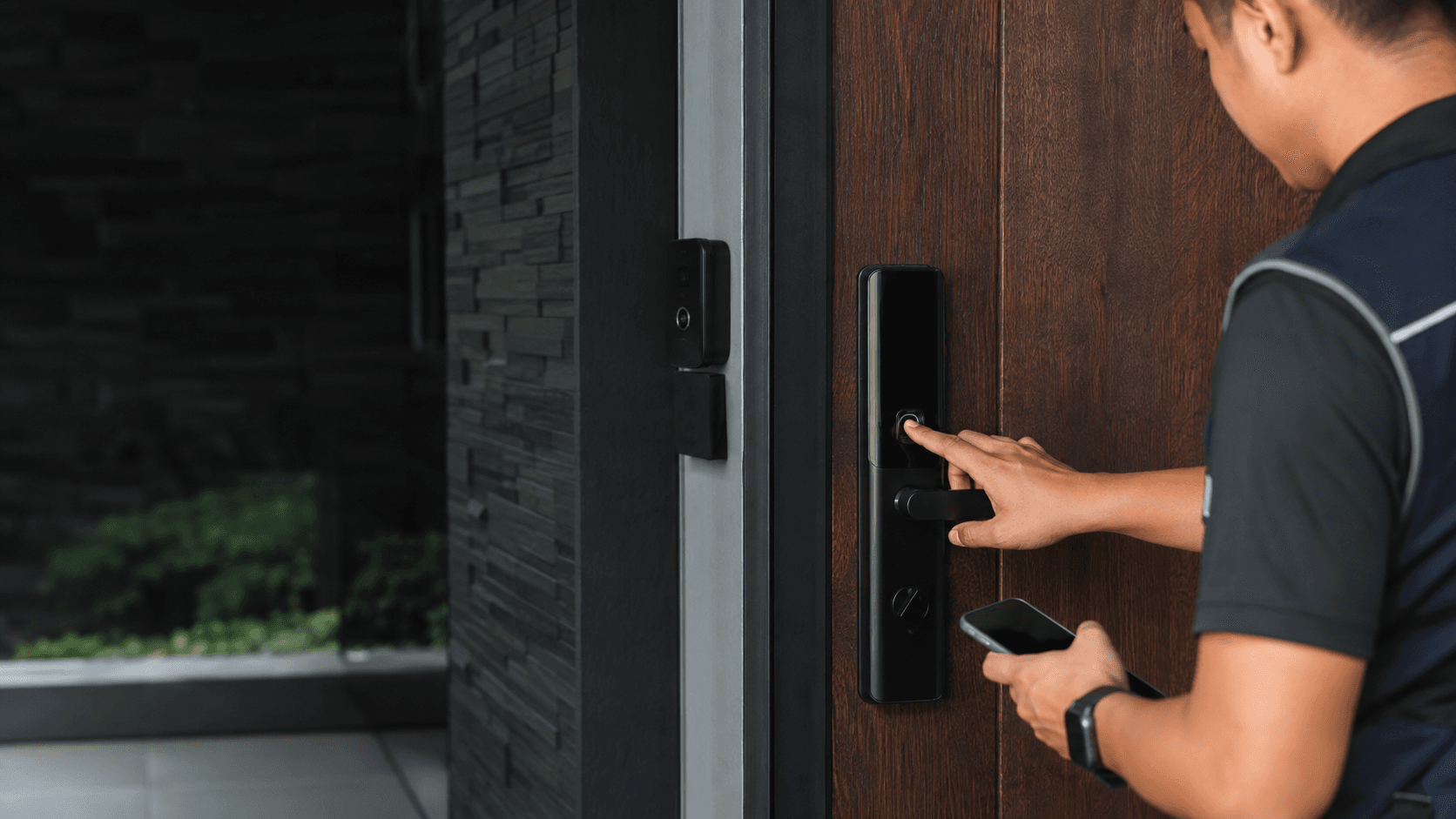
Lockly's own product page describes the accessory as the Lockly Wireless Door Sensor and lists it for compatible Lockly smart locks. The same page states that a latest version of the Secure Link Wi-Fi Hub must be present for the sensor to work. That pairing requirement is the single most important fact to confirm before buying, because a sensor without the right hub cannot deliver the status reporting it is sold for.
The practical value is narrow and specific. A smart lock knows whether its bolt is engaged. It does not always know whether the door leaf itself is standing open. A lockly door sensor closes that gap by watching the door rather than the deadbolt, so a door that is pushed shut but not locked, or unlocked but left ajar, produces a different signal from a door that is fully secured.
What a Lockly Door Sensor Reports
The sensor reports door open or closed status. Lockly's product description highlights alerts that arrive even when the lock is engaged while the door remains open, which is the scenario a deadbolt alone cannot detect. A locked bolt with an open door is a real condition in homes where someone unlocks, opens, and forgets to pull the door shut.
Status information surfaces through the Lockly Home app, the same application used to manage compatible Lockly locks. Lockly's Secure Link Wi-Fi Hub page describes Wi-Fi added for remote control and monitoring of Lockly Bluetooth smart locks, along with real-time notifications and access logs. The sensor's door status rides on that same connected layer.
Two limits follow from how the product is described. First, the sensor is an input device, not a lock; it does not secure anything by itself. Second, the alert is only as useful as the notification path behind it, which depends on the hub and the app being set up correctly.
Lockly Door Sensor Compatibility and Hub Requirements
Compatibility runs in two directions: the sensor must pair with a compatible Lockly smart lock, and the setup must include a latest-version Secure Link Wi-Fi Hub. Lockly's sensor page states both conditions directly. The hub page adds that the Secure Link Wi-Fi Hub supports Matter for compatible locks only, and that Lockly advises checking device compatibility before purchase.
The hub page also notes that the hub pairs with Lockly devices and receives firmware updates over the air. That matters for a sensor purchase because hub firmware version is part of the stated requirement, not an optional detail. A hub that is present but outdated may not satisfy the condition Lockly describes.
Lockly's own compatibility guidance points buyers to a compatibility list and a check-compatibility step rather than a blanket claim. The honest position for anyone in Malaysia holding an existing Lockly lock is to verify the specific model against Lockly's list before ordering, because the supplied evidence does not name which individual lock models pair with the sensor beyond general compatibility language.
Confirming Fit Before Purchase
- Identify the exact Lockly lock model already installed, using the model name printed on the lock or shown in the Lockly Home app.
- Check that model against Lockly's published compatibility list for the wireless door sensor.
- Confirm whether a Secure Link Wi-Fi Hub is already installed and whether it is running the latest version.
- Pair the sensor in the Lockly Home app following Lockly's installation and user manual for the sensor.
- Test both states physically. open the door and confirm an open status, then close it and confirm a closed status.
- Confirm alert delivery on the phone that will actually receive notifications, including with the app closed.
The order matters. Pairing before confirming hub version tends to produce a sensor that appears connected but reports nothing useful, which is harder to diagnose than a sensor that never paired at all.
Installing a Lockly Door Sensor
Lockly's site maintains an installation and user manual resource covering its devices, and the sensor page links to installation and user manual material. The supplied evidence does not state the sensor's mounting method, tools, or installation time, so those details belong to Lockly's manual rather than to any estimate here.
What can be said with confidence is the sequence that governs whether the installation succeeds. Physical mounting comes first, then hub readiness, then app pairing, then a live test of both door states. Skipping the live test is the common failure, because a sensor that pairs cleanly can still be mounted at a gap that never triggers the closed state.
Door condition deserves attention before mounting. Eyonic's smart lock review notes that smart locks work best when the door condition, user roles, and backup method are reviewed before installation, and that for business use the choice between a standalone smart lock and an access-control panel is worth checking. The same logic applies to a door sensor: a door that does not sit squarely in its frame gives a status sensor an unreliable reference point.
Lockly Door Sensor in Malaysia. Support and Handover
Malaysia buyers face a specific practical question that Lockly's global pages do not answer: who supplies the sensor locally, and who supports it after installation. The supplied evidence does not state Malaysia pricing, stock availability, warranty terms, or local distributor coverage for the Lockly Door Sensor, and it does not state whether Eyonic supplies, installs, or supports this sensor specifically. Those points should be confirmed directly rather than assumed.
Eyonic Sdn Bhd is a security system supplier in Sarawak that plans, supplies, and installs monitoring systems for homes, offices, shops, and industrial sites, and its product range includes smart locks. Its documented installation process runs through site survey, system proposal, installation, and handover. That process is the relevant reference point for anyone weighing a door sensor as part of a wider access setup, because it establishes who checks the door, who configures the app, and who confirms the alerts work before handover.
Eyonic's completed work includes the Kuching Immigration Office project, which focused on arrival flow, staff areas, visitor movement, and dependable daily operation, and the KTA Sarawak Sdn Bhd project, which covered staff movement, visitor handling, and tidy cabling in a Kuching office. Both are access-and-movement problems rather than sensor problems, but they show the kind of site where door status information has operational value.
For a business weighing a lockly door sensor against a fuller access-control approach, the deciding factor is usually user roles. A single door with a handful of regular users suits a smart lock plus sensor. Multiple doors, staff turnover, and audit requirements push toward a panel-based system, which is the distinction Eyonic's own review material raises.
Where a door sensor is part of a broader installation, the handover step is where the value is proven or lost. Someone should walk the door through open and closed states, confirm the alert arrives on the right phone, and confirm what happens when the hub loses power or internet. Those checks take minutes and prevent months of false confidence.
Lockly Door Sensor Limits and Evidence Gaps
Several details commonly asked about the lockly door sensor are not established by the available evidence. Battery type and battery life are not stated. Wireless range is not stated. Dimensions and operating temperature are not stated. Installation time, mounting method, and required tools are not stated. Malaysia pricing, stock, and warranty terms are not stated.
The hub question also carries a nuance worth flagging. Lockly's sensor page states that the sensor works with compatible Lockly smart locks when a latest version of the Secure Link Wi-Fi Hub is present. The supplied evidence does not separate which sensor functions depend on the hub from which functions might work without it, so the safe reading is that the hub is part of the stated requirement rather than an optional extra.
One further constraint is ecosystem scope. The Secure Link Wi-Fi Hub page describes Matter support for compatible locks only, which means Matter integration is a lock-and-hub property, not something a door sensor extends to unrelated smart home platforms. Anyone expecting the sensor to appear inside a third-party automation system should verify that expectation against Lockly's compatibility documentation rather than assume it.
For readers in Sarawak planning a door status setup alongside cameras, alarms, or intercom work, the practical next step is to share the location, property type, and required system with Eyonic on WhatsApp at +60 11-5111 7959. That conversation can establish whether the existing Lockly hardware meets the hub condition and whether the door itself is suitable before any sensor is ordered.