
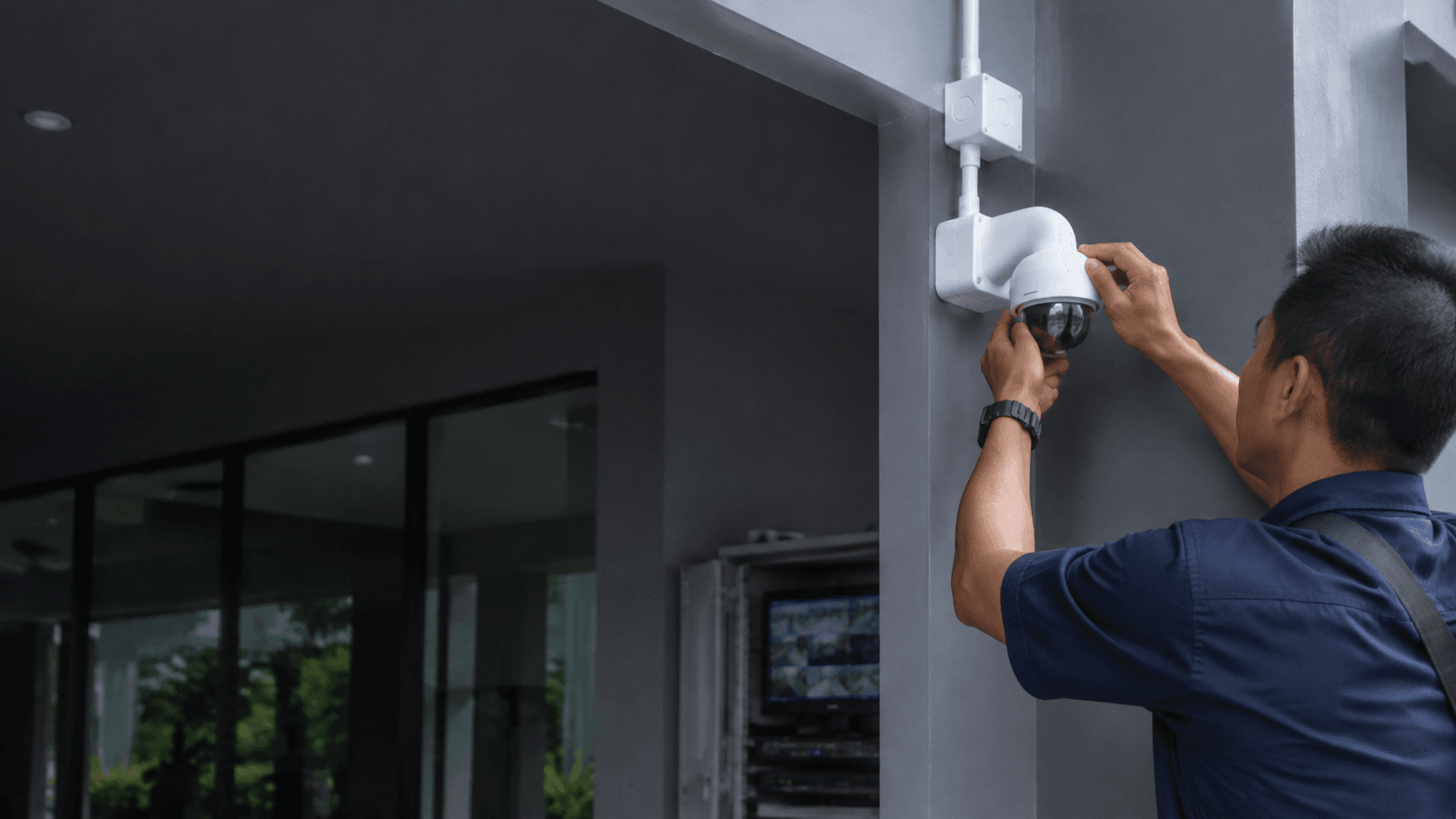
Buyers in Malaysia comparing a Reolink Camera System usually reach the same fork in the road: the brand sells both wired and wireless hardware, and the property decides which one makes sense. A terrace house with brick walls, a shop with a drop ceiling, and an office with existing network cabling each push the answer in a different direction.
What follows is a practical checklist for judging fit before money changes hands. It covers connection type, placement and lighting, recording and viewing habits, and who performs the installation and handover. Where verified Reolink specifications are not available, this article says so rather than guessing.
Reolink Camera System. what buyers in Malaysia are actually choosing
Reolink sells cameras and recorders in two broad families. Wired units draw power and data over a single Ethernet cable, usually to a network video recorder. Wireless units connect over Wi-Fi and typically need a power source nearby, or a battery that requires periodic charging.
Both families appear in the same product catalogue, and both are marketed for homes and businesses. The practical difference for a Malaysian buyer is not the brand name on the box but the cable run, the power source, and how the footage gets recorded.
Competitor pages in this category lean heavily on wireless and home security cameras, night and colour night vision, 24/7 recording, PoE cameras, NVR and local storage, and smart detection. Those topics describe what the market talks about. They do not confirm what any specific Reolink model does, and no verified Reolink model names, resolutions, or channel counts are available for this article, so none are stated.
One pattern is worth noting for anyone weighing a Reolink Camera System against a locally supplied alternative. Reolink hardware is widely sold through online retail and brand stores, which means the buyer often arranges installation separately. A locally supplied system usually bundles survey, installation, and handover into one scope. Neither route is automatically better; they place the coordination burden in different hands.
Wired or wireless. matching the Reolink Camera System to the property
The connection type should follow the building, not the other way around. A wired camera needs a cable path from the camera position back to the recorder or network switch. A wireless camera needs a strong signal at the camera position and a power source within reach, or a battery that someone will recharge.
Wired suits properties where cable can be routed through a ceiling void, trunking, or an existing conduit. It also suits positions that stay fixed for years, because the cable run is a one-time cost. The trade-off is disruption during installation and the need for a tidy route that does not look improvised.
Wireless suits rented premises, heritage buildings, and positions where drilling or chasing is not acceptable. The trade-off is dependence on Wi-Fi coverage at the camera position, which can degrade through reinforced concrete, metal roofing, and dense shelving in a shop.
Mixed setups are common and reasonable. A shop might run wired cameras along the frontage where cable is easy, and a wireless unit at a back entrance where it is not. The decision is per position, not per property.
Placement and lighting checks before a Reolink Camera System is fixed
Camera placement decides what the footage is actually worth. A camera aimed at a blank wall records nothing useful. A camera aimed into a bright doorway records silhouettes.
Eyonic recommends checking actual lighting conditions before confirming placement for ColorVu-style cameras, and the same discipline applies to any camera chosen for low-light performance. Lighting at 8pm is not the same as lighting at 2pm, and a position that looks clear in daylight can be unusable after dark.
Practical checks at each proposed position include the following.
- Confirm the property type and the coverage areas that matter, such as entry points, cash handling areas, or staff and visitor routes.
- Check the actual lighting at each proposed camera position at night, not just during a daytime visit.
- Decide whether each position will use a wired or wireless run, based on cable access and Wi-Fi signal strength.
- Agree where recordings are stored and how they will be viewed, including who holds access.
- Confirm who performs installation and handover, and what the handover includes.
Two placement constraints come up repeatedly. First, a camera needs a clear line of sight to the area of interest, which means trimming foliage or relocating signage may be part of the job. Second, a camera pointed at a neighbour's window or a public walkway raises privacy questions that are better settled before installation than after.
Recording, storage, and daily viewing habits
Recording and storage are separate decisions from camera choice, and they determine how far back footage can be reviewed. Local storage keeps recordings on a device on the premises. Cloud storage keeps them off-site. Some setups use both.
No verified Reolink app, storage, or subscription terms are available for this article, so specific capacity figures, retention periods, and plan details are not stated here. What can be said is that the storage decision should be made before purchase, because it affects the recorder, the drive, and the network design.
Daily viewing habits matter just as much. A system that only the installer can operate tends to go unused. Handover should include showing the people who will actually review footage how to find a clip by date and time, and how to export it if it is ever needed as evidence.
Access control is the third piece. If multiple staff members will view footage, the question of who can delete recordings is worth settling early. A system where anyone can erase footage is weaker than one where deletion is restricted.
Installation and handover for a Reolink Camera System in Sarawak
Eyonic's CCTV installation process includes site survey, system proposal, installation, and handover. That sequence exists because the survey is where placement, cabling, and lighting get tested against the actual building rather than a floor plan.
Eyonic Sdn Bhd is a security system supplier in Sarawak working on CCTV and ELV systems for homes, offices, shops, and industrial sites. Completed work includes the Kuching Immigration Office, where the focus was arrival flow, staff areas, visitor movement, and dependable daily operation, and KTA Sarawak Sdn Bhd, an engineering consultancy office in Kuching that needed support for staff movement, visitor handling, and tidy cabling.
Those projects illustrate a point that applies to any brand. A public office and a consultancy office have different traffic patterns, and the camera layout follows the traffic pattern rather than a standard template. The same logic applies when assessing whether a Reolink Camera System suits a particular site.
One limit should be stated plainly. No verified statement is available on whether Eyonic supplies, installs, or supports Reolink equipment, so this article does not claim that it does. Buyers comparing options should confirm scope directly with whoever will carry out the work.
What to confirm before committing to a Reolink Camera System
Before confirming any purchase, the buyer should be able to answer five questions in writing: which positions are covered, how each camera connects, where footage is stored, who can view and delete it, and who installs and hands over the system.
Two further checks are worth adding. Confirm what happens if a camera fails after installation, and confirm whether the recorder and storage are included in the quoted scope or purchased separately. These are the gaps that turn a straightforward setup into an extended project.
Budget expectations vary widely by scope. Eyonic's published package pricing for Hikvision CCTV, alarm, and autogate work is RM 1,599 per package, and completed project budgets have ranged from RM 8,000 to RM 18,000 for an office setup and RM 12,000 to RM 28,000 for a public office. Those figures describe Eyonic's own work and are not Reolink pricing, which is not available here.
For buyers in Sarawak who want a practical next step, sharing the location, property type, and required system with Eyonic on WhatsApp at +60 11-5111 7959 gives enough context for a useful response.