
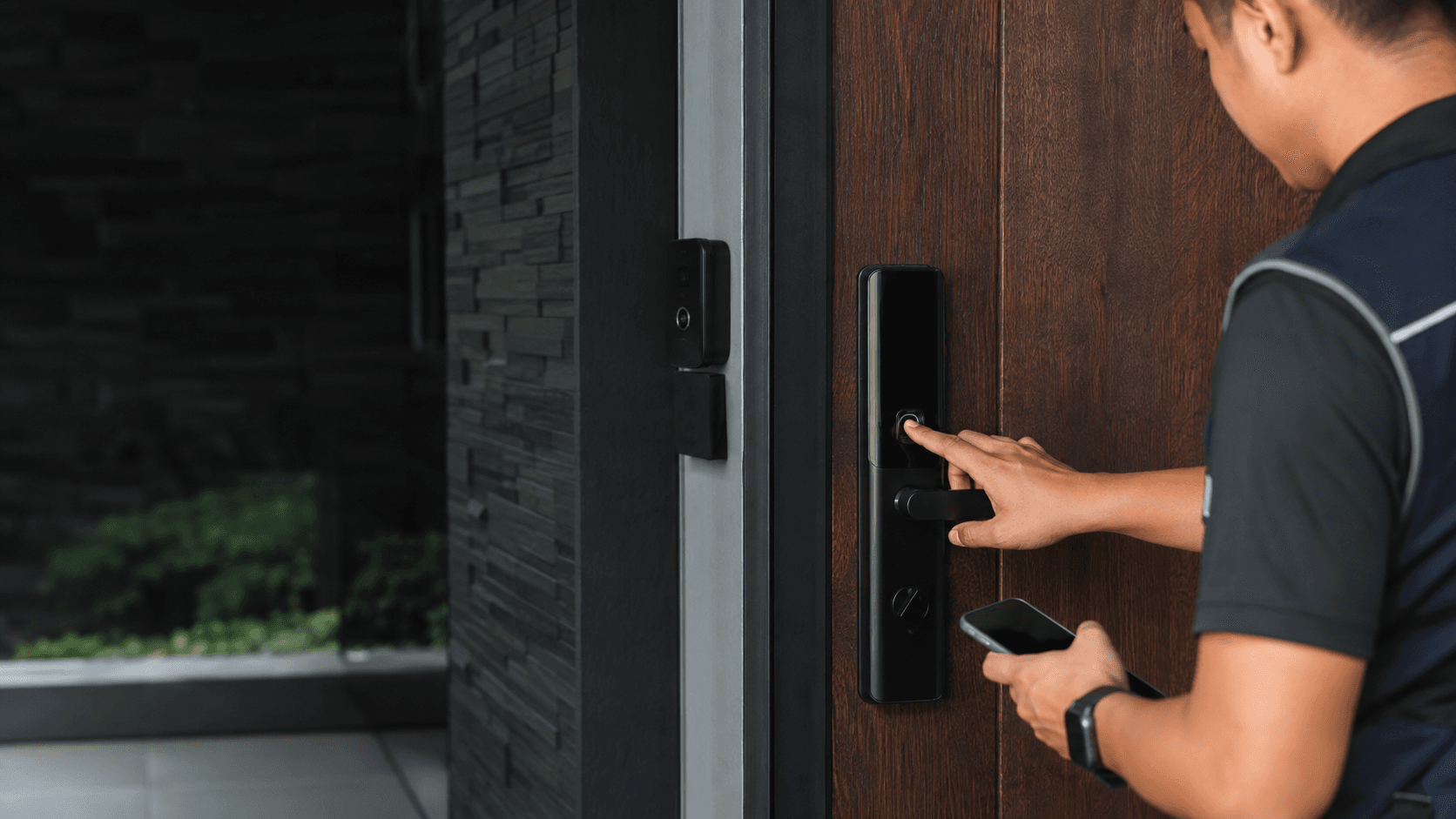
The appeal is simple. no key to lose, no key to copy, and a record of who came through the door. The trade-offs are equally real. A smart deadbolt depends on batteries, on a working network if remote control matters, and on a door that can physically accept the hardware. In Malaysia, humidity, gate and grille configurations, and the question of who services the unit after purchase all shape whether the decision holds up two years later.
This guide covers how Ultraloq Deadbolt models differ, what to measure before buying, how access is managed, what happens when power or connectivity fails, and how installation and handover work in Sarawak.
Ultraloq Deadbolt models and how they differ
Ultraloq sells deadbolts in more than one family, and the naming is the first thing that trips people up. The Bolt line and the U-Bolt line are separate product families, and within each family there are variants that differ mainly in how the lock connects and how it is unlocked.
The practical split is between locks that talk to a phone over Bluetooth only, and locks that add Wi-Fi or a bridge so the door can be controlled from somewhere else. A Bluetooth-only deadbolt still unlocks by fingerprint, keypad, or app when the phone is nearby. Remote unlock, access logs pushed to a phone, and virtual keys for guests generally need the network-capable version or a separate bridge.
Unlock methods across the range typically include fingerprint, keypad code, smartphone app, and a mechanical key. Some models add auto-unlock as a phone approaches, and some support voice assistants or smart home platforms. The exact combination belongs to the specific model, so the model number on the box is the thing to confirm rather than the family name.
Because verified model-by-model specifications are not available here, the honest position is this: treat the family name as a starting point and confirm the unlock methods, connectivity type, and door requirements for the exact model before committing. A supplier who cannot state those three things for a specific model is guessing.
Which model suits which household
A rented apartment with one regular occupant and a landlord who wants the original lock kept intact has different needs from a family home with four adults, a domestic helper, and regular deliveries. The first case is served by a straightforward fingerprint and keypad deadbolt. The second benefits from per-user codes that can be revoked, and from a log that shows which code opened the door and when.
Small offices and shoplots sit in a third category. Eyonic's own product guidance notes that smart locks work best when door condition, user roles, and backup method are reviewed before installation, and that for business use the choice between a standalone smart lock and an access-control panel deserves a deliberate look. A single door with a handful of staff is usually fine on a standalone lock. Multiple doors, shift patterns, and a need to prove who entered after an incident point toward a panel-based system instead.
What to check on the door before choosing an Ultraloq Deadbolt
Most smart deadbolt problems are door problems, not lock problems. The checks below take a few minutes with a tape measure and a screwdriver, and they prevent the common failure where a lock arrives and does not fit.
- Measure door thickness and the existing deadbolt cutout, including the backset distance from the door edge to the centre of the bore hole. Confirm the chosen model supports that thickness and backset.
- Check the door material and frame. Solid timber, metal, and glass-panel doors behave differently, and a metal door or grille may need different preparation.
- Decide who needs access and in what role: permanent residents, recurring help, temporary visitors, or contractors. This determines whether fixed codes, temporary codes, or app-based virtual keys are required.
- Agree the backup entry method before installation, and store the mechanical key somewhere outside the house.
- Confirm power and connectivity. battery type and expected replacement interval, plus whether Wi-Fi or a bridge is needed for remote features and whether signal reaches the door.
- Confirm who installs, who tests every unlock method, and who hands over the app, codes, and key at the end.
Two of these deserve emphasis. Door thickness and backset are the measurements that decide whether a deadbolt is compatible at all, and they are the numbers a supplier should ask for first. User roles are the decision that determines whether a standalone lock is enough or whether the property needs an access-control panel.
Door condition and existing hardware
An existing deadbolt cutout is usually reusable, which keeps installation simple. Where the door has never had a deadbolt, or where the existing bore is at an unusual height or backset, preparation work is needed before the lock goes on. Older timber doors in Malaysian homes can also have swollen or misaligned frames that stop a motorised bolt from throwing cleanly, and that has to be corrected first.
Metal gates and grilles are a separate case. A smart deadbolt is designed for a door, not for a sliding gate, and the two should not be confused when planning a property's entry points.
Ways to unlock and manage access
Fingerprint access is the fastest everyday method and the one most people use once it is enrolled. Keypad entry covers the case where a finger is wet, dirty, or bandaged, and it is the method most often shared with visitors because a code can be changed or deleted without reissuing hardware.
App unlock and virtual keys are the management layer. On a connected model, a homeowner can issue a temporary code to a contractor, set it to expire, and review a log of entries afterwards. On a Bluetooth-only model, that management happens within range of the door rather than from elsewhere.
Auto-unlock, where the door releases as an authorised phone approaches, is convenient and worth testing carefully in practice. It suits a resident arriving with full hands. It suits less well in a household where phones are left near the door inside the house, because proximity is the trigger.
User permissions are where a smart lock earns its place in a business setting. Named users, individual codes, and a revocable access list turn a door into something that can be audited. A single shared code does not, and it should be replaced the moment someone leaves.
Power, connectivity and backup entry
Every smart deadbolt is a battery device, and battery life varies by model, by how often the lock is used, and by how much the network radio is doing. Low-battery warnings are standard, and they should be treated as a prompt to replace cells rather than a notification to dismiss.
Backup entry is the part that decides whether a flat battery is an inconvenience or a lockout. The mechanical key override is the baseline. Some models also accept temporary external power so the lock can be woken and opened without the key. Whichever applies, the backup method should be tested at handover, not discovered during a failure.
Connectivity has a similar shape. Bluetooth works locally with no network at all. Wi-Fi or a bridge adds remote control, remote codes, and pushed logs, and it depends on the home network staying up. When the network drops, a connected lock typically falls back to local unlock methods rather than refusing entry, but the remote features stop until the connection returns.
For a business, the sensible question is what happens during a power cut, an internet outage, and a flat battery at the same time. If the answer relies on one person's phone, the setup is fragile.
Installation and handover in Sarawak
Eyonic's installation process runs through site survey, system proposal, installation, and handover, and that sequence applies to door access as much as to cameras. The survey is where door thickness, backset, frame condition, and network reach get checked against the chosen model. The proposal is where the model, the unlock methods, and the user roles get written down before anything is ordered.
Handover is the step that is most often skipped and most often missed later. It should cover enrolling each user's fingerprint, setting and testing codes, confirming the backup key works, showing where the battery compartment is, and walking through the app so the owner can add or remove a user without calling anyone.
Eyonic has completed access and security work for public and commercial premises in Sarawak, including the Kuching Immigration Office, where the focus was arrival flow, staff areas, visitor movement, and dependable daily operation. That project is a useful reference point for how door and entry planning is approached when a site has a steady stream of people who are not staff. Eyonic's founder, Eric Yong, has worked in technical installation of digital security solutions for commercial businesses in Sarawak for more than 10 years.
Two constraints are worth stating plainly. No Malaysia-specific pricing, stock, warranty, or service coverage for Ultraloq Deadbolt is confirmed in the available information, so those details need to be established directly with the supplier before purchase. And no verified compatibility statement exists between Ultraloq Deadbolt and Eyonic's installed systems, so any integration expectation should be confirmed rather than assumed.
Who should install it
A confident DIY installer can fit a smart deadbolt on a standard timber door with an existing cutout, and the manufacturer's instructions cover that case. The work becomes a professional job when the door needs new boring, when the frame is misaligned, when the door is metal, or when the property needs the lock tied into a wider access setup with multiple doors and defined user roles.
For a business, the deciding factor is rarely the fitting itself. It is whether someone will own the user list, revoke codes when staff leave, and respond when a lock reports a fault. That responsibility should be assigned before installation, not after.
Practical next step with Eyonic
The useful information to gather before contacting anyone is short: door thickness, backset, door material, whether a deadbolt cutout already exists, how many people need access and in what roles, and whether remote control is genuinely needed or whether local unlock is enough.
Eyonic supplies and installs smart lock door access in Sarawak alongside CCTV, alarm, autogate, intercom, and network work, which means a door decision can be planned together with the rest of a property's entry and monitoring setup rather than in isolation. Package pricing for related systems starts at RM 1,599 for the Hikvision CCTV package, the Hikvision alarm system, and the autogate package, each covering supply, setup, and handover.
Share your location, property type and required system with Eyonic on WhatsApp at +60 11-5111 7959 for the next practical step.