
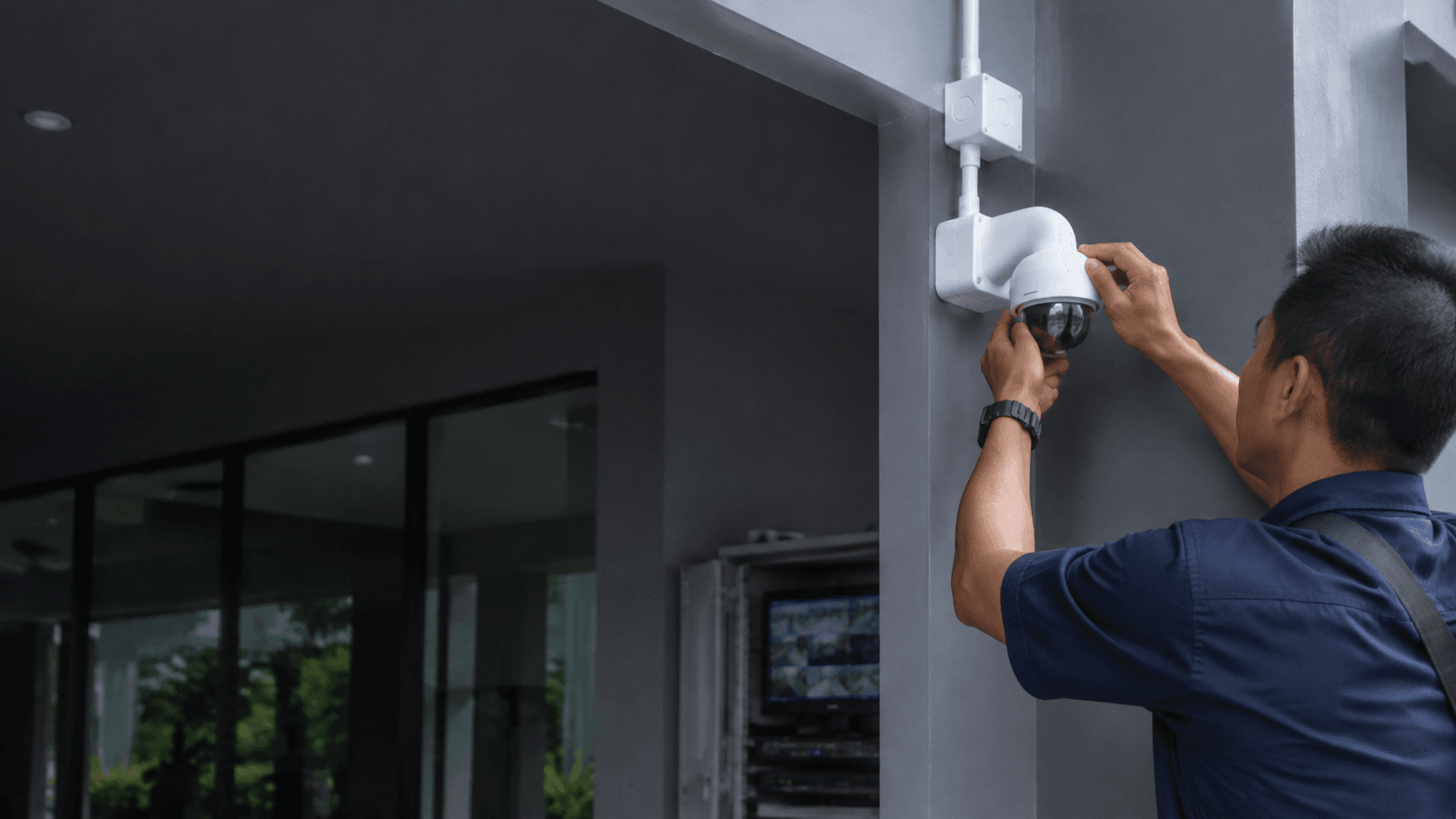
Eyonic Sdn Bhd plans, supplies, and installs monitoring systems with camera placement, recording, and remote viewing for homes, offices, shops, and industrial sites. The company's founder, Eric Yong, has worked in the industry for more than 10 years, with experience in technical installation of digital security solutions for commercial businesses in Sarawak.
A home system is not a product that gets picked off a shelf and mounted the same way everywhere. The useful decisions happen before installation: which areas need coverage, where cameras can actually see, how recording is stored, and how the household will view footage day to day. That is the difference between house cctv that gets checked regularly and a set of cameras that gets ignored after the first month.
What house cctv covers in a home setup
A complete home setup usually combines four working parts: cameras, a recorder, storage, and a viewing method. Eyonic's service scope names camera placement, recording, and remote viewing as the core of the monitoring systems it plans, supplies, and installs.
Camera placement decides what the system can prove. A camera aimed at a gate records arrivals and departures; a camera aimed at a corridor records movement through the house. Placement also decides what the system cannot see, which matters just as much. A camera that captures a face but not the approach to a door leaves a gap in the sequence.
Recording and storage decide how far back the footage reaches. Local recording keeps video on a recorder inside the property, while remote viewing lets the household check live or recorded footage from a phone. Both are part of the standard scope Eyonic works with, and both depend on the recorder being set up correctly rather than just powered on.
Remote viewing is often the feature that determines whether a system gets used. If checking the cameras takes more than a few taps, the habit fades. Handover matters here, because a system that is configured but not explained tends to stay half-used.
Wired and wireless choices in practice
Wired cameras draw power and send video over cable, which suits fixed positions where the route is already available or can be run tidily. Wireless cameras avoid long cable runs but still depend on power or batteries and on a stable network signal at the mounting point. The trade-off is not about which is better in general; it is about which fits the property. A house with easy access above ceilings and along walls can support wired positions that a finished interior cannot.
How a home system is planned before installation
Eyonic's CCTV installation process follows four stages: site survey, system proposal, installation, and handover. The order matters because each stage removes guesswork from the next one.
- Site survey. the property is reviewed on location so camera positions, cable routes, and power points are checked against the actual building rather than a floor plan.
- System proposal. the survey findings are turned into a proposed system covering camera positions, recording, and remote viewing.
- Installation. cameras, cabling, and the recorder are installed and configured according to the agreed proposal.
- Handover. the system is explained and the household is shown how to view footage and use the setup.
The survey stage is where most of the value sits. A proposal written without seeing the property tends to assume standard positions, and standard positions rarely match a specific house. Roof overhangs, trees, neighbouring walls, and interior lighting all change what a camera can capture from a given point.
The proposal stage is also where scope gets settled. Adding a camera later usually costs more than including it in the original plan, because the cable route and recorder capacity were already decided. Reviewing the proposal against actual daily routines, such as which door the household uses most and when the house is empty, keeps the system aligned with real use.
House CCTV placement and lighting checks
Placement and lighting are checked together, because a position that looks correct in daylight can perform differently after dark. Eyonic recommends checking actual lighting conditions before confirming placement for ColorVu-style cameras, which are designed to produce usable colour images in low light.
The check is practical rather than technical. A position that faces a bright streetlight, a reflective wall, or a direct light source can produce glare that washes out the area of interest. A position in deep shadow may record movement without useful detail. Walking the property after dark and looking at each proposed angle from the camera's point of view reveals problems that a daytime survey misses.
Coverage overlaps are worth planning deliberately. Two cameras with slightly overlapping views cover the gap between them, so someone moving across the front of a house stays in frame rather than disappearing between two fixed angles. Overlap also provides a second angle on the same event, which helps when one view is partly blocked.
Height is a trade-off. Higher mounting positions are harder to reach and interfere with, but they flatten the angle and can reduce the ability to capture a face. Lower positions capture better detail but sit within easier reach. The right height depends on what the camera is meant to record and how exposed the position is.
Where coverage usually matters most
Entry and exit points carry the most value in most homes: the main gate, the front door, and any secondary door used regularly. Vehicle areas come next, since a camera covering a parked car records both arrivals and any contact with the vehicle. Interior coverage is a separate decision, usually driven by whether the household wants to check on the property while away or monitor a specific area.
Privacy is a real constraint, not an afterthought. Cameras that overlook a neighbour's property, a shared corridor, or a public walkway create problems that are easier to avoid at the planning stage than to resolve afterwards. Adjusting an angle during the survey costs nothing; adjusting it after installation may mean moving a mount and re-running cable.
What a handover should include
Handover is the stage that decides whether the system stays useful. At minimum, it should cover how to view live footage, how to find recorded footage from a specific time, and what to do when something needs attention.
Remote viewing setup belongs in handover, not in a manual left behind. The household should leave the session with the viewing app working on the devices that will actually be used, and with a clear understanding of what the recorder is doing. Basic recording configuration is part of Eyonic's Hikvision CCTV Package, which is listed at RM 1,599 and includes camera supply and setup, basic recording configuration, and mobile viewing handover.
Handover is also the point to confirm what the system does not do. If a camera angle leaves a gap, saying so at handover is more useful than leaving the household to discover it later. The same applies to recording limits: knowing how far back footage reaches prevents the assumption that any past event is still available.
planning with Eyonic in Sarawak
Eyonic Sdn Bhd is a security system supplier based in Sarawak, Malaysia, specialising in CCTV and ELV systems. The company plans, supplies, and installs monitoring systems for homes, offices, shops, and industrial sites, with a focus on practical, user-friendly solutions. Its product range includes Hikvision cameras and smart locks.
The company's project work includes the Kuching Immigration Office, where the focus was arrival flow, staff areas, visitor movement, and dependable daily operation. That project carried an approximate budget of RM 12,000 to RM 28,000. A separate project for KTA Sarawak Sdn Bhd covered a practical office setup in Kuching supporting staff movement, visitor handling, tidy cabling, and clearer daily site control, with an approximate budget of RM 8,000 to RM 18,000.
Those figures describe commercial and office work, not a typical single home, so they should not be read as a home price guide. For homes, Eyonic's listed Hikvision CCTV Package is RM 1,599, covering camera supply and setup, basic recording configuration, and mobile viewing handover. A home with more positions, longer cable routes, or interior coverage will sit above a basic package, and the survey is what establishes the actual scope.
House cctv planning in Sarawak also involves practical local considerations. Cable routes need to suit the building, mounting points need to survive local weather, and the recorder needs a sensible indoor location with power and network access. None of these are unusual problems, but each one is easier to solve during a survey than after installation.
For households weighing up whether to start with a basic package or plan a larger system, the deciding factor is usually coverage rather than camera count. A small number of well-placed cameras covering the entry points will outperform a larger number of poorly placed ones. The survey is where that gets settled.
Share your location, property type and required system with Eyonic on WhatsApp at +60 11-5111 7959 for the next practical step.