
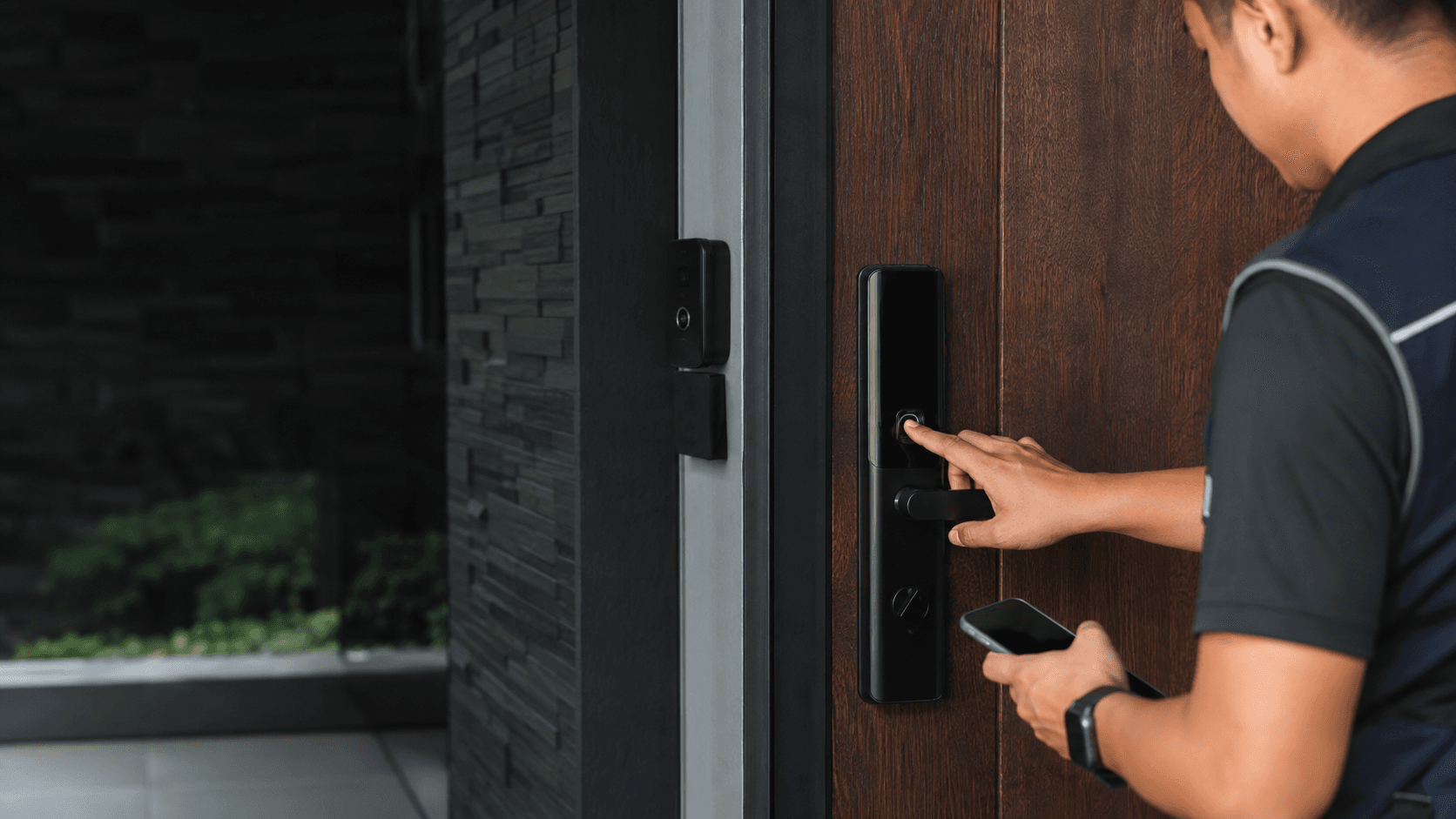
The exact figure depends on which lock family is chosen, what access methods it supports, and where it is bought. Published listings for Godrej digital and smart locks show a wide spread, and the gap between an entry-level electric lock and a multi-access smart lock is large enough that the model name matters more than the brand alone.
Godrej Electronic Door Lock Price: What Shapes the Number
Three things move the figure most: the access technology, the lock body type, and the sales channel. A lock that opens with a PIN and a mechanical key sits at the low end. A lock that adds fingerprint, RFID card, Wi-Fi, and mobile app control sits far higher.
Observed listings place a Godrej electric door lock at roughly ₹2,200 per piece through a wholesale trading listing, while a marketplace catalogue for Godrej smart locks starts at ₹7,773. Those two numbers describe different products, not a price range for one product, so comparing them directly misleads.
- Identify the door type first, because wooden doors, metal doors, main doors, and internal doors take different lock bodies.
- Decide which access methods are genuinely needed, since each added method raises the model tier and the price.
- Check whether the lock is a standalone unit or part of an access-control panel, because business sites often need the panel.
- Confirm the door condition and frame depth before ordering, since a lock that does not fit cannot be installed.
- Plan a backup entry method, such as a mechanical key, so a dead battery or failed reader does not lock out the property.
- Compare the delivered price against the installed price, because installation, cabling, and handover are separate from the unit cost.
That sequence matters because price alone does not describe what is being bought. A cheaper lock that needs a door modification can cost more overall than a higher-priced lock that fits the existing door.
Choosing the Right Godrej Electronic Door Lock
Fit comes before features. A lock rated for a wooden door should not be assumed to suit a metal gate, and a rim lock and a mortise lock mount differently. The door material, thickness, and existing cutout decide which models are even possible.
User roles decide the rest. A home with two or three regular users needs far less than an office where staff, visitors, and contractors each need different access. For business use, the practical question is whether a standalone smart lock is enough or whether an access-control panel is more appropriate, because permissions and audit needs change the hardware class.
Access methods and what they change
Published Godrej smart lock listings describe combinations such as fingerprint, PIN, RFID card, mechanical key, Wi-Fi, mobile app, Bluetooth, NFC, and smart watch access. Each method added to a model generally corresponds to a higher price tier, and the number of methods is often used in the model name itself.
More methods are not automatically better. A lock with five access routes has more to configure, more to explain to users, and more that can be misconfigured. A lock with two routes is easier to run and easier to support.
Warranty and installation terms
Some Godrej smart lock listings state a three-year warranty and free installation. Those terms attach to specific models and sellers, so they should be confirmed against the exact listing rather than assumed across the range.
What Is a Godrej Electronic Door Lock?
A Godrej electronic door lock is a door-mounted locking device that grants entry through an electronic credential rather than a key alone. Common credentials include a numeric PIN, a fingerprint, an RFID card, or a mobile app command, and most models retain a mechanical key as a fallback.
The category spans several product types. Godrej publishes digital locks for wooden doors, rim locks for main doors, cabinet locks, and hotel locks that use smart cards. A hotel lock and a home main-door lock are both electronic door locks, but they serve different operating models and are priced accordingly.
Where the price information actually lives
Godrej's own product pages describe models and features but do not publish a single price for the range. Prices appear on marketplace and distributor listings, which is why the same brand shows figures from roughly ₹2,200 to ₹7,773 and above depending on the source and the model.
That split is the main reason a single "Godrej electronic door lock price" figure does not exist. The number belongs to a model and a seller, not to the brand.
Digital Door Locks for Smart Security
Digital locks change how a door is managed, not just how it is opened. A PIN can be issued to a visitor and revoked afterwards. A fingerprint cannot be copied by observation. An app log shows when a door was used. Those are operational differences, and they are what the higher price tiers buy.
The trade-offs are real. Electronic locks depend on power, whether from batteries or a wired supply. They depend on the reader working. They depend on someone remembering the admin code. A mechanical lock has none of those dependencies, which is why backup entry is a planning item rather than an optional extra.
Standalone lock or access control panel
A standalone smart lock stores its own users and needs no central system. An access-control panel centralises permissions across multiple doors and produces a combined record. For a single home door, the standalone lock is usually the simpler fit. For a site with several controlled doors and staff movement between them, the panel approach avoids managing each door separately.
Eyonic, a security system supplier in Sarawak, Malaysia, reviews smart lock door access on the basis that door condition, user roles, and backup method should be checked before installation, and that business use often requires deciding between a standalone lock and an access-control panel. That review position matches the practical split described above.
Practical Considerations Before Buying
Several constraints decide whether a chosen model works in practice, and they are worth checking before comparing prices further.
Door condition and fit
Door thickness, frame depth, existing bore holes, and whether the door is wooden or metal all affect which locks can be fitted. A lock that requires cutting a new mortise is a different job from one that replaces an existing cylinder. On metal doors and gates, the mounting method changes again.
Power and backup
Battery-powered locks need a replacement routine, and a low-battery warning is only useful if someone acts on it. Wired locks need a supply route to the door, which may mean cabling work. Either way, the mechanical key or a second entry method should be stored somewhere reachable from outside the door.
Users and permissions
A household lock needs a handful of credentials. An office lock may need temporary access for visitors, separate access for cleaners, and a way to remove a credential the same day someone leaves. If those needs exist, the lock must support them, and that requirement usually points to a higher model tier or a panel.
Installation and handover
Installation is a separate cost from the unit. Eyonic's CCTV installation process runs through site survey, system proposal, installation, and handover, and the same shape applies to door access work: the survey confirms what the door can take, the proposal fixes the scope, and handover covers user setup and testing. A lock supplied without that step can arrive correct and still be configured badly.
Where the property is
Availability and pricing differ by market. Listings observed for this topic are largely Indian marketplace and distributor pages quoting rupee prices. A buyer in Malaysia is looking at a different supply chain, different stock, and different installation labour, so an Indian listing price is a reference point rather than a local figure.
Making an Informed Choice
The useful comparison is not the cheapest lock against the most expensive one. It is the lock that fits the door, supports the access methods actually needed, and has a workable backup, priced with installation included.
For a single home door with a few users, a mid-tier digital lock with PIN, fingerprint, and a mechanical key covers most needs without the cost of full connectivity. For a main door where remote control matters, a connected model adds app access and logging at a higher tier. For a business with several controlled doors, the standalone-versus-panel decision comes first, because it determines the hardware class before any model is chosen.
Two reference points help frame a budget. Eyonic's published package pricing for other security systems sits at RM 1,599 for a Hikvision CCTV package, RM 1,599 for a Hikvision alarm system, and RM 1,599 for an autogate package, which shows the general scale of installed security work in the Malaysian market. Completed project budgets on Eyonic's own project pages range from RM 8,000 to RM 18,000 for an office setup and RM 12,000 to RM 28,000 for a public office installation, covering multiple systems rather than a single lock.
For a door access decision, the practical next step is to establish the door type, the number of users, and the required access methods, then match those against available models. Eyonic can be reached on WhatsApp at +60 11-5111 7959 with the location, property type, and required system.