
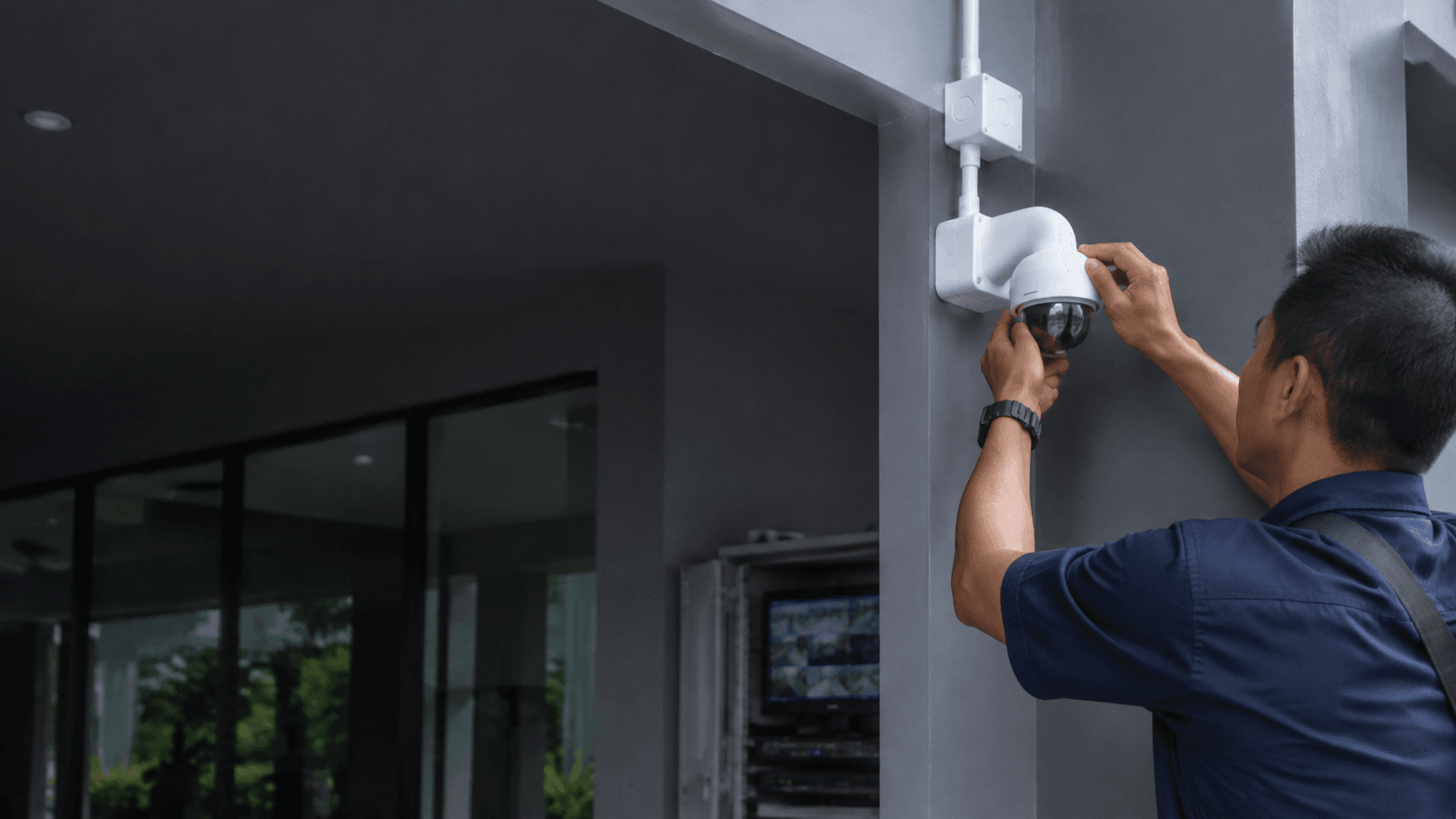
The exact-match query "frigate cctv" combines two ideas: Frigate, the software, and CCTV, the camera system it manages. Frigate runs on a local server, uses OpenCV and TensorFlow to detect objects in video streams, and integrates with Home Assistant, MQTT, and RTSP re-streaming. It is not a camera brand. It is a recording and detection layer that sits between IP cameras and the people reviewing footage.
This guide covers what Frigate Cctv means in practice, how it differs from conventional NVR setups, what hardware it needs, and where it fits for homes, offices, and commercial sites in Malaysia.
Frigate Cctv. What Matters Before Choosing
Frigate is an open source NVR built around real-time AI object detection. That single sentence explains most of its appeal and most of its constraints. The software processes camera streams locally, meaning footage does not need to leave the premises for object detection to work. It uses OpenCV and TensorFlow to identify people, vehicles, and other objects, then records and alerts based on what it detects rather than on raw motion alone.
The practical benefit is fewer false alerts. A tree branch moving in wind triggers motion detection on a conventional NVR. Frigate's object detection can distinguish that from a person walking through a gate. Zones and masks let users define which areas of the frame matter and which should be ignored.
The practical constraint is hardware. Frigate needs a server, a detector, and cameras that output RTSP streams. It is not a plug-and-play consumer product. Setup involves configuration files, Docker or similar deployment, and some tolerance for troubleshooting.
What Is Frigate Cctv?
Frigate Cctv describes the combination of Frigate software with CCTV cameras. Frigate itself is a network video recorder. It accepts streams from IP cameras, runs object detection on those streams, records video, and exposes events through a web interface and integrations.
The project is maintained as open source under the MIT License. A separate offering, Frigate+, provides access to custom models designed specifically for Frigate. The core software remains free to use and self-hosted.
Frigate is designed for Home Assistant but works independently. It communicates via MQTT, supports RTSP re-streaming, and offers low-latency live view through WebRTC and MSE. Recording can run continuously, on motion, or on detected objects, with retention rules controlling how long footage stays on disk.
How Frigate Cctv Differs From a Conventional NVR
A conventional NVR records what the cameras send and relies on motion detection to flag events. Frigate adds a detection layer that identifies what is moving. That difference shapes everything from storage use to alert quality.
Object-based recording means a camera pointed at a street can ignore passing shadows and record only when a person or vehicle appears. Zones refine this further, allowing separate rules for a driveway, a doorway, or a restricted area within the same camera view.
Integration is another difference. Frigate connects to Home Assistant, OpenHab, NodeRed, and MQTT, so detections can trigger lights, notifications, or other automations. A conventional NVR typically stays within its own app.
The trade-off is complexity. Frigate expects the user or installer to understand camera streams, server resources, and configuration. It rewards that effort with flexibility that closed systems rarely match.
Hardware and Camera Considerations for Frigate Cctv
Frigate's documentation lists recommended hardware across several detector categories, including Google Coral TPU, Hailo-8, OpenVINO on Intel, Nvidia GPUs, Apple Silicon, ROCm on AMD, and community-supported options such as MemryX MX3, Nvidia Jetson, Rockchip, Synaptics, and AXERA. The detector handles inference; the CPU handles decoding, motion detection, and recording.
Camera choice matters as much as server choice. Frigate works with IP cameras that provide RTSP streams. Resolution affects detection accuracy and processing load. A 1440p main stream gives more detail but demands more from the server than a lower-resolution substream used for detection.
Lighting is a practical factor that no software setting fully overcomes. Eyonic recommends checking actual lighting conditions before confirming placement for ColorVu-style cameras, and the same principle applies to any camera feeding Frigate. A detection model performs best when the scene is lit well enough for the camera to produce a usable image.
For sites in Sarawak, humidity, rain, and variable daylight are routine conditions. Camera placement, housing, and cabling routes deserve the same attention as server specifications.
Practical Considerations for Frigate Cctv
Deploying Frigate Cctv involves decisions that affect reliability, cost, and maintenance. The sequence below reflects a practical order of work.
- Confirm the cameras output RTSP streams and note their resolutions and frame rates.
- Choose a server or host device with enough CPU, memory, and storage for the number of cameras and retention period.
- Select a detector that matches the host hardware, such as Google Coral TPU, OpenVINO on Intel, or an Nvidia GPU.
- Install Frigate and connect it to the camera streams.
- Configure zones and masks so detection focuses on areas that matter.
- Set recording and retention rules for continuous, motion, or object-based capture.
- Connect MQTT and any automation platform such as Home Assistant.
- Test alerts, review footage, and adjust detection thresholds based on real events.
Storage planning deserves attention. Continuous recording of multiple high-resolution streams fills disks quickly. Object-based recording reduces that load but requires detection to work reliably. Retention rules should reflect how far back footage needs to be available.
Network design also matters. Cameras and the Frigate host should sit on a network with enough bandwidth for the streams in use. PoE switches simplify cabling but need to supply adequate power per camera.
Maintenance is ongoing. Frigate is actively developed, and updates can change configuration options. A deployment that works today may need adjustment after a major release. Sites without technical staff should plan for installer support.
Making an Informed Choice About Frigate Cctv
Frigate Cctv suits users who want local processing, object-based detection, and integration with home or business automation. It fits well when cameras already output RTSP, when a server or NAS is available, and when someone can manage configuration.
It fits less well when the priority is a single app with no setup, when cameras are locked to a proprietary ecosystem, or when no one wants to touch a configuration file. In those cases, a conventional NVR or a managed installation may serve better.
For businesses in Sarawak, the decision often comes down to who maintains the system after handover. Eyonic's CCTV installation process includes site survey, system proposal, installation, and handover, and the company has completed projects such as the Kuching Immigration Office, focused on arrival flow, staff areas, visitor movement, and dependable daily operation. Those projects illustrate the kind of planning that any camera system, Frigate-based or otherwise, benefits from.
Frigate is software. Cameras, cabling, power, network, and storage are physical. A successful deployment treats both as one system rather than two separate purchases.
Share your location, property type and required system with Eyonic on WhatsApp at +60 11-5111 7959 for the next practical step.