
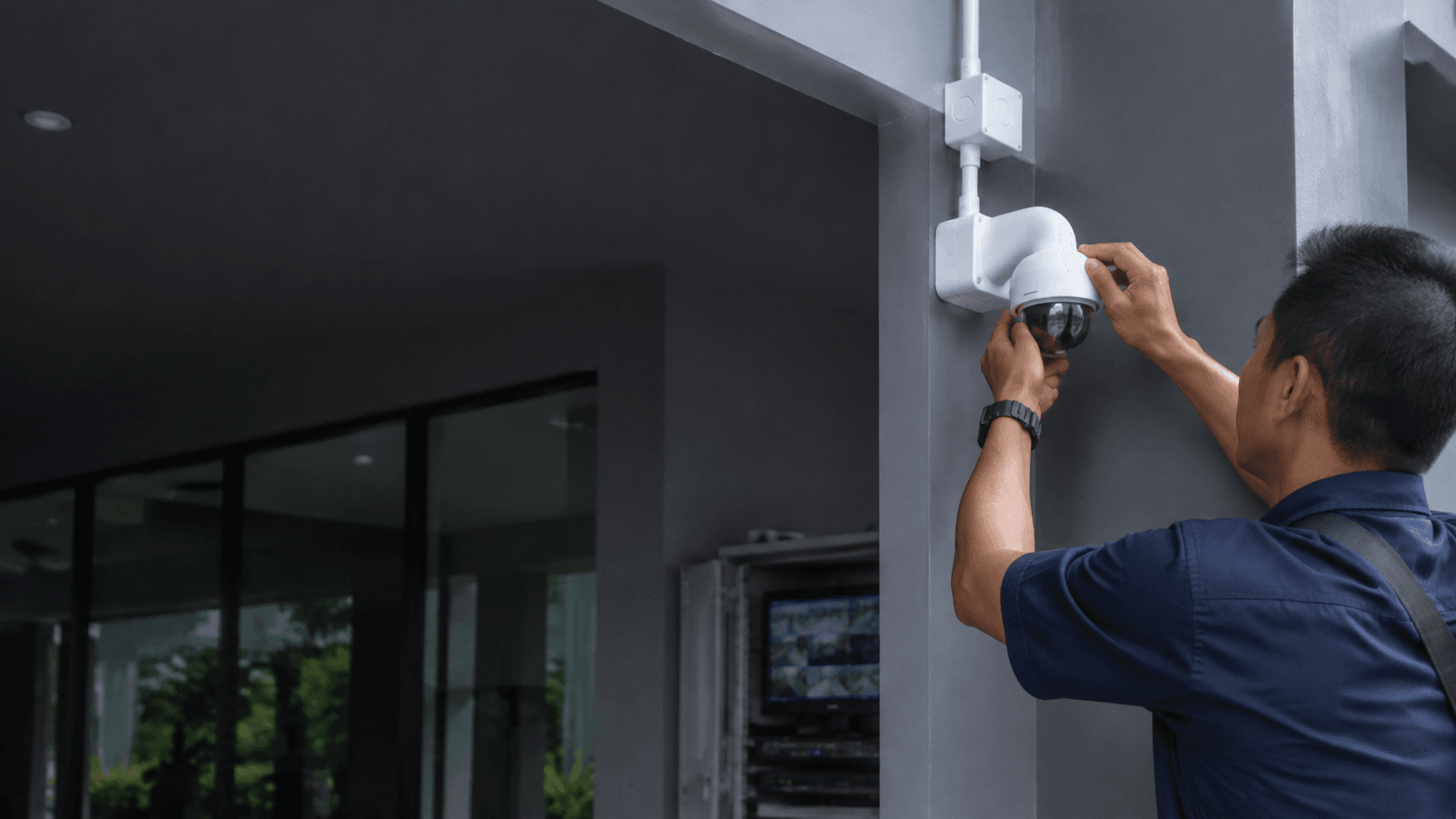
The exact-match query verisure cctv prices is hard to answer with a number because Verisure routes buyers toward a tailored quote rather than a public rate card. That does not make the question unanswerable. It means the useful work is understanding what drives the figure, what a monitored camera setup includes that a boxed camera kit does not, and how a locally supplied and installed system compares on cost and control.
What Verisure CCTV prices usually include
A monitored camera system is sold as a service, not as a box of hardware. The price therefore bundles several things that a retail camera purchase keeps separate.
Equipment is the visible part. cameras, a hub or control panel, sensors, and often a video doorbell. Installation is the second part, and it is labour rather than product. Monitoring is the third, and it is the part that recurs. A connection to a monitoring centre, app access, and maintenance or technical support usually sit inside the ongoing fee rather than the upfront one.
That structure explains why published figures are rare. Two properties on the same street can carry different equipment counts, different cable runs, and different monitoring terms, so a single headline price would mislead more than it informs.
Upfront cost versus ongoing cost
Buyers comparing quotes should separate the two numbers rather than adding them into one figure. The upfront element covers equipment and installation. The ongoing element covers monitoring, app access, and support. A low upfront figure with a long contract can cost more over several years than a higher upfront figure with a shorter commitment.
Contract length matters as much as the monthly amount. A monthly fee multiplied across a fixed term gives the true commitment, and that total is the number worth comparing against a one-off purchase.
How monitoring changes Verisure CCTV prices
Monitoring is the main reason a monitored system costs more than a self-installed camera kit. A camera that records to a local card or recorder only helps after an event, when someone reviews the footage. A monitored system adds a response layer: alerts are filtered, and an alarm receiving centre or guard response can be triggered.
That response layer carries staffing and infrastructure costs, which is why it is billed continuously. It also changes what the buyer is actually purchasing. The camera becomes one input into a service that includes human attention, not the whole product.
For a household that is away for long stretches, that layer has clear value. For a property that is occupied most of the day and mainly needs recorded evidence, the same layer may be paid for without being used. The honest comparison is between the cost of monitoring and the likelihood that anyone acts on an alert.
What a quote should state about monitoring
A quote that does not state the contract length, the notice period, and what happens to the equipment at the end of the term is incomplete. Equipment ownership is a common point of confusion: in some monitored models the hardware remains the provider's property, which affects what happens if the contract ends.
These terms are commercial facts, and they should come from the provider in writing rather than from a summary page.
Camera placement and lighting before price
Placement decisions change the bill before any equipment is chosen. A camera that needs a long cable run, a new power point, or a mounting point on a difficult surface costs more to install than one sited near existing infrastructure.
Lighting matters just as much. Eyonic advises checking actual lighting conditions on site before confirming placement for ColorVu-style cameras, because a position that looks adequate in daylight can behave differently after dark. Moving a camera after installation costs more than placing it correctly the first time.
Coverage gaps are the other hidden cost. A single wide camera may leave an entrance or a side gate uncovered, and adding a second unit later usually means a second visit. Planning the field of view across the whole boundary at the start is cheaper than expanding in stages.
Why a site survey comes before a figure
A survey converts a vague property description into a specific equipment list and cable route. It is the step that turns an estimate into a price. Without it, any figure is a guess dressed as a quote.
A Sarawak comparison point. Eyonic CCTV packages
For readers in Sarawak, a locally supplied and installed system gives a concrete price anchor. Eyonic lists a Hikvision CCTV package at RM 1,599, covering camera supply and setup, basic recording configuration, and mobile viewing handover. The same RM 1,599 figure applies to a Hikvision alarm system and to an autogate package.
That is a one-off installation price for a defined scope, not a monitored subscription. It is useful precisely because it is published. It shows what the hardware, installation, and handover portion of a small system costs when bought outright, which is the part a monitored quote also has to cover.
Larger projects scale from there. Eyonic's Kuching Immigration Office project, which covered arrival flow, staff areas, visitor movement, and dependable daily operation, carried an approximate budget of RM 12,000 to RM 28,000. A KTA Sarawak Sdn Bhd office project in Kuching, covering staff movement, visitor handling, tidy cabling, and clearer daily site control, carried an approximate budget of RM 8,000 to RM 18,000. Those ranges reflect site size and cabling scope rather than camera brand alone.
Eyonic's installation process runs through four stages:
- Site survey to assess the property, lighting, and coverage needs.
- System proposal setting out equipment, placement, and scope.
- Installation of cameras, recording, and cabling.
- Handover covering mobile viewing and basic operation.
The comparison point is not that one model is cheaper. It is that a one-off installed system and a monitored subscription sit in different cost categories, and a buyer weighing verisure cctv prices against a local package should compare the multi-year total of each, not the headline figure of one against the upfront figure of the other.
What to confirm before accepting any CCTV price
Several details separate a usable price from a misleading one, and they apply to any provider.
Confirm what the figure covers. equipment only, equipment and installation, or equipment, installation, and monitoring. Confirm the contract length and notice period if monitoring is included. Confirm who owns the equipment at the end of the term. Confirm what storage is included and for how long footage is retained. Confirm whether remote viewing depends on the property's internet connection and what happens during an outage.
Confirm the response model as well. A monitored system may connect to an alarm receiving centre, to a guard response, or to app notifications only, and those are different levels of service at different costs. A price without that detail cannot be compared fairly against another quote.
Finally, confirm the scope in writing. Camera count, placement, cable routing, and handover training should all appear in the proposal, because those are the items most likely to change the final figure after work begins.
Questions worth asking directly
Is the monthly fee fixed for the contract term, or can it change? What is the total cost across the full term? What happens if the property is sold or the contract is cancelled early? Does the price include maintenance visits, and how often? Each answer changes the real cost, and none of them can be inferred from a headline number.
For readers who want a concrete starting point rather than an open-ended quote, sharing the location, property type, and required system with Eyonic on WhatsApp at +60 11-5111 7959 gives a defined scope to price against.