
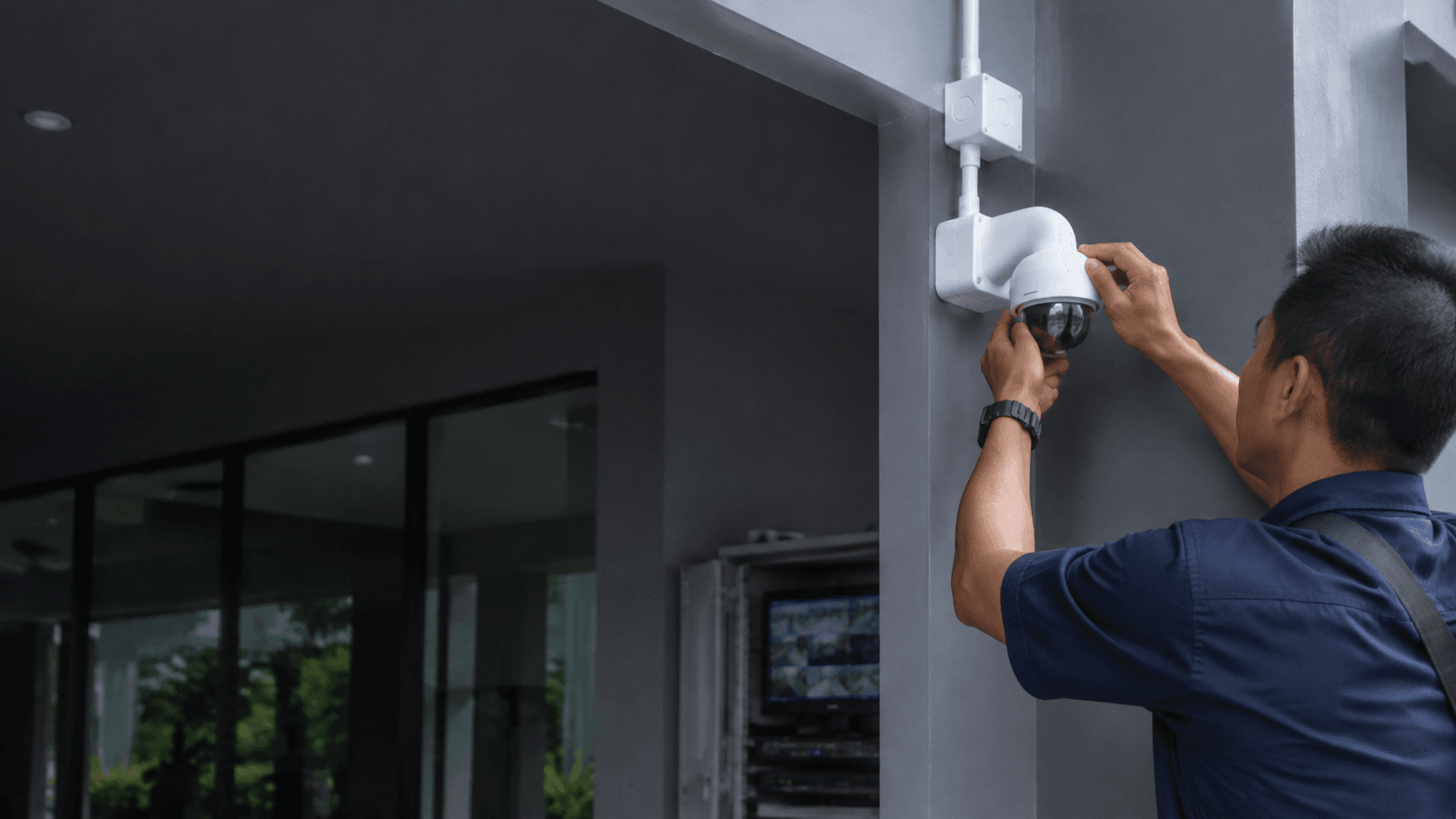
The term covers two different things that are often sold as one. A 4G camera is a single unit with a SIM slot, its own power source, and onboard storage. A 4G CCTV setup is a multi-camera system where a recorder or router shares one cellular connection across several cameras. Both remove the need for a fixed internet line, but they behave differently once recording, retention, and remote viewing are involved.
Reolink states plainly that its cellular cameras connect through 4G LTE with a SIM card and that a 4G camera cannot work with WiFi. That single constraint drives most of the practical decisions below.
4g Cctv: What Matters Before You Choose
Most buyers start with the camera and work backwards. The order that avoids wasted spending runs the other way, because the site conditions decide what the hardware is allowed to be.
- Confirm whether a fixed internet line exists at the camera position, not just at the building.
- Check cellular signal strength at the exact mounting height and angle, since a strong signal at ground level can weaken at eaves height.
- Decide how many cameras need to run, because one SIM can serve several cameras through a shared router or recorder.
- Choose the power method. mains, battery, or solar, based on whether a supply can reach the position.
- Set the recording and retention expectation, then match storage to it.
- Confirm the data plan covers the upload volume the chosen resolution and recording mode will produce.
- Verify remote viewing works on the devices the site actually uses.
Steps two and six are the ones that get skipped. A camera installed where signal is marginal will connect, drop, reconnect, and produce gaps that only become obvious when footage is needed.
What is 4g cctv?
4g CCTV is a surveillance setup that transmits video over a mobile network rather than a fixed broadband connection. The camera or recorder holds a SIM card and communicates with the mobile network the same way a phone does. Remote viewing then happens through an app over the internet, wherever the viewer happens to be.
The distinction that matters is between transmission and power. Cellular handles the video path. Power is a separate question, and a 4G camera can be mains-powered, battery-powered, or solar-charged. Confusing the two leads to purchases that do not fit the site.
How the connection actually works
A SIM card registers on a mobile network. The camera encodes video and uploads it over that connection, either continuously, on motion, or on a schedule. The recorder or camera stores footage locally on a microSD card or hard drive, and the app pulls selected clips or a live stream over the mobile link when someone requests them.
This is why data consumption is not the same as recording volume. A camera can record continuously to local storage while uploading very little, because only the clips that get viewed travel over the cellular connection. Systems configured to push every event to cloud storage behave very differently and consume far more data.
Choosing the Right 4g Cctv
The choice usually comes down to three configurations, and each fits a different site.
| Configuration | Best fit | Main trade-off |
|---|---|---|
| Single 4G camera, battery or solar | One viewpoint with no power or network nearby | One camera covers one angle; battery and solar depend on sunlight and event frequency |
| Single 4G camera, mains powered | A fixed position where power exists but internet does not | Requires a power run, which may cost more than the camera |
| Multiple cameras sharing one cellular router or recorder | Shops, offices, warehouses, and compounds needing several angles | All cameras depend on one connection; a signal problem affects the whole system |
The third row is where most commercial sites land. Sharing one connection across several cameras is usually cheaper per camera than buying separate 4G units, and it keeps recording in one place. The cost is a single point of failure on the network side.
Power options and what they demand
Battery and solar cameras trade installation simplicity for ongoing attention. A solar panel needs meaningful daylight, and a battery camera's runtime depends on how often it wakes, records, and uploads. A camera that triggers constantly on passing traffic will drain faster than one watching a quiet gate.
Mains power removes that variable entirely. Where a supply can be run to the position, mains-powered 4G cameras behave like ordinary cameras with an unusual network path, which makes them easier to reason about over years of operation.
Signal, SIM, and data
Signal strength at the mounting point is the single most common cause of disappointing 4G camera performance. Testing at ground level is not sufficient. A phone held at the intended camera height, on the intended network, gives a far more useful reading.
Data volume depends on resolution, frame rate, how much is uploaded, and how often live view is opened. A system that records locally and uploads only viewed clips uses far less than one that pushes every motion event to the cloud. Multi-camera sites sharing one SIM should size the plan against the busiest expected month, not the average.
Storage and retention
Local storage keeps working when the mobile link drops, which is a real advantage on sites with intermittent coverage. Cloud storage survives theft or damage to the recorder but depends on the connection and usually on a subscription. Many practical installations use local storage as the primary record and treat cloud as a secondary copy for selected events.
Practical Considerations for
Installation quality decides whether a 4G system is dependable. Eyonic's CCTV installation process runs through site survey, system proposal, installation, and handover, and the survey stage is where signal, power, and camera placement get settled before anything is mounted.
Placement deserves more attention than it usually gets. Eyonic recommends checking actual lighting conditions before confirming placement for ColorVu-style cameras, because a position that looks adequate in daylight can behave very differently at night. The same discipline applies to cellular signal: the position that works on paper is not always the position that works on the wall.
Where 4G makes sense and where it does not
4G fits sites without a usable fixed line: remote compounds, construction and jobsite locations, farms, temporary installations, and buildings where running cable to the camera position is impractical or disproportionately expensive.
It fits less well where a fixed line already exists and is stable. In that case a conventional IP camera system is usually simpler, cheaper to run, and free of data-plan management. Cellular is a solution to a connectivity problem, not an upgrade in its own right.
Edge cases worth planning for
Coverage varies by network and by location, so a SIM that performs well in one part of Sarawak may not perform the same way elsewhere. Where coverage is genuinely marginal, a higher-gain antenna or a different mounting position can help, but neither creates signal that is not there.
Power outages affect cellular sites differently from wired ones. If the mobile tower loses power, the camera's connection goes with it even if the camera itself has battery backup. Local recording continues; remote viewing does not.
Data plans also need an owner. Someone has to monitor usage, renew the plan, and notice when a camera stops uploading. Systems without a named owner tend to fail quietly.
Working with an installer
Eyonic Sdn Bhd plans, supplies, and installs monitoring systems with camera placement, recording, and remote viewing for homes, offices, shops, and industrial sites across Sarawak. The company has completed work for the Kuching Immigration Office, focused on arrival flow, staff areas, visitor movement, and dependable daily operation, and for KTA Sarawak Sdn Bhd, an office setup in Kuching supporting staff movement, visitor handling, and tidy cabling.
Founder Eric Yong has worked in the industry for more than ten years, with experience in technical installation of digital security solutions for commercial businesses in Sarawak. That background matters most at the survey stage, where signal, power, and placement decisions are made.
Making an Informed Choice About
A workable decision comes down to four questions answered honestly. Is there a fixed internet line at the camera position? Is there cellular signal at the mounting height? Can power reach the position, or does the camera need battery or solar? And how many cameras need to run?
Answer those and the configuration largely selects itself. A single remote viewpoint with no power points to a battery or solar 4G camera. A shop or office with several angles and existing power points to multiple cameras sharing one cellular router or recorder. A site with a stable fixed line points away from cellular altogether.
Budget expectations should be set against the whole installation rather than the camera alone. Eyonic's published package pricing starts at RM 1,599 for a Hikvision CCTV package covering camera supply and setup, basic recording configuration, and mobile viewing handover. Comparable packages for a Hikvision alarm system and an autogate setup are also listed at RM 1,599. Larger commercial work sits well above that: the Kuching Immigration Office project carried an approximate budget of RM 12,000 to RM 28,000, and the KTA Sarawak Sdn Bhd project an approximate RM 8,000 to RM 18,000.
Those figures reflect scope, camera count, and site conditions rather than the cellular component specifically. A 4G element adds a SIM, a data plan, and possibly a router, but the bulk of most commercial budgets goes to cameras, cabling, recording, and labour.
Share your location, property type and required system with Eyonic on WhatsApp at +60 11-5111 7959 for the next practical step.