
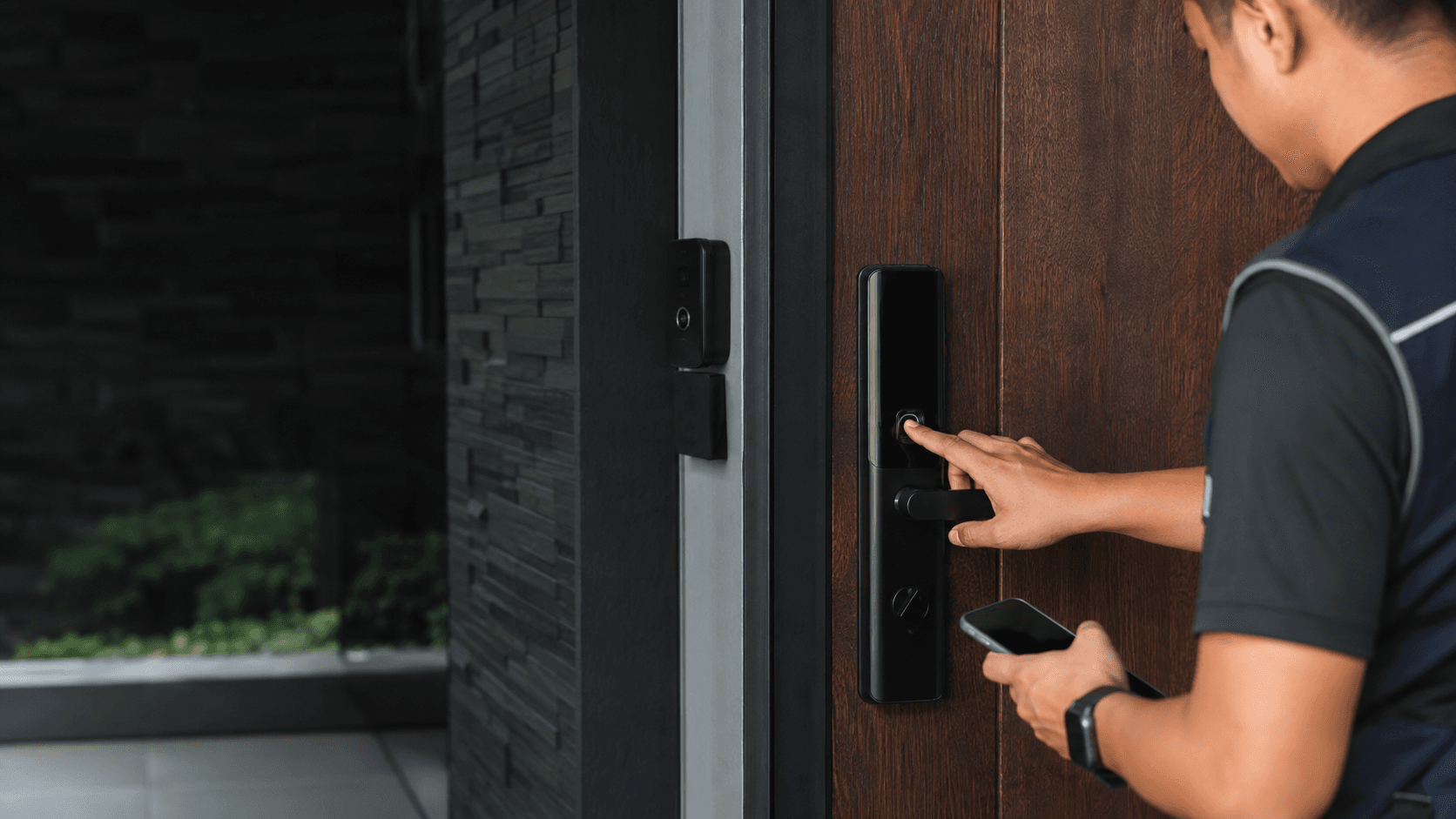
The exact-match phrase yale smart lock z wave describes a specific hardware arrangement rather than a single product. Yale builds the lock body, and a Z-Wave radio module supplies the wireless link to a hub. That split matters because the module, not the lock, decides which automation platform the door can join.
Two module part numbers appear repeatedly across retailer and support pages: AYR202-ZWV-USA and AYR-MOD-ZW2-USA. The first is associated with Assure and Assure 2 hardware, the second with the newer Assure Lock 2 generation. Buyers who already own a Yale lock should confirm which module fits before ordering, because the two are not interchangeable across every model.
Yale Smart Lock Z Wave. What Matters Before Choosing
A Z-Wave lock is a mesh-network device. It does not talk to a phone directly. It reports to a hub, and the hub passes commands to an app or an automation routine. That chain is the whole point of choosing Z-Wave over Wi-Fi or Bluetooth.
The practical consequences are consistent across the category:
- Confirm the door has a compatible deadbolt cutout and enough door thickness for the lock body.
- Check which Yale lock model is being purchased and whether it ships with a Z-Wave module or needs one added.
- Verify the hub supports the lock's Z-Wave generation, since older hubs may not handle Z-Wave Plus devices cleanly.
- Plan a backup entry method, such as a physical key or a keypad code, before relying on the network.
- Test the lock in place after pairing, including manual thumbturn operation and auto-lock behaviour.
Yale's own support documentation treats the module as a separate installable part, which is why installation guides exist for the module alone. A lock that arrives without the module will still work as a keypad or keyed deadbolt, but it will not appear in a Z-Wave hub until the module is fitted.
Choosing the Right Yale Smart Lock Z Wave Model
The Assure Lock 2 line covers touchscreen and key-free variants, and the Pro 2 line is positioned for deadbolt replacement with Z-Wave connectivity. Both appear in retailer listings alongside Z-Wave Plus modules. The differences that affect daily use are the entry method, the finish, and whether the lock is sold as a complete Z-Wave package or as a base lock plus module.
Hub compatibility is the deciding factor for most buyers. Retail and support pages name SmartThings, Ring Alarm, Hubitat, Wink, Qolsys, Alarm.com, Honeywell, Resideo and 2GIG as systems that work with Yale Z-Wave locks. A household already running one of those platforms gains remote locking, access sharing and access history without adding a second ecosystem.
A household with no Z-Wave hub at all should weigh whether the lock is the right first purchase. Adding a lock usually means adding a hub, and the hub then becomes the device that everything else depends on.
What is yale smart lock z wave?
It is a Yale deadbolt or lever lock fitted with a Z-Wave radio module so it can be controlled through a Z-Wave hub. The lock keeps its keypad or keyed entry, and the module adds network control on top. Without the module, the same lock is a standalone keyless deadbolt.
Z-Wave Door Locks For Your Smart Home
Z-Wave door locks suit homes that already run a Z-Wave mesh, because each mains-powered device strengthens the network for the others. Battery-powered locks do not repeat the signal, so a lock at the far end of a property benefits from nearby powered Z-Wave devices. In larger Malaysian homes with detached gates or long driveways, that mesh behaviour is often the difference between a reliable lock and an intermittent one.
Practical Considerations for Yale Smart Lock Z Wave
Installation is the point where most problems surface. Door preparation, strike plate alignment and deadbolt throw all affect whether the lock operates smoothly, and a binding bolt will drain batteries faster and produce failed lock commands in the hub log.
Battery life is a recurring trade-off. Network reporting, frequent remote unlocks and auto-lock routines all draw power. A lock that is polled constantly by a hub will need attention sooner than one that is used mainly by keypad.
Access control is the other consideration. For a home, per-user codes and scheduled access are usually enough. For a business, the question shifts to whether a standalone smart lock or a managed access-control panel is the better fit, because staff turnover, shared doors and audit requirements change what the system needs to do.
Eyonic, a security system supplier in Sarawak, notes that smart locks work best when door condition, user roles and backup entry are reviewed before installation, and that business sites are assessed for whether a standalone lock or an access-control panel is more appropriate. The same review applies to Z-Wave models, where the hub adds a dependency that a standalone lock does not have.
Making an Informed Choice About Yale Smart Lock Z Wave
The decision usually comes down to three questions. Does the property already run a Z-Wave hub? Is the door physically suitable for a motorised deadbolt? Is there a backup way in when the network or the batteries fail?
If the answer to the first is yes and the other two are handled, a Z-Wave Yale lock integrates cleanly into existing routines. If the answer is no, a Wi-Fi or Bluetooth Yale lock may involve fewer moving parts, at the cost of the mesh reliability and hub-level automation that Z-Wave provides.
For properties in Sarawak that combine a smart lock with cameras, alarms or gate automation, the lock is one device inside a wider system. Eyonic's installation work follows a site survey, system proposal, installation and handover sequence, and completed projects include the Kuching Immigration Office, where arrival flow, staff areas and visitor movement shaped the design. A door lock chosen in isolation can end up outside that plan.
Common Questions About
Does a Yale Z-Wave lock need a hub? Yes. Z-Wave is a hub-based protocol, so remote control and automation require a compatible controller such as SmartThings, Ring Alarm or Hubitat.
Can a module be added later? In many cases yes, provided the lock model accepts the module generation being sold. The module part number must match the lock family.
What happens when the network goes down? The lock continues to work by keypad or key, and hub-based remote features resume when the network returns.
Is Z-Wave better than Wi-Fi for a lock? Z-Wave generally uses less power and joins a mesh, while Wi-Fi avoids the need for a hub. The better choice depends on what the property already runs.
For readers weighing a lock alongside cameras, alarms or gate automation, sharing the property type, location and required system with Eyonic on WhatsApp at +60 11-5111 7959 is a practical way to get the scope reviewed before purchase.