
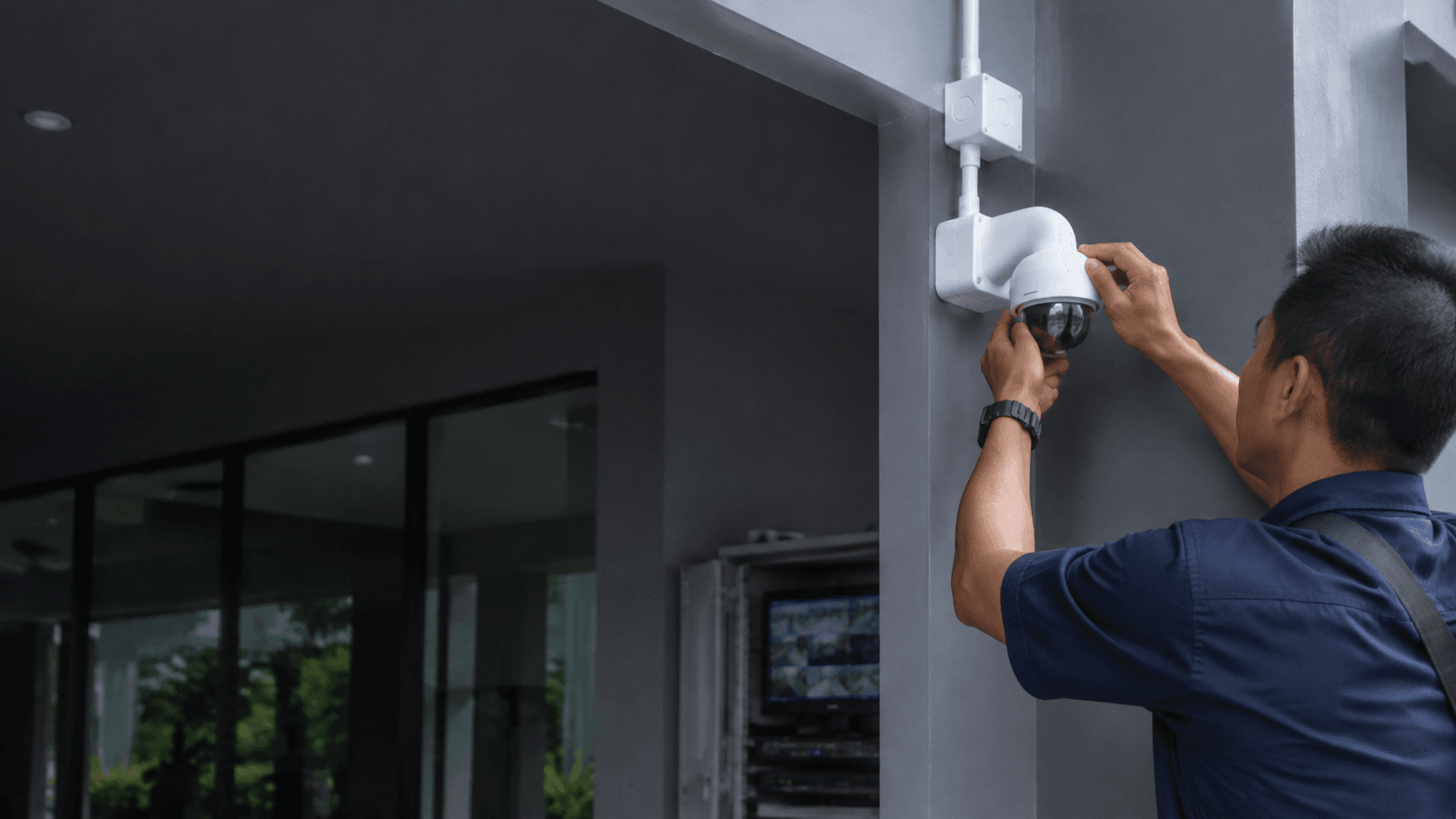
Covert formats sit inside ordinary objects or small housings, so the visible hardware rarely looks like a camera. That is the appeal and the complication: a discreet camera still needs power, a recording path and a viewing method, and those three requirements usually decide whether a hidden format is practical at a given site.
Eyonic Sdn Bhd plans, supplies and installs monitoring systems with camera placement, recording and remote viewing for homes, offices, shops and industrial sites. The company is based in Sarawak and works across residential, commercial and government projects.
Spy Cctv Camera. What Covert Surveillance Covers
Covert surveillance means recording without the camera being obvious to the people in the space. In practice, a spy cctv camera is judged on three things: whether the housing blends into the room, whether the lens has a clear line to the area of interest, and whether the recording and viewing chain works without drawing attention.
Discretion is not the same as invisibility. A disguised housing hides the camera body, but the lens still needs an unobstructed view. A unit tucked behind a shelf or angled into a wall records nothing useful, no matter how well the housing blends in.
Covert formats also change the maintenance picture. A camera inside a clock, a smoke detector housing or a small enclosure is harder to reach for cleaning, repositioning or cable checks than a standard dome or bullet camera mounted on a bracket. That trade-off belongs in the planning conversation, not in the afterthought stage.
Hidden Camera Formats and Disguised Housings
Hidden camera formats generally fall into a few practical groups, and the group matters more than the specific product name.
- Object-based housings, where the camera sits inside a functional item such as a clock, detector housing or small appliance.
- Pinhole and small-lens units, where the camera body is separate from a tiny lens opening.
- Compact standalone cameras, small enough to sit on a shelf or bracket without a bulky housing.
- Standard cameras positioned discreetly, where an ordinary dome or turret camera is placed to be unobtrusive rather than disguised.
The last group is worth separating from the rest. A conventional camera placed high, angled away from eye level and finished in a neutral colour is often less noticeable than expected, and it keeps the maintenance and recording setup straightforward. Disguised housings solve a visibility problem; discreet placement solves the same problem with fewer moving parts.
Eyonic's product range includes Hikvision cameras, and the company reviews camera behaviour before recommending placement. In a review of Hikvision ColorVu cameras, Eyonic notes that actual lighting conditions should be checked before confirming placement. That check applies to covert formats too, because a small lens opening and a disguised housing both reduce the light reaching the sensor.
Spy Cctv Camera Placement and Lighting Checks
Placement decides whether a covert camera produces usable footage. The checks below are the ones that change outcomes most often.
- Site survey. walk the space at the times of day that matter and note where light comes from, where people actually move, and where a camera can sit without an obvious cable run.
- System proposal. match camera format, recording device and viewing method to the surveyed conditions rather than to a product list.
- Installation. mount, cable and configure the system, then confirm the lens view matches the intended coverage area.
- Handover. confirm recording works, confirm remote viewing works, and confirm the people responsible know how to check both.
Eyonic's CCTV installation process follows those four stages: site survey, system proposal, installation and handover.
Lighting is the check most often skipped. A camera facing a bright window records silhouettes; a camera in a dim corridor records noise. Eyonic's guidance on ColorVu-style cameras is to verify actual lighting conditions on site before confirming placement, because the difference between a lit and unlit view changes what the camera can realistically capture.
Angle and height matter for a second reason. A camera mounted too low sits at face level and is easy to spot; a camera mounted too high loses facial detail and records the tops of heads. The useful band is usually the range where the lens sees the target area without being at eye level.
Recording, Storage and Remote Viewing Basics
A covert camera is only half of a working system. The recording device, the storage method and the viewing app determine whether footage exists when it is needed.
Eyonic's service scope includes NVR setup and remote viewing alongside camera placement. An NVR records camera feeds to a local storage device, and remote viewing lets the footage be checked from a phone or computer. Both need to be configured and tested at handover, because a camera that records locally but cannot be viewed remotely fails a common requirement, and a system with remote viewing but no working recording fails the other one.
Storage planning is a practical constraint rather than a technical footnote. Continuous recording fills storage faster than motion-triggered recording, and more cameras fill it faster than fewer. The right balance depends on how far back footage needs to be available, which is a question for the site owner rather than a default setting.
Network reliability affects remote viewing directly. If the connection at the site drops, remote access drops with it, even though local recording continues. That distinction is worth confirming at handover so expectations match what the system actually does.
Spy Cctv Camera Planning for Shops and Offices
Commercial sites change the calculation. A shop or office usually needs coverage of entrances, counters, cash handling areas and stock or equipment zones, and it usually needs the system to be maintainable by staff who are not technicians.
Eyonic's completed work includes the Kuching Immigration Office, a public office project focused on arrival flow, staff areas, visitor movement and dependable daily operation. The same priorities appear in commercial planning: where people enter, where staff work, where visitors move, and whether the system keeps running day after day without intervention.
Eyonic also completed a project for KTA Sarawak Sdn Bhd, an engineering consultancy site in Kuching that needed a practical office setup supporting staff movement, visitor handling, tidy cabling and clearer daily site control. Tidy cabling is not a cosmetic detail in a covert setup. Visible cable runs undermine the discretion of a hidden camera, and poorly routed cable is harder to service later.
For shops and offices, the honest trade-off is between discretion and serviceability. A fully disguised camera is harder to identify and harder to maintain. A discreetly placed conventional camera is easier to service and easier to explain to staff. The right choice depends on what the site is actually trying to observe and who needs to know the system exists.
Budget expectations vary by scope. Eyonic's published package pricing starts at RM 1,599 for a Hikvision CCTV package covering camera supply and setup, basic recording configuration and mobile viewing handover. Larger commercial work sits in a different range: the Kuching Immigration Office project carried an approximate budget of RM 12,000 to RM 28,000, and the KTA Sarawak Sdn Bhd project carried an approximate budget of RM 8,000 to RM 18,000.
Questions to Settle Before Any Installation
These questions decide the shape of a covert camera system before any hardware is chosen.
What is the camera meant to observe? A specific counter, an entrance, a stock area or a general space each points to a different format and position. A camera aimed at everything usually captures nothing well.
Who knows the system exists? Covert recording raises consent and privacy questions that vary by setting, and the answers affect where cameras can be placed and who can view footage. Those questions belong with the site owner and any relevant authority, not with the installer alone.
What happens when the camera is discovered? Discretion reduces the chance of a camera being noticed, but it does not remove the possibility. A system that only works while hidden has a single point of failure.
How will footage be retrieved and how far back does it need to go? Retention requirements drive storage sizing, and storage sizing drives cost.
Who maintains the system? A disguised housing that needs repositioning, cleaning or a cable check requires access, and that access needs to be planned rather than improvised.
What is the fallback if remote viewing fails? Local recording and remote viewing are separate functions, and knowing which one is primary keeps expectations realistic.
Eyonic's founder, Eric Yong, has worked in the industry for more than ten years and is experienced in technical installation of digital security solutions for commercial businesses in Sarawak. That background is relevant to covert planning mainly because placement decisions depend on how a site actually operates, not on how it looks on a floor plan.
For sites in Sarawak, the practical next step is to share the location, property type and required system with Eyonic on WhatsApp at +60 11-5111 7959, so the site survey and system proposal stages can be based on the actual space rather than on assumptions.