
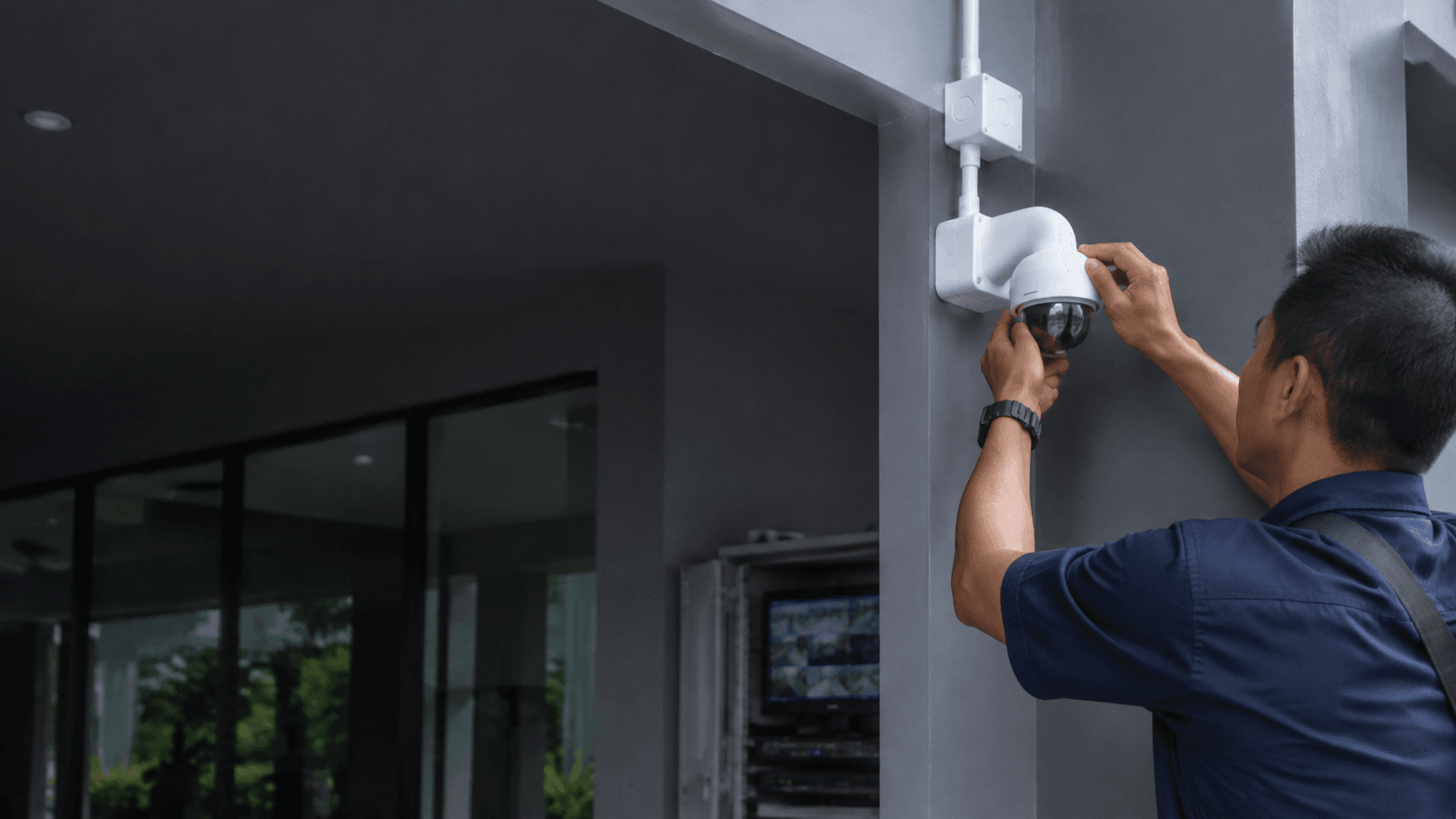
The exact-match query zosi cctv describes a product family rather than a single device. Zosi sells cameras, recorders and the Zosi Smart app as separate parts of one system, and the brand's own store pages organise the range around two recorder types: analog DVR systems and PoE NVR systems. Buyers in Malaysia searching zosi cctv are usually trying to work out whether that combination fits a specific property before committing to a purchase or an installation.
What follows sets out what the brand's pages actually establish, what they leave open, and how a buyer can close those gaps with a site survey rather than a specification sheet.
What Zosi CCTV covers across cameras and recorders
Zosi's own store pages present the range as three connected layers: cameras, a recorder, and an app for viewing. The recorder layer splits into two families.
An analog DVR system uses wired cameras connected to a digital video recorder. Zosi's analog collection describes this route as cost-effective coverage with continuous recording, long-distance cabling and local storage on a hard drive, and it notes that the DVR does not need internet access to record. That last point matters for properties where the recorder sits in a room without a reliable network connection.
A PoE NVR system uses IP cameras connected over Ethernet, with power carried on the same cable. Zosi's wired camera collection lists PoE systems alongside analog ones, and its recorder collection separates network video recorders from digital video recorders. The practical difference is cabling: analog runs on coaxial cable, PoE runs on network cable.
Both routes store footage locally on a hard drive. Zosi's recorder pages describe local storage and remote access as standard parts of the setup, and the Zosi Smart app is presented as the viewing layer for live feeds, playback and alerts. The app is available for mobile and desktop platforms according to the app's own site.
One limit is worth stating plainly. Zosi's store pages list model numbers, channel counts and hard drive options, but those figures come from the vendor's own product listings and were not independently verified for this article. Treat them as a starting point for a conversation, not as confirmed performance data.
How Zosi CCTV systems are set up and viewed
Setup follows the same broad sequence whether the property uses analog or PoE hardware. The order below reflects how a buyer typically works through the decision, from property requirements to handover.
- Confirm what the property needs covered, including entrances, boundaries, staff areas and any blind spots that matter for daily operation.
- Check lighting and placement conditions on site, because actual light levels at each position determine whether a camera can hold a usable image after dark.
- Match camera type to recorder type, since analog cameras pair with a DVR and IP cameras pair with an NVR.
- Confirm storage and viewing requirements, including how long footage should be retained and which devices need remote access.
- Arrange installation and handover, covering cabling, recorder configuration, app setup and a walkthrough of how the system behaves day to day.
Placement is the step most often rushed. Eyonic's review of ColorVu-style cameras recommends checking actual lighting conditions before confirming placement, because a position that looks adequate in daylight can behave differently at night. The same logic applies to any camera choice: the site decides the position, not the product photo.
Viewing is the other half of setup. Local storage keeps footage on the recorder, while remote viewing depends on the recorder's network connection and the app. A system can record continuously without internet access, but remote viewing will not work until that connection is in place. Buyers who want both should confirm the network route at the same time as the camera positions.
What to compare before choosing Zosi CCTV
The useful comparison is not Zosi against another brand on paper. It is the property's requirements against what each system type can deliver.
Analog DVR systems suit properties where cabling already exists or where runs are long, and where the priority is straightforward continuous recording without monthly fees. PoE NVR systems suit properties where network cabling can be run cleanly and where higher-resolution IP cameras are wanted. Both depend on the recorder having enough channels for the cameras planned, and on storage sized for the retention period required.
Three questions separate a workable plan from an optimistic one. First, how many positions genuinely need coverage, not how many cameras a package includes. Second, what happens at night at each of those positions. Third, who will maintain the system after handover, because a recorder that fills up or an app that loses its connection needs someone able to respond.
Cost is the fourth consideration, and it is where published information runs out. No verified Zosi pricing for the Malaysian market was available for this article, and no verified warranty or after-sales terms for Malaysia were supplied either. Buyers comparing quotes should ask what is included in supply, what is included in installation, and what happens if a camera or recorder fails.
Where Zosi CCTV fits alongside local installation support
Zosi hardware is sold as a product range. Installation, placement and handover are separate work, and that separation is where local support matters.
Eyonic's CCTV installation process covers site survey, system proposal, installation and handover. A survey establishes what the property actually needs before any hardware is chosen, which is the step that prevents a package from being bought for the wrong layout. Placement decisions then follow the survey rather than a floor plan.
Completed work shows what that process looks like in practice. Eyonic's project for the Kuching Immigration Office focused on arrival flow, staff areas, visitor movement and dependable daily operation, with an approximate budget of RM 12,000 to RM 28,000 for that type of work. A separate project for KTA Sarawak Sdn Bhd covered a practical office setup in Kuching supporting staff movement, visitor handling, tidy cabling and clearer daily site control, with an approximate budget of RM 8,000 to RM 18,000.
Those figures describe completed projects, not Zosi packages, and they should not be read as a price for any specific system. They show the scale of work involved when a property needs coverage planned around how it is used rather than around a box contents list.
For buyers who want supply, placement and handover handled together, Eyonic's packages start at RM 1,599 for a Hikvision CCTV package covering camera supply and setup, basic recording configuration and mobile viewing handover. Sharing the property location, property type and required system with Eyonic on WhatsApp at +60 11-5111 7959 is the practical next step.
Zosi CCTV questions buyers ask before deciding
Does a Zosi recorder need internet to record? No. Zosi's analog collection states that the DVR does not need internet access to record, because footage is written to the local hard drive. Internet access is needed for remote viewing through the app.
Can analog and PoE cameras be mixed on one recorder? Not on a single recorder of either type. Analog cameras connect to a DVR and IP cameras connect to an NVR, so the recorder choice determines the camera type. Properties wanting both would need to plan for two systems or choose one route.
Is a monitor required? Zosi's analog collection notes that a DVR system can be used without a monitor, with viewing handled through the app instead. A monitor is useful during initial setup and for anyone who wants a fixed local view.
What is not established by the brand's own pages? Verified technical specifications, Malaysian pricing, warranty terms and independent performance data for night vision or detection were not available for this article. Zosi's store pages list model numbers and storage options, but those are vendor listings rather than independently confirmed figures. A buyer weighing a Zosi system against another brand should ask for the specification sheet for the exact model being quoted and confirm what support is available locally.
Where does local installation change the decision? It changes the order of the work. Instead of choosing a package and then finding positions for it, a survey establishes the positions first and the hardware follows. That approach suits properties with irregular layouts, mixed indoor and outdoor coverage, or areas where lighting varies significantly across the day.