
The exact-match query 4k cctv describes a camera and recorder combination rather than a single product. Resolution is only one variable in that combination. Placement, lighting, recorder capacity and how footage gets reviewed all shape whether the extra pixels produce a usable image or an expensive one.
Eyonic Sdn Bhd plans, supplies and installs monitoring systems with camera placement, recording and remote viewing for homes, offices, shops and industrial sites. The company is based in Sarawak, Malaysia, and its founder Eric Yong has worked in the industry for more than ten years, with experience in technical installation of digital security solutions for commercial businesses in Sarawak.
What 4k cctv Means In Practice
4K refers to a horizontal resolution of roughly 4,000 pixels. In surveillance equipment this is commonly marketed as 8MP, and the two labels describe the same class of sensor. A 4K camera captures a wider pixel grid than a 1080p camera, which matters most when a viewer needs to identify a face, a plate or a hand movement inside a wide scene.
The practical effect is crop tolerance. A 1080p frame of a car park may show that a person walked past. A 4K frame of the same car park holds enough detail that a section of the image can be enlarged and still read. That difference is the entire commercial argument for 4k cctv, and it only holds when the rest of the system keeps up.
Three constraints decide whether it holds:
- Storage and bandwidth. More pixels per frame means more data per second. A recorder sized for 1080p cameras will fill faster or force a shorter retention window when 4K cameras are added.
- Lens and field of view. A very wide lens spreads the same pixel count across more scene, which reduces the detail available on any one subject.
- Light. Detail depends on light reaching the sensor. A high-resolution sensor in a dim corridor can produce a larger but noisier image than a lower-resolution camera in the same spot.
Eyonic's own guidance on ColorVu-style cameras is to check actual lighting conditions before confirming placement. That advice applies with more force at 4K, because resolution cannot recover detail that was never captured.
When 4k cctv Is The Right Choice
4k cctv earns its cost when identification matters more than coverage count. The clearest cases involve a scene that must be watched from a distance, a wide area covered by few cameras, or an entrance where faces and vehicles need to be distinguishable after the fact.
Typical fits include.
- Shopfronts and entrances where a single camera must cover a wide approach.
- Office reception and visitor areas where movement needs to be reviewed later.
- Industrial and warehouse perimeters where cameras sit far from the point of interest.
- Properties where the number of camera positions is limited by structure or cabling.
The case against 4K is equally concrete. A small room with a fixed camera a few metres from the door does not need 4K to identify a face. A site with many cameras and a tight storage budget may get more value from consistent 1080p coverage than from a few 4K units. A location with poor lighting may need lighting work or a camera suited to low light before resolution becomes the deciding factor.
Eyonic's project for the Kuching Immigration Office illustrates the pattern. The work focused on arrival flow, staff areas, visitor movement and dependable daily operation. Those are coverage and reliability problems first, and resolution serves them rather than leading them.
What To Compare Before Choosing 4k cctv
Comparison should start with the scene, not the specification sheet. The questions that change the answer are about distance, light, retention and who will review footage.
- Site survey. Walk the property and record where identification is actually needed, at what distance, and under what lighting at different times of day.
- System proposal. Match camera positions, lens choice and recorder capacity to those findings, including how many days of footage must be retained.
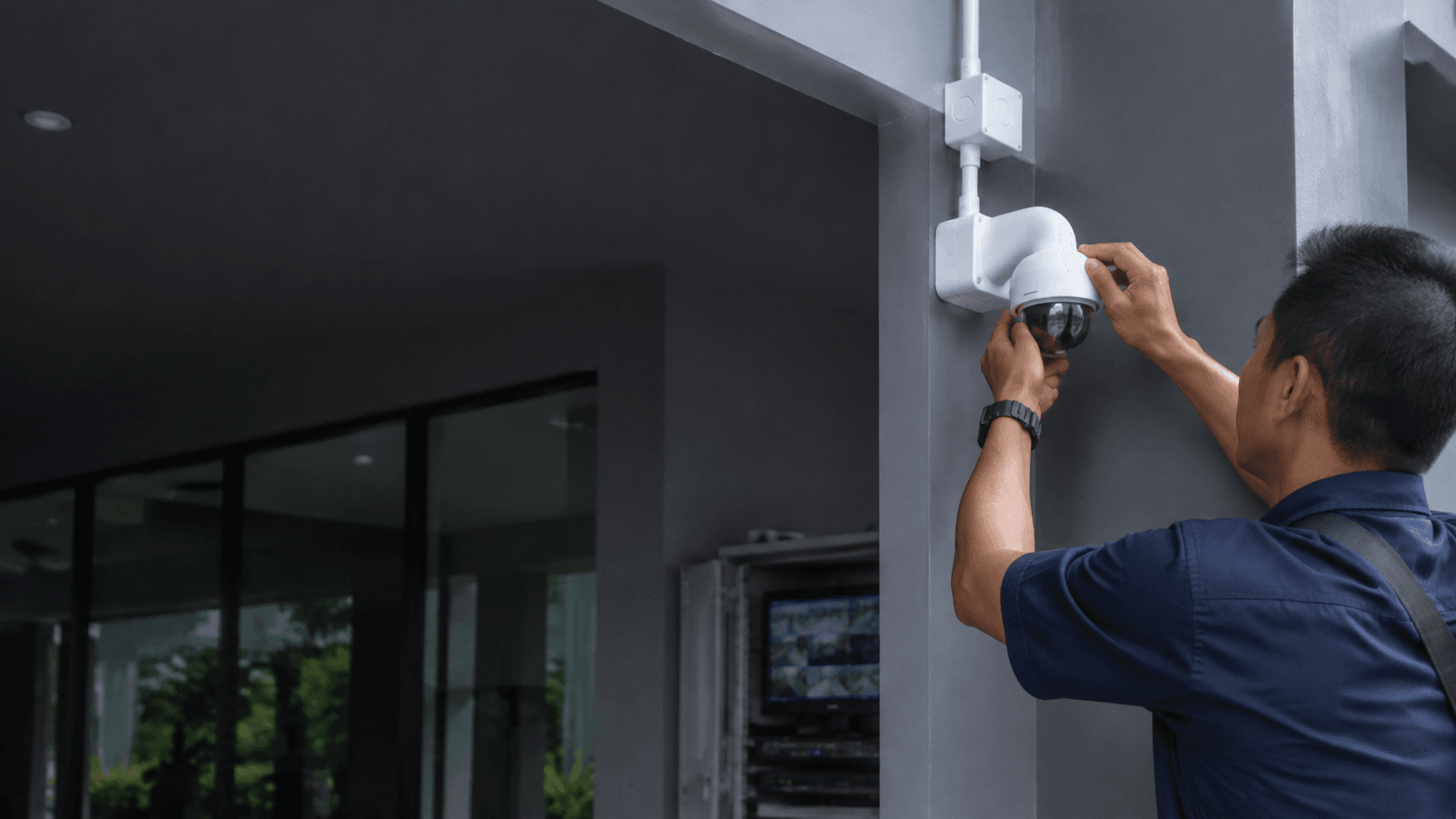
- Installation. Mount cameras, run cabling, configure the recorder and confirm each view matches the plan.
- Handover. Confirm recording, playback and remote viewing work, and that the people who need access know how to use them.
Eyonic's CCTV installation process follows those four stages: site survey, system proposal, installation and handover. The sequence matters because a proposal written before a survey tends to over-specify cameras and under-specify storage.
Four comparison points carry the most weight:
- Retention period. Decide how many days of footage must be kept, then size storage against that number rather than against camera count alone.
- Camera positions. Fewer, well-placed cameras usually outperform more cameras aimed at the same ground.
- Lighting at each position. Check the scene at night, not from a daytime photograph.
- Remote viewing. Confirm the recorder and network setup support the phones and devices that will actually be used.
Cost is part of the comparison, and it is worth separating package pricing from project pricing. Eyonic lists a Hikvision CCTV Package at RM 1,599 covering camera supply and setup, basic recording configuration and mobile viewing handover. Larger or more complex work is quoted per project; the Kuching Immigration Office project sits in an approximate budget range of RM 12,000 to RM 28,000, and the KTA Sarawak Sdn Bhd office project sits in an approximate range of RM 8,000 to RM 18,000. Those ranges describe project scale, not a 4K package price.
How Eyonic Plans A 4k cctv Installation
Eyonic plans, supplies and installs monitoring systems with camera placement, recording and remote viewing. For a 4K system the planning stage carries more weight than the hardware list, because resolution raises the demands on storage, network and lens choice at the same time.
The survey establishes what each camera must prove. A camera covering a gate needs enough detail to identify a vehicle. A camera covering a corridor may only need to show that someone passed through. Treating those two positions as identical is the most common way a 4K budget gets spent without a matching gain.
The proposal then sets camera positions, lens and field of view, recorder capacity and retention, and the remote viewing setup. Installation follows the agreed positions, and handover confirms recording, playback and mobile access before the job closes.
Two practical notes apply to most sites. First, cabling and recorder location are easier to settle during the survey than after cameras are mounted. Second, lighting should be checked at the positions chosen, since a camera that performs well in daylight may behave differently after dark.
Eyonic's wider service range covers alarm systems, autogate, keyphone intercom and Starlink internet installation alongside CCTV, which matters when a property needs several systems to work together rather than in isolation.
Common Questions About 4k cctv
Is 4K the same as 8MP? In surveillance marketing the two terms are used interchangeably for the same resolution class. Buyers comparing listings should treat them as equivalent labels rather than as different tiers.
Does 4K replace the need for good camera placement? No. A poorly aimed 4K camera produces a large image of the wrong area. Placement decides what is in frame; resolution decides how much detail survives inside that frame.
Can 4K cameras be added to an existing system? Sometimes, but the recorder, storage and network must be checked first. A recorder sized for lower-resolution cameras may not handle additional 4K streams at the retention period the site needs.
Is 4K necessary for a small shop or office? Often not. Where cameras sit close to the point of interest and lighting is reasonable, a lower resolution can identify people adequately. The decision should follow the survey rather than a default preference for the highest number available.
What should be prepared before an installation visit? The property location, property type and the system required give an installer enough to plan a survey. Sharing those details with Eyonic on WhatsApp at +60 11-5111 7959 is the next practical step.