
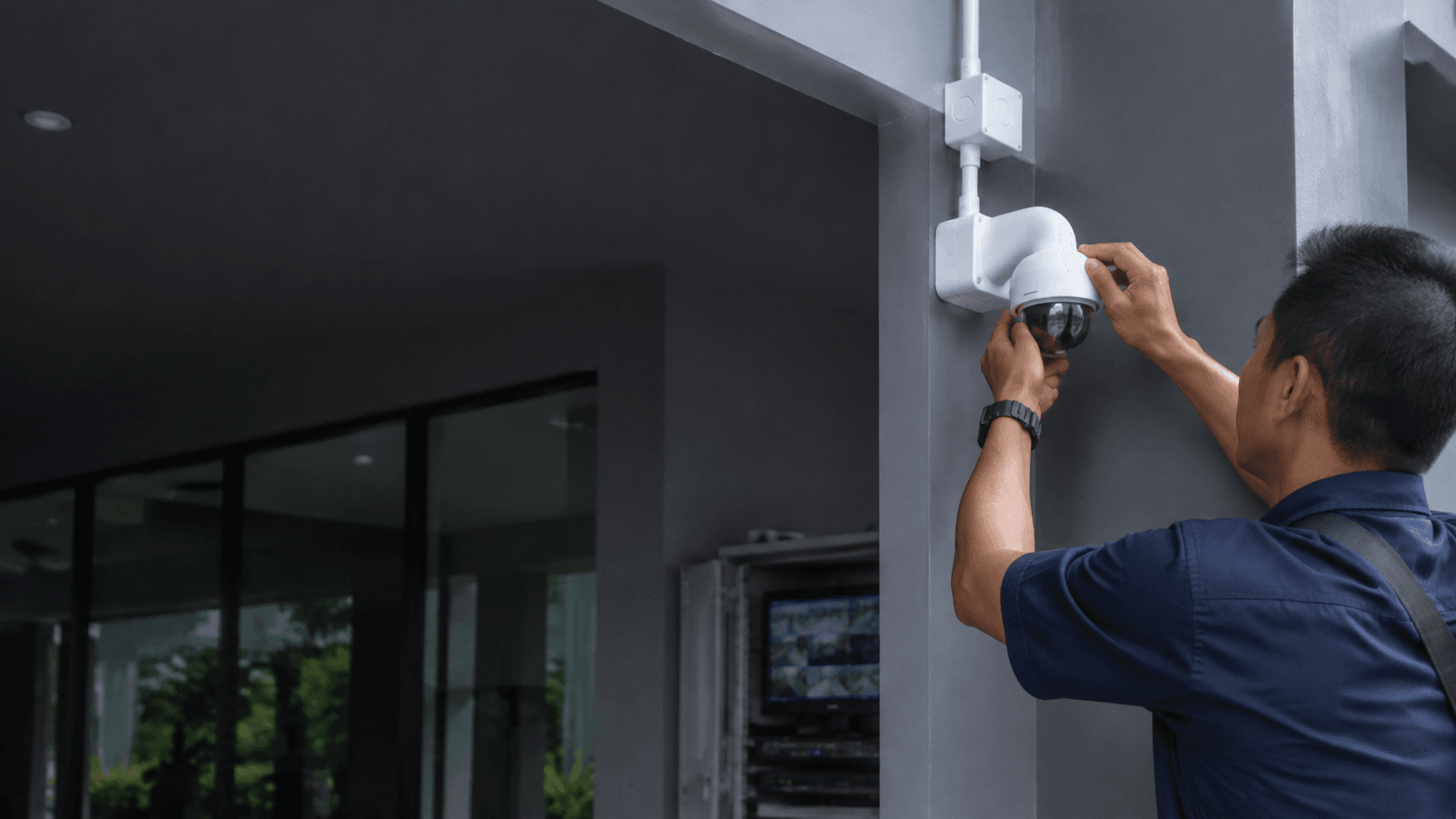
Outdoor surveillance is rarely decided by the camera box alone. Two properties on the same street can need completely different coverage because of where the gate sits, which corner stays dark after sunset, and how visitors actually arrive. That is why the useful question is not which model is newest, but what the site needs the footage to show.
Eyonic Sdn Bhd plans, supplies and installs monitoring systems with camera placement, recording and remote viewing for homes, offices, shops and industrial sites. The company is based in Sarawak and works across Malaysian properties, so the practical advice below stays close to how installations are actually scoped here.
Outside Cameras. What Determines a Workable Setup
A workable setup answers three questions before any hardware is chosen: what must be seen, when it must be seen, and who needs to review it afterwards. Coverage that ignores any one of those tends to produce footage nobody can use.
What must be seen is about field of view and angle. A camera aimed at a gate should capture faces and vehicle plates at the point where people slow down, not the blur of a car already moving past. A camera covering a back lane serves a different purpose from one watching a shop entrance, and the mounting height and direction change accordingly.
When it must be seen is about lighting. Daylight coverage is the easy part. The harder question is what the scene looks like at night, under a porch light, beside a street lamp, or in complete darkness. Eyonic recommends checking actual lighting conditions before confirming placement for ColorVu-style cameras, because a position that looks ideal in the afternoon can behave very differently after dark.
Who reviews it is about recording and access. Recording configuration and remote viewing are part of the same planning conversation, since footage that cannot be found quickly after an incident has limited value. NVR setup and mobile viewing are handled at installation so the system is usable from day one rather than left half-configured.
Why Placement and Lighting Decide Most Outcomes
Placement and lighting carry more weight than most buyers expect. A well-positioned camera with modest capability usually outperforms a higher-specification unit pointed at the wrong spot.
Three placement realities shape results:
- Distance to the subject. A camera covering a wide driveway sees faces small; the same camera closer to the gate sees them clearly.
- Light direction. A camera facing a bright light source at night can lose detail in the area that matters most.
- Obstruction. Trees, signage, parked cars and roof lines change coverage through the day and across seasons.
Lighting is the variable most often underestimated. A position that captures clean images at midday may sit in shadow by evening, while another spot benefits from existing lighting that costs nothing to use. This is why the lighting check happens on site, at the actual position, rather than from a floor plan.
How Eyonic Plans an Outside Camera Installation
Eyonic's CCTV installation process follows four stages, and each one exists to prevent a problem that would otherwise appear after the work is finished.
- Site survey — the property is reviewed for coverage needs, mounting positions, lighting conditions, cabling routes and recording location.
- System proposal — the survey findings are turned into a recommended system covering camera placement, recording and remote viewing.
- Installation — cameras, cabling and recording equipment are installed and configured on site.
- Handover — the system is tested and the user is shown how to view footage and manage the setup.
The sequence matters because each stage feeds the next. A proposal written without a survey is guesswork, and an installation completed without a handover leaves the owner dependent on someone else to check footage.
For larger or more complex sites, the same logic scales. Eyonic completed a project for the Kuching Immigration Office, focused on arrival flow, staff areas, visitor movement and dependable daily operation. That kind of brief is about coverage of movement through a building rather than a single entrance, and it shows how placement decisions multiply as a site grows.
A second example sits closer to a typical commercial office. Eyonic's work with KTA Sarawak Sdn Bhd covered a practical office setup in Kuching supporting staff movement, visitor handling, tidy cabling and clearer daily site control. Cabling routes and tidy finishing are part of the plan, not an afterthought, because exposed or poorly routed cable affects both reliability and how the installation looks years later.
Outside Cameras in Malaysian Weather and Daily Operation
Malaysian conditions put outdoor equipment through heat, humidity and heavy rain, and the practical response is to plan for maintenance access rather than assume nothing will need attention.
Two operational habits keep a system useful over time. The first is checking footage periodically rather than only after an incident, so a failed camera or a shifted angle is noticed early. The second is keeping the recording setup and remote viewing working together, since a camera that records but cannot be reviewed remotely loses much of its value for a business owner who is often off site.
Where a property already has alarm, autogate, intercom or internet infrastructure, it is worth raising that during planning. Eyonic also supplies and installs alarm systems, autogates, keyphone intercoms and Starlink internet, so a site with existing or planned systems can be considered as a whole rather than as separate purchases that later conflict.
What a Site Survey Confirms Before Installation
A site survey confirms the details that decide whether the finished system works: where cameras can be mounted, how cable reaches them, where recording equipment will sit, and what the scene looks like under real lighting.
It also confirms what the property cannot support. Some positions have no practical cable route. Some walls cannot take a mounting point without additional work. Some entrances are better covered from an angle than head-on. Finding these constraints before installation is far cheaper than discovering them afterwards.
The survey is also where the brief is clarified. A homeowner watching a front gate, a shop owner covering a counter and entrance, and an industrial site monitoring a loading area all need different coverage priorities, and the survey is the point where those priorities are stated plainly.
What a Package Covers and What a Project Covers
Eyonic's Hikvision CCTV Package is priced at RM 1,599 and covers camera supply and setup, basic recording configuration, and mobile viewing handover. That structure suits a straightforward property where the coverage requirement is clear.
Larger or multi-area sites are usually scoped as projects instead. The Kuching Immigration Office project carried an approximate budget of RM 12,000 to RM 28,000, and the KTA Sarawak Sdn Bhd project carried an approximate budget of RM 8,000 to RM 18,000. Those ranges reflect scope and site conditions rather than a fixed product list, which is why a survey comes before a proposal.
Individual camera unit pricing is not published, so a property needing a specific number of cameras is best scoped through the survey and proposal stage.
. Next Practical Step
The most useful information to prepare before a survey is simple: the property location, the property type, and what the system needs to cover. With those three details, a proposal can be built around the site rather than around a generic package.
Share your location, property type and required system with Eyonic on WhatsApp at +60 11-5111 7959 for the next practical step.