
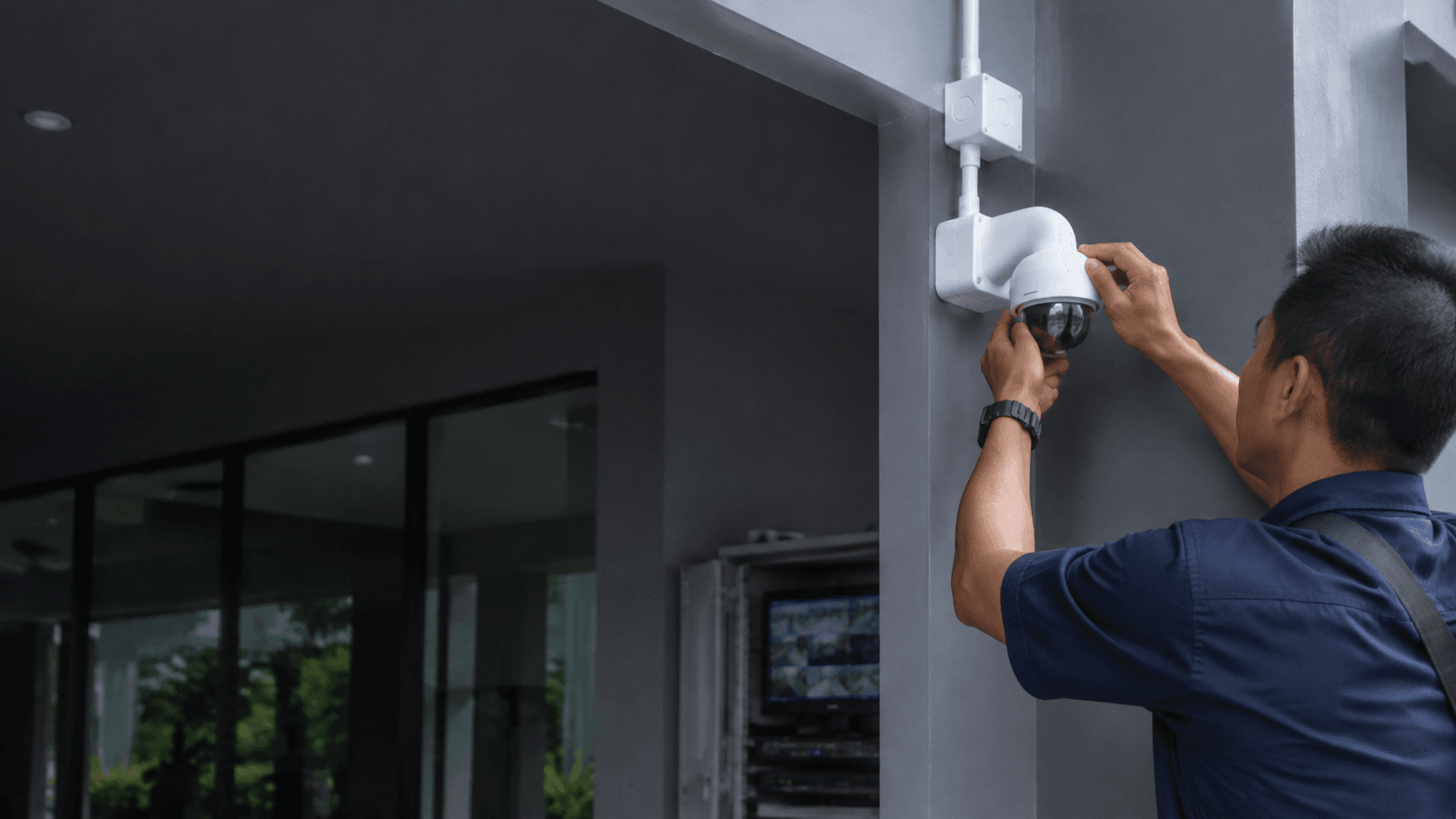
Eyonic Sdn Bhd plans, supplies and installs CCTV systems for shops in Sarawak, and the same sequence applies to a retail unit anywhere in Malaysia: survey the premises, agree the camera positions, install, then hand over the recording and mobile viewing setup. The sections below cover what shop owners compare, where cameras go, how recording and remote viewing work, why lighting decides camera choice, and what an installation visit actually includes.
Best CCTV Camera for Shop. What Malaysian Shop Owners Compare
Shop owners comparing options usually weigh four things: what the camera can see, where it can be mounted, how footage is stored, and how the footage is viewed later. Resolution and night performance get the most attention, but placement and lighting decide whether a camera is useful in practice.
Two constraints shape the decision more than any specification sheet. The first is the shop layout — a narrow unit with a single entrance needs different coverage from a corner lot with a loading area. The second is lighting, because a camera that performs well under bright fluorescent light may behave differently in a dim stockroom or under a shopfront awning at night.
Eyonic's published guidance on Hikvision ColorVu cameras is to check actual lighting conditions before confirming placement. That is a practical instruction rather than a product claim: the same camera model can suit one position and not another depending on how much light reaches it after dark.
Why the word "best" needs qualifying
There is no verified comparative testing evidence establishing one camera brand or model as objectively best for shop premises. Published roundups from other sites rank cameras by their own criteria, and those criteria differ. A shop owner is better served by matching camera type to position than by chasing a single top pick.
Cctv Camera For Shop placement across counter, entrance, and stock areas
Placement is the part of a shop CCTV camera decision that most affects what footage is actually usable. Three zones matter in most retail premises, and each has a different job.
- Site survey. Eyonic's installation process begins with a site survey, which establishes the shop layout, existing cabling routes and the lighting at each proposed camera position.
- System proposal. The survey findings feed a proposal covering camera positions, recording setup and remote viewing before any work starts.
- Installation. Cameras, cabling and the recorder are installed and configured on site.
- Handover. The recording configuration and mobile viewing access are handed over so the shop operator can review footage without calling an installer.
The counter is usually the highest-value position because it covers both cash handling and the customer-facing side of the transaction. An entrance camera needs to capture faces as people come in, which means it should be positioned to look toward the door rather than along the wall beside it. Stock areas and back-of-house corridors are typically lower-traffic but matter for internal loss and after-hours access.
Overlapping coverage between the entrance and counter is often more useful than adding a camera elsewhere, because a single camera covering both zones can leave a gap when shelving or signage blocks part of the view.
Mounting height and obstruction
Cameras mounted too low are easy to obstruct or reposition; cameras mounted too high lose facial detail at the entrance. The practical answer depends on ceiling height and whether the shop has a drop ceiling or exposed structure, which is why the survey happens before the proposal rather than after.
Recording, storage, and remote viewing for a shop system
Recording and storage decisions determine how far back footage can be reviewed, and remote viewing determines whether the operator can check the shop without being on site. Both are configured during installation rather than added later.
Eyonic's CCTV service covers camera placement, recording and remote viewing for shops alongside homes, offices and industrial sites. The RM 1,599 Hikvision CCTV Package listed by the brand includes camera supply and setup, basic recording configuration, and mobile viewing handover — which maps to the three practical questions a shop owner asks: what is recorded, where it is stored, and how it is watched.
Storage capacity, retention period and recording configuration figures for a specific shop deployment are not published, so those numbers are set during the survey and proposal stage based on the number of cameras and the retention the operator wants.
Remote viewing in practice
Mobile viewing handover means the shop operator leaves the installation able to open the camera feed on a phone. That is a configuration task, not just an app download, because the recorder, network and user access all have to be set up together.
Lighting conditions and camera selection before installation
Lighting is the variable most often overlooked when a shop owner picks a camera from a specification list. A position that looks bright during a daytime visit can be dark at closing time, and a position under an awning can behave differently again after rain or when signage lighting is switched off.
Eyonic's guidance on ColorVu-style cameras is to check the actual lighting conditions before confirming placement. That check happens during the site survey, when the installer can see the shop under its real lighting rather than under showroom conditions.
Verified low-light and night performance figures for shop conditions in Malaysia are not available, so no claim is made here about how any specific model performs after dark. The honest position is that lighting assessment at the premises is what determines whether a given camera position will produce usable footage.
Where lighting changes the plan
Shopfronts with glass and street lighting outside behave differently from internal stockrooms with intermittent lighting. A position that works for the counter may not work for a rear corridor, and the survey is where that difference gets resolved.
What the Eyonic installation process covers from survey to handover
Eyonic's CCTV installation process runs through site survey, system proposal, installation and handover. Each stage produces something the shop owner can act on before the next one begins.
The survey establishes layout, cabling routes and lighting. The proposal sets out camera positions and the recording and viewing setup. Installation puts the hardware and configuration in place. Handover transfers the recording configuration and mobile viewing access to the operator.
Eyonic has completed work for the Kuching Immigration Office, focused on arrival flow, staff areas, visitor movement and dependable daily operation, and for KTA Sarawak Sdn Bhd, an engineering consultancy office setup in Kuching covering staff movement, visitor handling and tidy cabling. Both are office and public-building projects rather than retail units, so they illustrate the planning approach rather than shop-specific outcomes.
Eric Yong founded Eyonic Security Systems and has worked in the industry for more than ten years, with experience in technical installation of digital security solutions for commercial businesses in Sarawak.
What the process does not cover
Warranty terms, support response times and after-sales conditions are not published in the available material, so those should be confirmed directly rather than assumed. Malaysian legal or regulatory requirements for recording audio or video in shop premises are also not covered here, and a shop owner with specific concerns should check the current position with an appropriate source.
Practical next step for a shop CCTV camera in Malaysia
The most useful next step is a site survey, because it converts a general camera question into a specific plan for one premises. Before that visit, it helps to know the shop layout, the areas of concern, and whether remote viewing is needed.
Eyonic's listed packages sit at RM 1,599 for the Hikvision CCTV Package, RM 1,599 for the Hikvision Alarm System and RM 1,599 for the Autogate Package. Larger commercial work is priced separately — the Kuching Immigration Office project carried an approximate budget of RM 12,000 to RM 28,000, and the KTA Sarawak Sdn Bhd project an approximate budget of RM 8,000 to RM 18,000 — which shows how much scope affects cost.
Share your location, property type and required system with Eyonic on WhatsApp at +60 11-5111 7959 for the next practical step.