
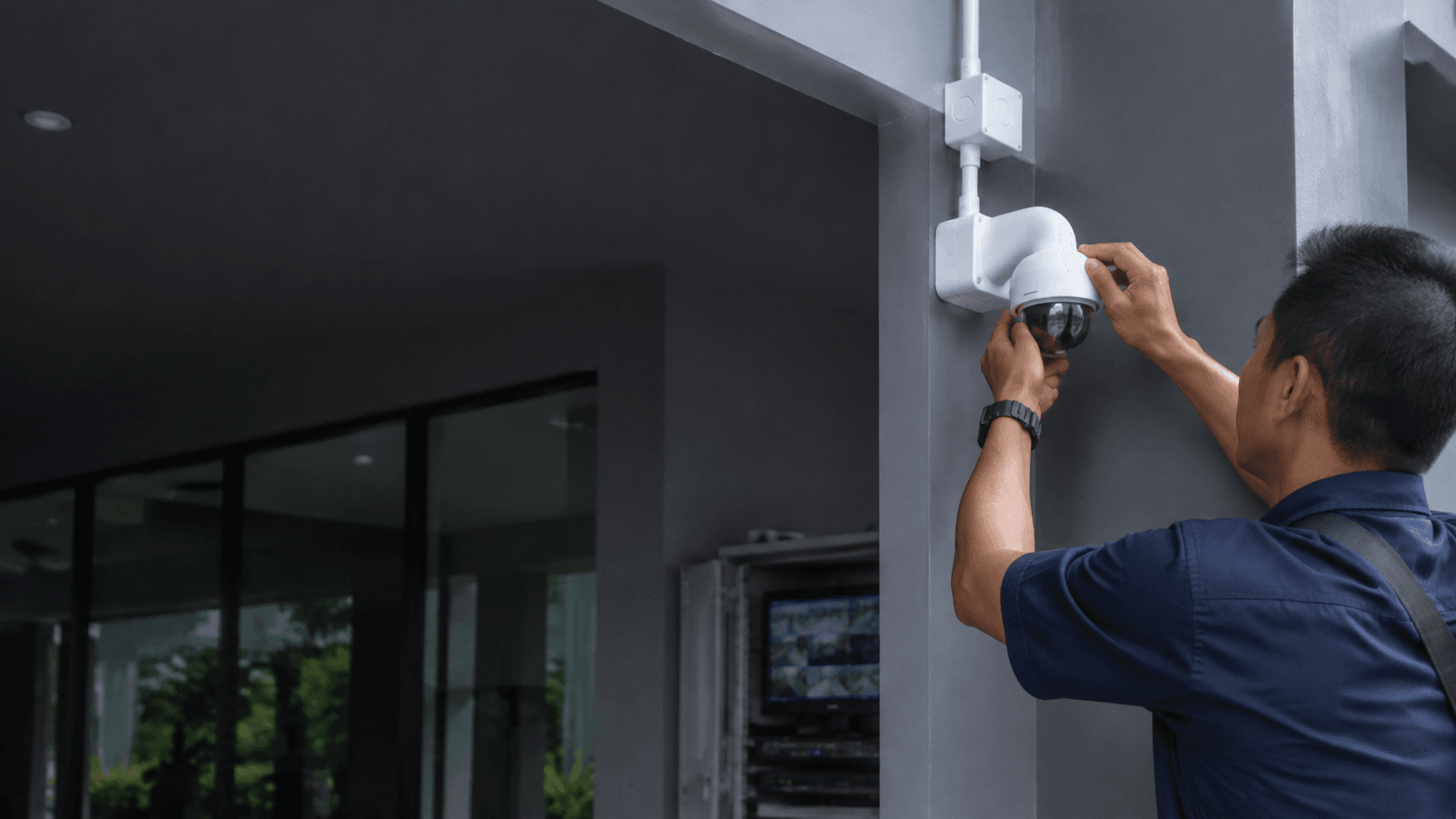
Eyonic Sdn Bhd plans, supplies, and installs monitoring systems for homes, offices, shops, and industrial sites across Sarawak. The work starts with a survey of the actual site rather than a fixed camera count, because entrances, walkways, and staff areas each need different coverage.
A working setup usually combines cameras, a recorder, storage, and a viewing method. The recorder is the part most buyers underestimate, since it decides how many cameras can run and how footage is kept. Eyonic lists NVR setup and remote viewing as part of its CCTV service, alongside camera placement and site survey.
Cctv Systems. what a working setup includes
A complete setup has four working parts: cameras that capture the scene, a recorder that stores the footage, storage sized to the number of cameras, and a viewing method for checking live or recorded video. Eyonic's service description names camera placement, recording, and remote viewing as the core of what it plans, supplies, and installs.
Camera choice follows the scene. A wide entrance and a narrow corridor rarely suit the same lens, and a camera aimed at a bright doorway behaves differently from one covering a shaded walkway. Eyonic advises checking actual lighting conditions before confirming placement for ColorVu-style cameras, because the light at the site at night matters more than the light in a product photo.
Recording and viewing are separate decisions. Recording is about where footage lives and how long it stays; viewing is about who can check it and from where. Both are settled during planning, not after the cameras are on the wall.
How camera placement follows real movement
Placement works best when it follows how people and vehicles actually move through a site. The Kuching Immigration Office project shows the pattern: coverage was planned around arrival flow, staff areas, and visitor movement rather than an even spread of cameras across the building.
That approach produces a few practical rules. Entrances and arrival points come first, because they capture who comes in and when. Walkways and corridors come next, since they connect one area to another. Staff and back-of-house areas follow, because those are the places where movement is least visible from a public counter.
Lighting is the constraint that most often changes a plan. A camera that performs well in daylight can lose detail at night if the area is dark or unevenly lit, which is why Eyonic checks real conditions before locking a position. Cabling runs and mounting height also shape placement, since a position that needs a long, awkward cable run is worth reconsidering before installation begins.
What the Eyonic installation process covers
Eyonic's CCTV installation process has four stages, and each one produces something the next stage depends on.
- Site survey — the site is reviewed for entry points, movement, lighting, and cabling routes before any equipment is proposed.
- System proposal — the survey findings are turned into a recommended setup covering camera positions, recording, and viewing.
- Installation — cameras, cabling, and the recorder are installed and configured on site.
- Handover — the system is explained and the viewing setup is passed to the user.
The survey is the stage that prevents most rework. A proposal built without one tends to over-supply cameras in easy positions and under-supply the awkward ones that matter, such as a side gate or a loading area.
Handover is the stage that decides whether the system gets used. A recorder that nobody can operate, or a mobile view that was never set up, leaves the site with footage it cannot reach. Eyonic's basic Hikvision CCTV package lists camera supply and setup, basic recording configuration, and mobile viewing handover as its three components, which mirrors the same sequence at a smaller scale.
Cctv Systems for offices, shops, and industrial sites
Different property types push the plan in different directions. An office usually needs coverage of entrances, reception, and staff movement, with tidy cabling because the installation is visible to visitors. The KTA Sarawak Sdn Bhd project followed that pattern: a practical office setup in Kuching supporting staff movement, visitor handling, tidy cabling, and clearer daily site control.
A shop leans toward counter and entrance coverage, where the priority is seeing transactions and who walks in. An industrial site usually spreads further, with outdoor areas, loading points, and perimeter sections that need coverage across a larger distance and in more variable light.
Scale changes the recorder decision more than the camera decision. A small office may run a handful of cameras on one recorder, while a larger site needs a recorder with enough channels to add cameras later without replacing the unit. That is a planning question, not a product question, and it belongs in the proposal stage.
Budget ranges and package pricing in Malaysia
Eyonic lists three packages at RM 1,599 each: a Hikvision CCTV package, a Hikvision alarm system, and an autogate package. The CCTV package covers camera supply and setup, basic recording configuration, and mobile viewing handover.
Larger project work sits well above package pricing. The Kuching Immigration Office project carries an approximate budget of RM 12,000 to RM 28,000, and the KTA Sarawak Sdn Bhd project carries an approximate budget of RM 8,000 to RM 18,000. Both figures describe the type of work, not a fixed quotation, and the spread reflects how much site size, camera count, and cabling affect the total.
The gap between RM 1,599 and the project ranges is mostly scope. A package covers a defined set of equipment and setup. A project covers a surveyed site with multiple areas, longer cable runs, and a recorder sized to the building. Buyers comparing quotes should check whether the quoted figure includes the survey, the cabling, the recorder configuration, and the handover, because a low figure that omits any of those is not comparable to one that includes them.
Common questions before confirming a Cctv Systems layout
Does the quote include the site survey? The survey is the first stage of Eyonic's process, and it is what the proposal is built from. A quote produced without one is a guess about camera positions.
Who sets up remote viewing? Mobile viewing handover is listed as part of the basic Hikvision CCTV package, so the viewing setup is passed to the user rather than left for someone on site to work out.
What happens if lighting is worse than expected? Eyonic checks actual lighting conditions before confirming placement for ColorVu-style cameras, which is the point at which a position can still be changed.
Can cameras be added later? That depends on the recorder's channel count, which is why the recorder is worth settling during the proposal stage rather than after installation.
How is cabling handled? Tidy cabling is part of the office work Eyonic describes on the KTA Sarawak Sdn Bhd project, and cable routes are reviewed during the survey.
Share the location, property type, and required system with Eyonic on WhatsApp at +60 11-5111 7959 to move from planning to a surveyed proposal.