
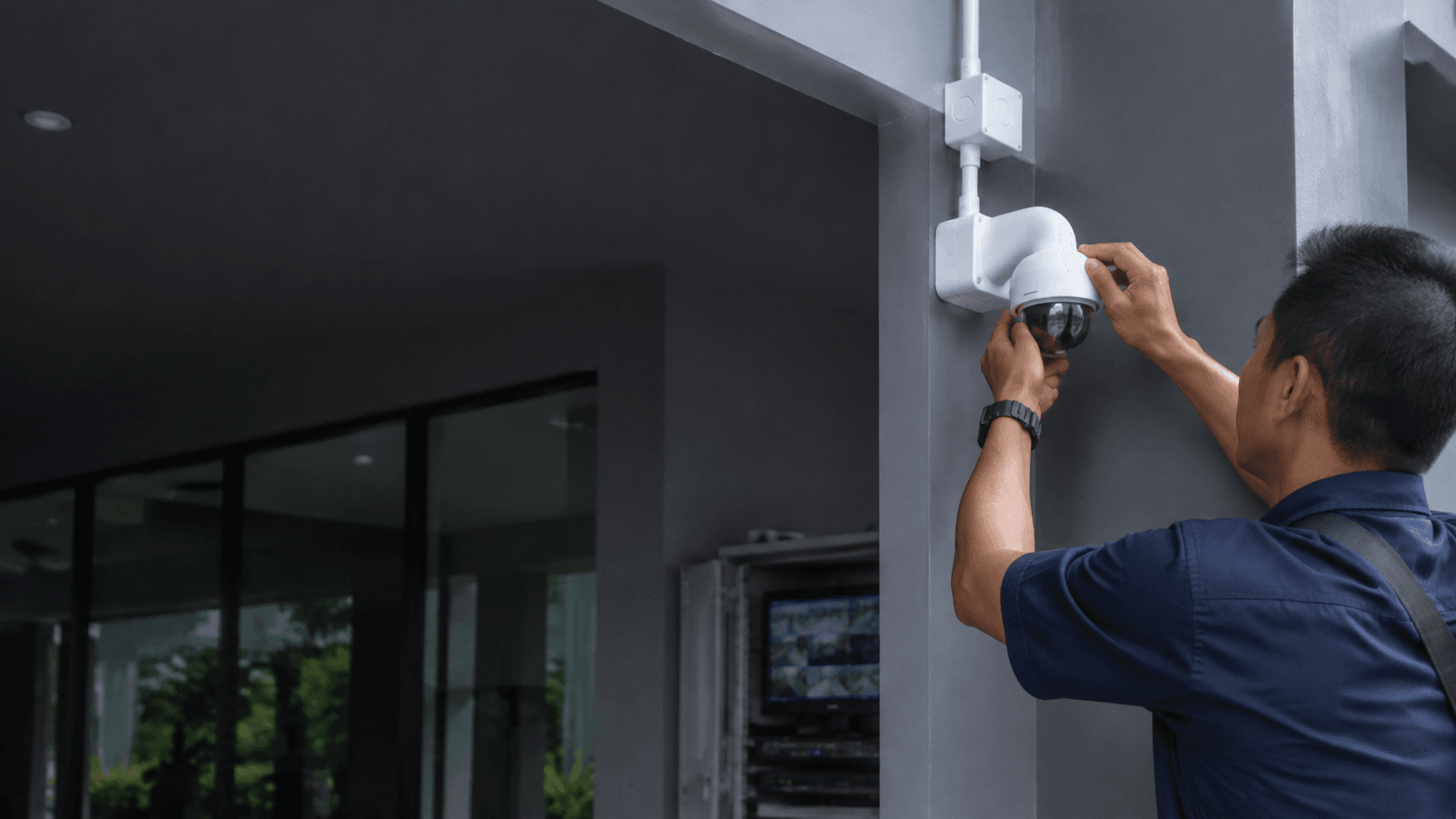
The term covers a working setup rather than a single device. A camera system records what happens, an alarm system reacts when something is forced, access control decides who enters, and remote viewing lets the owner check the property from a phone. Each part has to be placed and configured for the actual building, which is why the planning stage matters more than the product list.
What Smarthome Security Covers in a Malaysian Property
A complete smarthome security setup for a Malaysian home, office or shop usually draws on five building blocks. They can be installed together or in stages, depending on budget and how exposed the property is.
- Site survey. the installer walks the property, checks lighting, entry points, cable routes and power, then confirms where each device can realistically go.
- System proposal. the survey findings become a written scope covering camera placement, NVR setup, alarm zones, access control and remote viewing.
- Installation. cameras, recorders, sensors, locks and gate motors are mounted, cabled and configured on site.
- Handover. the installer tests each device, sets up mobile viewing, and walks the owner through daily use and basic troubleshooting.
Eyonic's CCTV installation process follows exactly these four stages: site survey, system proposal, installation and handover. The same sequence applies when alarm, autogate or intercom work is added to the job.
Cameras handle recording and evidence. Alarm systems handle detection and deterrence. Smart lock door access handles controlled entry, and Eyonic notes that smart locks work best when the door condition, user roles and backup method are reviewed before installation. For business use, the choice between a standalone smart lock and a full access-control panel is usually settled during the survey. Autogate packages cover motor recommendation, remote-control setup and safety testing. Keyphone intercom systems connect the gate or front door to the people inside.
Remote viewing ties the parts together. Once the recorder and network are configured, the owner can open a phone app and see live or recorded footage from anywhere with an internet connection. That single feature is often the reason a household starts looking at smarthome security in the first place.
Smarthome Security Starts With a Site Survey
The site survey is the step that decides whether the finished system works. A camera pointed at a blank wall records nothing useful, and a sensor mounted where air conditioners or pets trigger it creates false alarms that owners eventually ignore.
Eyonic recommends checking actual lighting conditions before confirming placement for ColorVu-style cameras. Night performance depends on what light is already present, so a position that looks good in daylight may need adjusting once evening conditions are considered. The survey is where that gets tested rather than assumed.
Several practical questions get answered on site:
- Where does power reach, and where does cabling need to run?
- Which entry points are used daily and which are rarely opened?
- Does the property have a gate, and does it need motorised control?
- How many people need access, and do they need different permission levels?
- Is there existing internet service reliable enough for remote viewing?
Properties with tidy cable routes and clear sight lines are simpler to plan. Older buildings with thick walls, no ceiling access or shared power points take longer, and the proposal should reflect that. A survey also protects the owner from buying equipment that does not suit the site.
How Eyonic Plans and Installs Smarthome Security
Eyonic Sdn Bhd is a security system supplier based in Sarawak, Malaysia, working on CCTV and ELV systems for homes, offices, shops and industrial sites. The company plans, supplies and installs monitoring systems with camera placement, recording and remote viewing. Founder Eric Yong has worked in the industry for more than ten years, with experience in technical installation of digital security solutions for commercial businesses in Sarawak.
The work is deliberately staged. Planning comes first because camera placement, NVR setup and remote viewing all depend on decisions made before any bracket is fixed to a wall. Supply follows the approved proposal, so the equipment matches the site rather than the other way around. Installation then happens in one coordinated visit where possible, which keeps disruption to a working office or shop to a minimum.
Handover closes the job. Mobile viewing is configured on the owner's phone, alarm zones are tested, and gate or lock controls are checked. The point of handover is that the people using the system daily can operate it without calling for help every week.
Two completed projects show the range. The Kuching Immigration Office needed practical support for a public office, focused on arrival flow, staff areas, visitor movement and dependable daily operation. KTA Sarawak Sdn Bhd, an engineering consultancy, needed a practical office setup in Kuching to support staff movement, visitor handling, tidy cabling and clearer daily site control. Both are commercial environments where the system has to keep working through a normal working day.
What Smarthome Security Costs in Sarawak
Eyonic publishes three packages at RM 1,599 each, which gives a clear starting point for budgeting.
- Hikvision CCTV Package at RM 1,599 covers camera supply and setup, basic recording configuration, and mobile viewing handover.
- Hikvision Alarm System at RM 1,599 covers the control panel and sensors, siren and zone setup, and user testing and handover.
- Autogate Package at RM 1,599 covers motor recommendation, remote-control setup, and safety testing and handover.
Larger or combined projects sit above package level. The Kuching Immigration Office project carried an approximate budget of RM 12,000 to RM 28,000, and the KTA Sarawak Sdn Bhd office project carried an approximate budget of RM 8,000 to RM 18,000. Those figures reflect multi-area commercial work rather than a single package installation.
Cost is driven by how many areas need coverage, how far cable has to run, whether access control or intercom is included, and how much existing infrastructure can be reused. A single-package installation and a full office fit-out are different jobs with different budgets, and the survey is what separates them.
Smarthome Security for Homes, Offices and Shops
The same components serve different priorities depending on the property.
A home usually focuses on perimeter awareness and convenience. Cameras cover the gate, car porch and back entrance. An alarm system protects doors and windows when the house is empty. Smart lock door access and autogate control reduce the daily friction of keys and manual gates. Remote viewing lets the owner check on the property while at work or travelling.
An office leans toward movement and accountability. Staff and visitor flow matter, which is why the Kuching Immigration Office project concentrated on arrival flow, staff areas and visitor movement. Access control with defined user roles suits offices better than a single shared lock, and tidy cabling keeps the installation presentable in a client-facing space.
A shop combines both. Cameras cover the counter, entrance and stock area. An alarm system protects the premises outside trading hours. Access control limits who can reach the back office or storeroom. For shops, the practical test is whether staff can operate the system during a busy trading day without it becoming a distraction.
Industrial sites add scale. More cameras, longer cable runs and harsher conditions change the equipment and the planning, but the four-stage process stays the same.
Smarthome Security Questions Before Installation
Most decisions come down to a handful of practical points that are worth settling before work begins.
Can one supplier handle planning, supply and installation? Yes, and that is the model Eyonic uses. A single supplier avoids the gap that opens when equipment comes from one party and installation from another, and it keeps responsibility for the finished result in one place.
Does the system need internet to work? Recording and alarms run locally. Remote viewing needs a working internet connection, so the reliability of that connection matters if checking the property from a phone is a priority.
Can the system be installed in stages? Yes. Many owners start with CCTV and add alarm, access control or autogate later. Planning the full layout during the first survey makes later additions simpler and cheaper than starting over.
What happens if power fails? This is a site-specific question that the survey should address, since the answer depends on the equipment selected and the backup arrangements available at the property.
How long does installation take? A single package is a shorter job than a multi-area commercial fit-out. The proposal should state the expected duration once the scope is confirmed.
What is included at handover? Testing of each device, mobile viewing setup, and a walkthrough of daily operation. Anything beyond that should be written into the agreed scope rather than assumed.
For a property in Sarawak, the practical next step is to share the location, property type and required system with Eyonic on WhatsApp at +60 11-5111 7959. That information is enough to arrange a site survey and move toward a proposal that matches the building.