
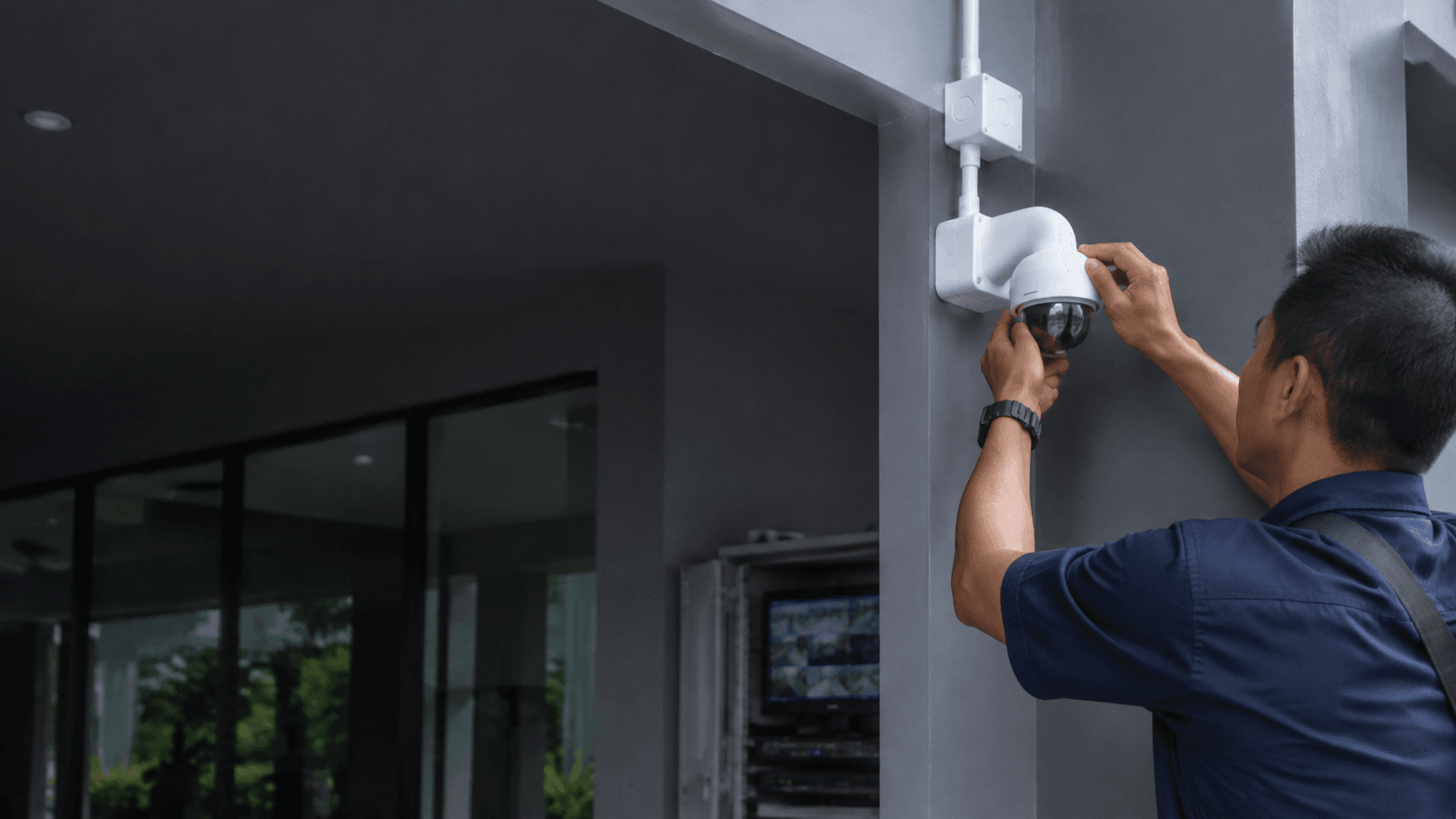
The exact-match query cctv security describes a working system rather than a single boxed product. A useful setup starts with a site survey, moves through a written proposal, then installation, then handover. Eyonic Sdn Bhd, a security system supplier in Sarawak, runs that sequence for clients across the state.
Most pages ranking for this query are product catalogues or broad explainers written for a global audience. They list camera types and channel counts but say little about how placement is decided on an actual Malaysian property. That gap matters because lighting, movement, and cable routes decide whether footage is usable months later.
What a cctv security system covers in a Malaysian property
A complete system has four working parts: cameras, a recorder, storage, and a way to view footage remotely. Eyonic describes its CCTV work as planning, supplying, and installing monitoring systems with camera placement, recording, and remote viewing for homes, offices, shops, and industrial sites.
Each part has a job. Cameras capture the scene. The recorder writes footage to storage and keeps it available for review. Remote viewing lets an owner check a site without returning to it. NVR setup ties the recorder to the network so the cameras and the viewing app can talk to each other.
What the system does not do is decide its own coverage. A camera pointed at a blank wall records a blank wall. Placement, lens choice, and lighting are the variables that decide whether a recording is useful when someone needs to review it.
Where local conditions change the plan
Malaysian properties bring conditions that a generic buying guide cannot account for. Strong afternoon sun on one side of a building, deep shade on another, and heavy rain during monsoon months all affect what a camera sees. Reflective surfaces such as glass shopfronts and wet car parks can wash out an image at the wrong angle.
Movement patterns matter too. A shop entrance, a back lane, and a staff-only corridor carry different traffic at different hours. Planning around those patterns is more useful than adding cameras until the count feels sufficient.
How camera placement is decided before installation
Placement is decided on site, not from a floor plan alone. Eyonic recommends checking actual lighting conditions before confirming placement for ColorVu-style cameras, because a position that looks correct in daylight can behave differently after dark.
The survey looks at four things. First, the entry and exit points that matter most. Second, existing light sources and how they change between day and night. Third, cable routes and where a recorder can sit without disrupting daily use. Fourth, whether a position is reachable for adjustment later.
Trade-offs appear at this stage. A wider view covers more ground but shows less detail at distance. A tighter view identifies a face or a plate but leaves blind spots at the edges. A higher mounting point resists tampering but can lose facial detail. The survey exists to settle those choices before anyone drills.
Lighting conditions and camera choice
Lighting is the single condition most likely to disappoint after handover. A camera rated for low light still needs some light to work with. Where a scene is genuinely dark, the plan may need additional illumination, a different camera position, or a different camera type.
Eyonic reviews products such as the Hikvision ColorVu range on its product review pages, and the guidance there is consistent: confirm the real lighting at the real position rather than relying on a specification sheet. That check costs time during the survey and saves a return visit later.
What the Eyonic installation process involves
Eyonic's CCTV installation process has four stages, and each one produces something the client can review before the next begins.
- Site survey. A visit to the property to record entry points, lighting, movement, cable routes, and where the recorder will sit.
- System proposal. A written plan covering camera positions, the recorder and storage arrangement, and the remote viewing setup.
- Installation. Mounting, cabling, recorder configuration, and network setup carried out on site.
- Handover. Walking through live and recorded footage, confirming remote viewing works, and answering questions about daily use.
The order matters because each stage removes guesswork from the next. A proposal written after a survey reflects the property. An installation carried out against an agreed proposal avoids mid-job changes. A handover that includes a live walkthrough means the person using the system has seen it work.
Handover and daily operation
Handover is where a system either becomes part of daily routine or gets ignored. The practical checks are simple. can the owner open the app and see a live view, can they find a recording from yesterday, and do they know who to contact if a camera drops offline.
Eyonic's project work reflects this emphasis on dependable daily operation. The Kuching Immigration Office project focused on arrival flow, staff areas, visitor movement, and reliable day-to-day running rather than on camera counts. A second project for KTA Sarawak Sdn Bhd covered staff movement, visitor handling, and tidy cabling for an engineering consultancy office in Kuching.
packages and project budgets in Malaysia
Eyonic publishes three packages at RM 1,599 each. The Hikvision CCTV Package covers camera supply and setup, basic recording configuration, and mobile viewing handover. The Hikvision Alarm System package covers a control panel and sensors, siren and zone setup, and user testing and handover. The Autogate Package covers motor recommendation, remote-control setup, and safety testing and handover.
Those packages suit straightforward properties where the scope is close to standard. Larger or more complex sites are quoted as projects. Two published project budgets give a sense of scale: the Kuching Immigration Office work sat in the RM 12,000 to RM 28,000 range, and the KTA Sarawak Sdn Bhd office work sat in the RM 8,000 to RM 18,000 range.
Budget differences come from scope rather than brand. More camera positions, longer cable runs, additional storage, and integration with alarms or access control all move a project above package pricing. A single shopfront and a multi-level office with public counters are not the same job even when both are described as cctv security.
What sits outside the published figures
Eyonic has not published resolution, lens, storage, or channel specifications for the cameras it supplies, and it has not published warranty terms, response times, or maintenance schedules. Coverage area, camera count, and cable distance figures are also unpublished. Those details belong in a written proposal for a specific property, where they can be matched to the survey findings rather than stated as general rules.
Questions to settle before confirming a setup
A few questions separate a system that works from one that gets replaced within a year.
Which views matter most? Entry points, cash handling areas, stock rooms, and vehicle access usually rank above general coverage. Naming them first keeps the camera count honest.
What happens after dark? The answer decides camera type and whether extra lighting is needed. It is a survey question, not a catalogue question.
Who reviews footage, and how often? A system checked weekly behaves differently from one opened only after an incident. Remote viewing setup should match the person who will actually use it.
How will the system grow? A property that may add a second entrance or a new storage area benefits from a recorder with room to expand. That is a planning decision made before installation, not after.
What is the handover standard? Live view confirmed, recorded playback confirmed, and a named contact for support. Anything less leaves the owner guessing.
Eric Yong, founder of Eyonic Security Systems, has worked in the industry for more than ten years and specialises in technical installation of digital security solutions for commercial businesses in Sarawak. That background shapes how surveys are run and how proposals are written for commercial sites.
For a property in Sarawak, the practical next step is to share the location, property type, and required system with Eyonic on WhatsApp at +60 11-5111 7959. A survey can then be arranged and a proposal written against the actual site rather than a general assumption about what cctv security should include.