
The phrase "redmi cctv camera" is a search habit rather than a product name. Xiaomi publishes its cameras under the Xiaomi and Mi labels, and the Redmi name appears in the same storefront as a separate product family. That gap matters, because a buyer searching for a redmi cctv camera in Malaysia will land on Xiaomi camera pages, third-party marketplaces, or an installer who supplies a different brand entirely.
This guide separates what the evidence actually shows from what the query implies, then sets out how to choose a camera that fits a real property.
Redmi Cctv Camera. What the Evidence Actually Shows
Across the seven accessible competitor pages reviewed for this query, the exact phrase "redmi cctv camera" appears zero times. Xiaomi's own global camera listing names Xiaomi, Mi, REDMI and POCO as storefront brands, but the camera products on that page are listed under Xiaomi and Mi. The Redmi name is present in the storefront navigation, not attached to a camera model in the reviewed pages.
That is the central finding. A search for a redmi cctv camera is best understood as a search for a Xiaomi-family home camera, and the practical decision is which Xiaomi or Mi model, or which installed system, matches the property.
What is redmi cctv camera?
It is not a documented product line in the reviewed sources. The closest documented products are the Xiaomi 360° Home Security Camera 1080p 2i and the Mi Home Security Camera 360° 1080P, both indoor pan-and-tilt cameras with 1080p video, 360-degree coverage, infrared night vision, motion detection and two-way audio.
Anyone who needs a camera that is genuinely branded Redmi should verify the model number on the retailer listing before purchase, because the reviewed Xiaomi pages do not confirm a Redmi-branded camera.
Choosing the Right Redmi Cctv Camera
Because the brand question is unresolved, the useful work is matching camera capability to the space being watched. The reviewed Xiaomi models are indoor units. They cover a room, a hallway, a shop counter or a small office. They are not documented as outdoor or weather-rated units in the sources reviewed.
An indoor pan-and-tilt camera and an installed outdoor system solve different problems. The indoor unit is quick to place, runs on Wi-Fi, and stores to a micro SD card, NAS or cloud option. An installed system covers entry points, perimeter and multiple zones with recording that survives a power cut and a camera being removed.
- Confirm the brand and model number on the actual listing before paying, since the Redmi camera name is not confirmed in the reviewed sources.
- Decide whether the space is indoor only or includes outdoor and perimeter coverage.
- Check the lighting at each position, including how dark the area is at night and whether a light source sits near the camera.
- Choose the recording method. local card, network storage, cloud, or a recorder with its own drive.
- Plan who reviews footage and how, including mobile viewing and any user permissions.
- Confirm the installation route for cabling, power and mounting before committing to positions.
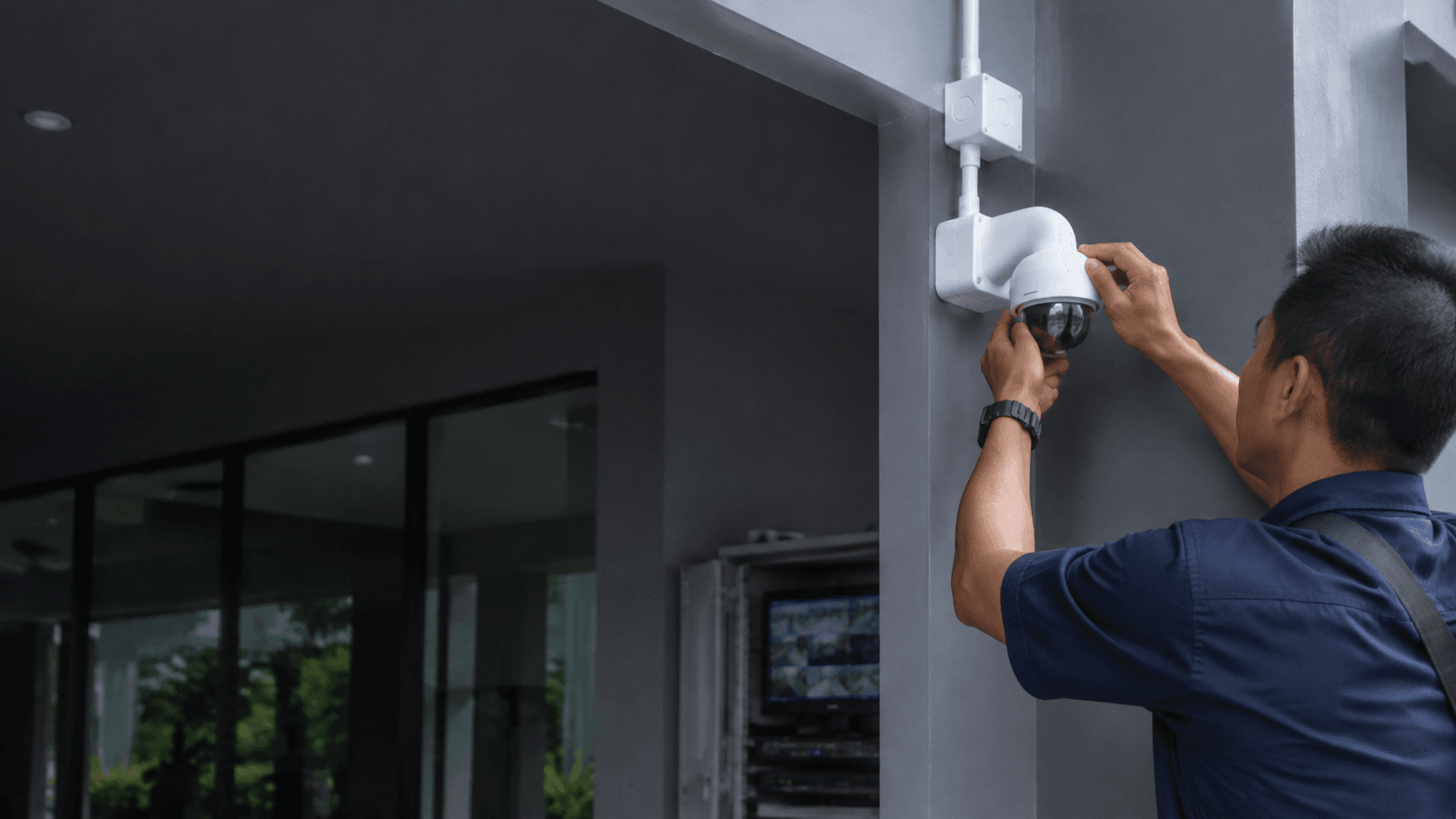
Eyonic's own installation process follows a comparable sequence: site survey, system proposal, installation, and handover. The survey step exists because camera placement decided on a floor plan often changes once the actual lighting and sightlines are seen.
Xiaomi Global Home
Xiaomi's global camera listing is the official starting point for the Xiaomi and Mi camera range. It groups home security cameras, smart doorbells, smart door locks, and smart sensors and hubs. The listing carries the Xiaomi, Mi, REDMI and POCO brand names in its storefront structure.
For a buyer in Malaysia, that listing is useful for confirming which models exist and what they claim to do. It does not confirm local stock, local pricing, or local warranty handling, and it does not confirm a Redmi-branded camera.
Practical Considerations for Redmi Cctv Camera Buyers
A Wi-Fi indoor camera and a wired installed system differ in ways that show up months later, not on the day of purchase.
| Consideration | Indoor Wi-Fi camera | Installed CCTV system |
|---|---|---|
| Typical placement | Indoor rooms, counters, hallways | Entry points, perimeter, multiple zones |
| Recording | Micro SD card, NAS or cloud option | Recorder with local storage |
| Power and network | Mains power and Wi-Fi | Wired cabling and dedicated recorder |
| Coverage model | One room per camera | Whole-property coverage planned together |
| Main constraint | Depends on Wi-Fi stability and power | Requires survey, cabling and installation |
The table is a planning aid, not a specification sheet. The right column describes how installed systems are generally structured, and the left column reflects the documented features of the reviewed Xiaomi indoor models.
Lighting decides more than resolution
Eyonic advises checking actual lighting conditions before confirming placement for ColorVu-style cameras. The same discipline applies to any camera choice. A position that looks adequate in daylight can produce unusable footage at night if the only light source sits behind the subject or if the area is genuinely unlit.
For an indoor Xiaomi camera, infrared night vision covers a dark room. For an outdoor position, the decision is between infrared, full-colour low-light performance, and adding lighting. That decision should be made at the position, not at a desk.
Storage and retention
The reviewed Xiaomi models support micro SD card, NAS and cloud storage options, with H.265 video encoding and 128-bit AES encryption named in the product material. Retention depends on card size, resolution and how much motion the camera records. A busy shop counter fills storage far faster than a quiet hallway.
An installed system keeps footage on a recorder, which is a different failure model. If the recorder is stolen or damaged, the footage goes with it, so recorder placement is a security decision in its own right.
Privacy and permissions
Indoor cameras with two-way audio and app access raise questions that outdoor perimeter cameras do not. Who can view the feed, whether recordings leave the property, and what happens when a device is resold all need answers before installation. The reviewed Xiaomi material names data encryption and privacy features, but the operating decisions belong to the property owner.
Making an Informed Choice About Options
Two paths are defensible. The first is a self-installed indoor Xiaomi or Mi camera for a single room, a counter or a small office, where Wi-Fi is stable and the main goal is being able to look in remotely. The second is an installed system for a home, shop, office or industrial site where entry points, perimeter and multiple zones need coverage that keeps recording independently.
For the second path, Eyonic Sdn Bhd plans, supplies and installs monitoring systems with camera placement, recording and remote viewing for homes, offices, shops and industrial sites in Sarawak. Completed work includes the Kuching Immigration Office, where the focus was arrival flow, staff areas, visitor movement and dependable daily operation, and KTA Sarawak Sdn Bhd, where the focus was staff movement, visitor handling, tidy cabling and clearer daily site control.
Package pricing published by Eyonic starts at RM 1,599 for a Hikvision CCTV package covering camera supply and setup, basic recording configuration and mobile viewing handover. The same RM 1,599 figure applies to a Hikvision alarm system and to an autogate package. Larger project work has been scoped in the RM 8,000 to RM 18,000 range for an office setup and RM 12,000 to RM 28,000 for a public office.
Those figures are for installed systems, not for a Xiaomi indoor camera bought off a shelf. The two options are not competing on price alone; they are competing on what happens when the Wi-Fi drops, when the power fails, or when footage is needed as evidence.
Where the Redmi question leaves the buyer
If the goal is a low-cost indoor camera and the Redmi name is not essential, the documented Xiaomi and Mi models are the realistic reference points. If the goal is a camera that is genuinely Redmi-branded, the model number needs verification at the point of sale, because the reviewed sources do not confirm one.
If the goal is coverage of a property rather than a single room, brand naming matters far less than placement, lighting, recording method and who maintains the system. That is where a survey and a written proposal do more work than a product page.
Share the location, property type and required system with Eyonic on WhatsApp at +60 11-5111 7959 for the next practical step.