
What a Digital Front Door Lock Replaces
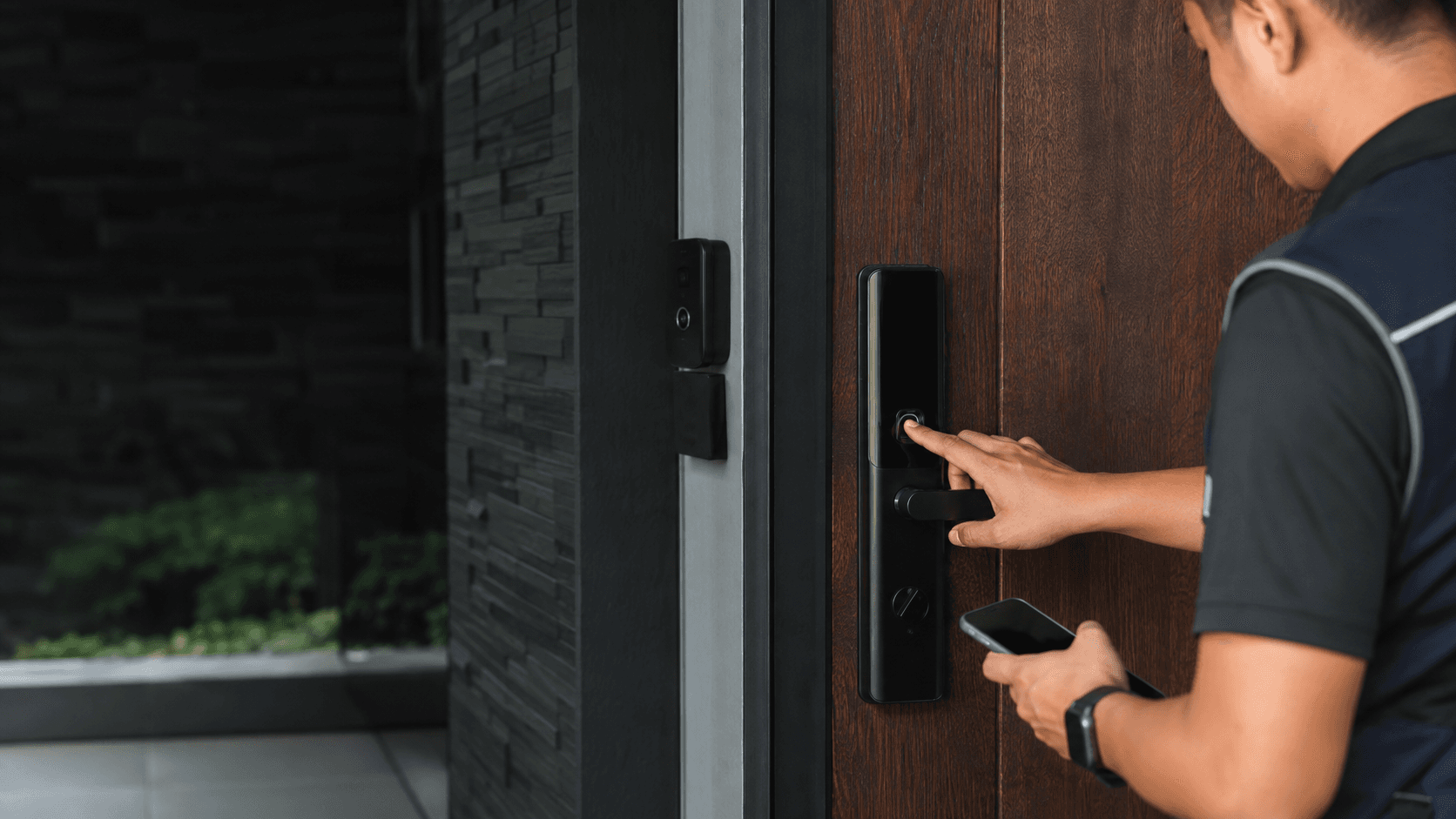
A digital front door lock removes the physical key from the daily entry routine. Instead of turning a metal key, a person touches a fingerprint sensor, types a PIN, taps a card, or uses a smartphone app. The lock body mounts on the same door position as a standard deadbolt, so the change is mostly about the credential method, not the door structure.
The term covers several product styles. A standalone smart lock works on one door and manages its own user list. An access-control panel connects multiple doors to a central system, which matters more for offices. Eyonic's product review notes that for business use, the installer usually checks whether a standalone smart lock or an access-control panel fits the site better. That distinction shapes the whole purchase.
Why a Digital Front Door Lock Suits Malaysian Properties
Malaysian homes and offices face humidity, frequent rain, and heavy daily use at the main entrance. A digital front door lock removes the problem of lost keys and rekeying after staff changes or tenant turnover. For a rental property, the owner can delete a departing tenant's fingerprint or PIN instead of changing the cylinder.
The practical gain is controlled convenience. Eyonic describes smart lock door access as "good for controlled convenience when user permissions and backup entry are planned properly." That phrasing carries two conditions. User permissions must be reviewed before installation, and a backup entry method must exist. A digital front door lock without a fallback plan becomes a liability when the battery dies or the electronics fail.
For commercial sites, the same hardware serves a different purpose. The Kuching Immigration Office project handled arrival flow, staff areas, and visitor movement with dependable daily operation. A front door lock in that setting is part of a wider access picture, not a standalone gadget. Offices usually need an audit trail of who entered and when, which pushes the choice toward a networked access-control system rather than a single residential lock.
Key Features to Compare in a Digital Front Door Lock
Buyers comparing a digital front door lock should weigh entry methods, power backup, door condition, and user management before looking at brand names. These four areas decide whether the lock works well past the first month.
- Entry methods. fingerprint, PIN, card, app, and mechanical key backup each suit different users; a home with elderly residents may prefer a simple PIN over a fingerprint reader.
- Power and backup. battery life varies by usage, and a physical key override or external power port prevents lockout when the battery drains.
- Door and frame condition. warped doors, misaligned strike plates, and thin hollow-core doors affect how reliably the latch engages.
- User management. the number of stored fingerprints or PINs, plus the ability to delete individual users, determines fit for rentals and offices.
Fingerprint readers are the most common reason buyers search for a digital front door lock. Optical sensors can struggle with wet or dirty fingers, which matters in Malaysia's climate. Capacitive sensors read the fingerprint beneath the skin surface and tend to work better with moisture. Eyonic's ColorVu camera review makes a related point about checking actual lighting conditions before confirming placement; the same principle applies to checking how a fingerprint reader performs on the actual door in real weather.
Connectivity is a secondary feature, not the core function. Wi-Fi and Bluetooth allow remote locking and activity logs, but they add setup complexity and depend on home network reliability. A digital front door lock that works locally with fingerprints and PINs remains functional when the internet drops. Buyers should treat app control as a convenience layer, not the security foundation.
How to Install a Digital Front Door Lock
Installation quality determines whether a digital front door lock lasts. Eyonic's CCTV installation process follows a sequence that applies equally to door access work: site survey, system proposal, installation, and handover. The same four-stage method prevents the common failures of DIY smart lock fitting.
The site survey checks the door material, thickness, backset, and existing hole pattern. Many Malaysian doors are solid timber or metal, which need different drilling approaches. A metal door may require specific mounting plates, while a timber door with a loose frame will not hold the lock body securely. The survey also confirms the lock's latch aligns with the strike plate so the bolt throws fully.
The system proposal stage matches the lock to the user count and access pattern. A home with four family members needs a different user structure than a shop with fifteen staff on rotating shifts. Eyonic's smart lock review states that the installer checks whether a standalone smart lock or access-control panel is more appropriate for business use. That decision happens here, before any drilling.
Installation covers physical mounting, wiring if the lock is powered or networked, and configuration of user credentials. Handover includes showing the owner how to add and delete users, change the master PIN, and handle a low-battery warning. A proper handover prevents the most common post-installation problem: the owner never learns how to manage the user list and calls for support over a simple setting change.
Digital Front Door Lock Maintenance and Battery Life
A digital front door lock runs on batteries, and battery management is the single most important maintenance task. Most units signal low power with a warning beep or app notification well before failure. Replacing batteries immediately on that warning prevents a locked-out family or a closed office with no entry.
The backup entry method matters most at this point. A mechanical key override is the simplest fallback. Some locks include an external battery port on the front face, allowing a temporary 9V battery to power the lock for one entry. Buyers should confirm which backup exists before purchase and keep the physical key somewhere accessible but secure.
Moving parts need occasional attention. The latch and strike plate collect dust and can stiffen over time. A dry lubricant on the latch mechanism, not oil-based spray that attracts grime, keeps the bolt moving freely. The fingerprint sensor surface should be wiped clean periodically; a film of dust or grease degrades read accuracy.
Door alignment shifts with humidity and building settlement. A digital front door lock that worked smoothly at installation may start failing to latch after a season of wet weather. The fix is usually adjusting the strike plate position, not replacing the lock. This is why professional installation with a site survey matters more than the lock's retail price.
Where to Buy a Digital Front Door Lock in Malaysia
Malaysian buyers can purchase a digital front door lock from electronics retailers, online marketplaces, or security system suppliers. The channel choice affects after-sales support more than the hardware price. Online marketplaces offer the widest model selection but leave installation and warranty service to the buyer.
A security system supplier like Eyonic provides the full cycle: product selection, site survey, installation, and handover. Eyonic operates in Sarawak and handles homes, offices, shops, and industrial sites. The company's project history includes the Kuching Immigration Office and KTA Sarawak Sdn Bhd, an engineering consultancy needing staff movement control, visitor handling, and tidy cabling. Those projects show the supplier works beyond single residential doors.
The practical question for a buyer is whether the lock comes with local support when something fails. A digital front door lock is an electromechanical device; it will eventually need service. Buying from a supplier who can visit the site and diagnose the issue avoids the common situation of a lock under warranty but with no one to repair it in Kuching or Sibu.
For a home, a standalone smart lock from a reputable brand usually suffices. For a business, the decision shifts toward access control with user audit trails. Eyonic's guidance is to review door condition, user roles, and backup method before installation. Sharing the property type and user count with a supplier produces a more accurate recommendation than choosing a model from an overseas review site that never tested the lock on a Malaysian door.
Share the location, property type, and required system with Eyonic on WhatsApp at +60 11-5111 7959 for the next practical step.