
The exact-match query hik camera system is a short way of describing a bundled surveillance setup rather than a single product. In Malaysia, the practical questions sit around what the hardware covers, where cameras can actually go, how recording and remote viewing are configured, and what a starting package costs. Eyonic Sdn Bhd is a security system supplier in Sarawak that plans, supplies and installs monitoring systems with camera placement, recording and remote viewing for homes, offices, shops and industrial sites.
One caution shapes everything below. Eyonic's own evidence covers its packages, its installation process and two completed projects. It does not supply verified Hikvision camera resolutions, lens sizes, sensor types, compression formats, night-vision distances, NVR channel counts, storage capacities or warranty terms. Those details must be confirmed against current manufacturer documentation and the actual site, not assumed from a product name.
What a Hik camera system covers in a Malaysian property
A Hik camera system is best understood as four connected layers: cameras, recording, viewing and the physical installation that holds them together. Each layer has its own decisions, and a weak choice in one layer limits the others.
The camera layer is where placement matters most. A camera aimed at a gate, a shop counter or a corridor answers a different question from one covering a car porch or a back lane. Eyonic's service description puts camera placement alongside recording and remote viewing, which reflects how tightly those three depend on each other.
The recording layer is the NVR. It receives video from the cameras, stores it, and determines how far back recorded footage can be reviewed. Eyonic lists NVR setup as part of its CCTV work. Because no verified channel count or storage figure is available for this page, the honest position is that recording depth depends on the number of cameras, the recording schedule and the storage fitted, and those are settled during planning rather than guessed in advance.
The viewing layer is remote viewing, which lets footage be checked away from the property. Eyonic includes remote viewing in its CCTV scope. No verified statement exists here about app behaviour or mobile access reliability, so performance should be tested during handover rather than promised beforehand.
Lighting is the layer most often overlooked. Eyonic recommends checking actual lighting conditions before confirming placement for ColorVu-style cameras. A position that looks adequate in daylight can behave very differently at night, and the check is done on site because lighting varies between a covered porch, an open car park and a shopfront under street lighting.
How Eyonic plans a Hik camera system before installation
Planning starts with the property, not the product list. Eyonic's process begins with a site survey, and the survey is what turns a general request into a specific layout.
During the survey, the practical inputs are the entry and exit points, the areas that need continuous coverage, the areas where coverage is optional, existing cabling routes, power availability, and the lighting conditions at each proposed camera position. For a shop, the counter and the stock area usually carry different priorities. For an office, staff movement and visitor handling tend to shape the layout, which is the pattern behind Eyonic's Kuching Immigration Office project, where the focus was arrival flow, staff areas, visitor movement and dependable daily operation.
The survey output becomes a system proposal. That proposal sets out the camera positions, the recording approach, the viewing setup and the scope of work, so the cost reflects the property rather than a generic bundle. This is also the stage where a property with difficult cabling or poor lighting gets an honest answer instead of a surprise during installation.
Two completed Eyonic projects show how scope drives budget. The Kuching Immigration Office project carried an approximate budget of RM 12,000 to RM 28,000. The KTA Sarawak Sdn Bhd project, a practical office setup in Kuching supporting staff movement, visitor handling, tidy cabling and clearer daily site control, carried an approximate budget of RM 8,000 to RM 18,000. Both are project ranges, not package prices, and both reflect commercial sites with wider coverage than a single home entry point.
Hik camera system installation steps from survey to handover
Eyonic's CCTV installation process has four stages, and each one closes a decision before the next begins.
- Site survey. The property is reviewed on site for entry points, coverage priorities, cabling routes, power and lighting conditions at each proposed camera position.
- System proposal. The survey findings become a defined scope covering camera positions, recording approach, viewing setup and the work required.
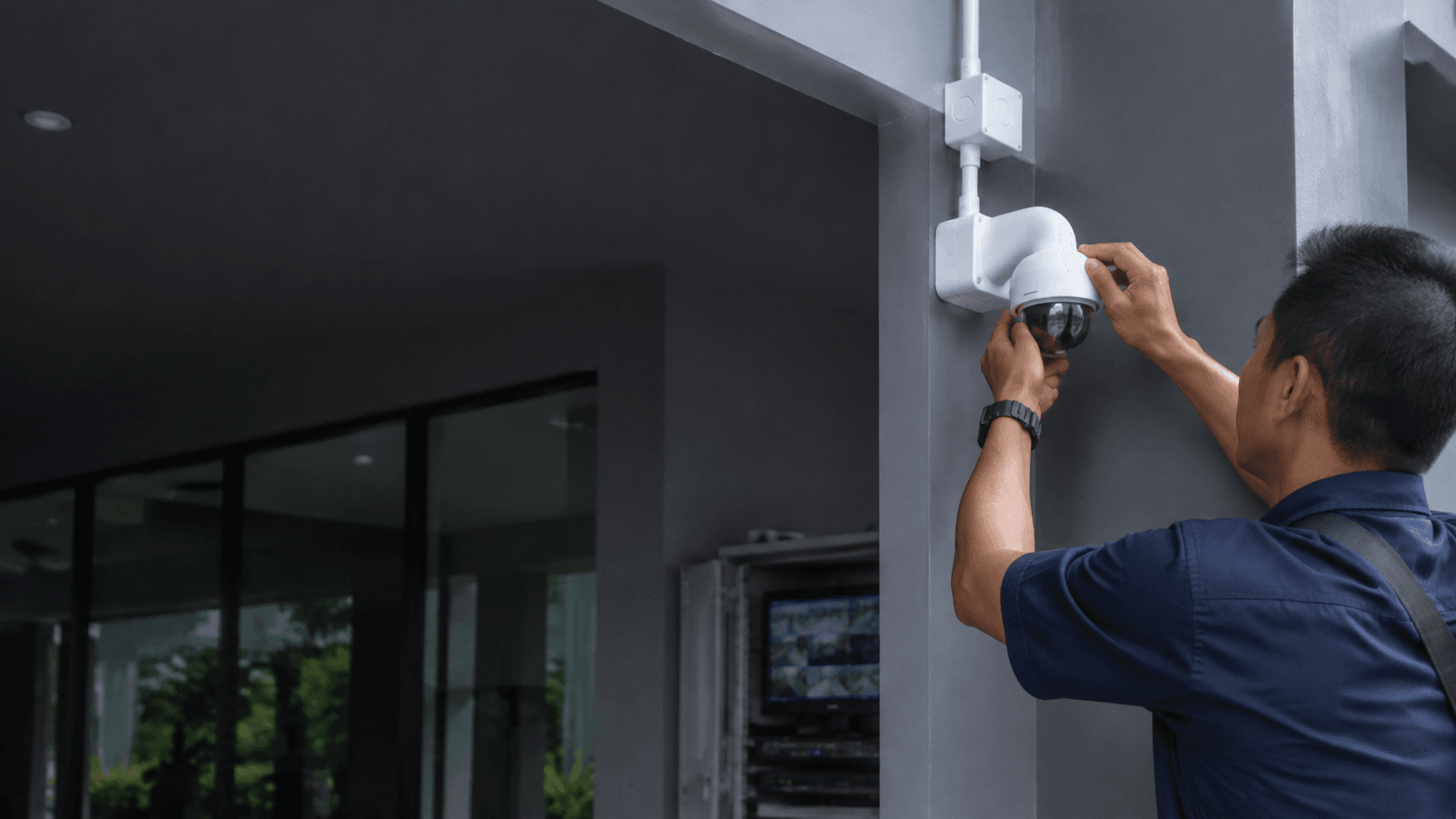
- Installation. Cameras, recording hardware and cabling are installed and configured according to the agreed proposal.
- Handover. The system is explained and the viewing setup is passed to the people who will use it day to day.
Handover deserves more attention than it usually gets. A system that records correctly but is never checked provides little value, and a system that is checked but poorly understood creates false confidence. Handover is the point where the recording schedule, the review process and the viewing setup are confirmed against how the property actually operates.
The sequence also explains why skipping the survey tends to cost more later. Camera positions chosen from a floor plan alone can miss the lighting problem, the obstruction or the cable route that only becomes visible on site.
Hik camera system packages and project budgets in Malaysia
Eyonic's published starting point is the Hikvision CCTV Package at RM 1,599, which covers camera supply and setup, basic recording configuration and mobile viewing handover. That figure describes a defined package scope, not a quotation for every property.
Above the package level, cost tracks coverage. The two Eyonic project ranges sit at RM 8,000 to RM 18,000 for an office setup and RM 12,000 to RM 28,000 for a public office with arrival flow, staff areas and visitor movement in scope. The gap between a RM 1,599 package and a five-figure project is mostly camera count, coverage area, cabling distance and the amount of configuration required, not the brand of camera.
For a Malaysian property, the useful way to read these numbers is as brackets rather than prices. A single-entry home or small shop with a handful of positions sits near the package end. A commercial site covering multiple zones, longer cable runs and a busier daily operation sits in the project ranges. Anything between the two depends on the survey.
One constraint applies to all of it. No verified pricing exists for a Hik camera system beyond the RM 1,599 package and the two project ranges, so any figure outside those brackets should be treated as unconfirmed until it comes from a survey-based proposal.
What to confirm before choosing a Hik camera system
Several details cannot be settled from a product page, and confirming them early prevents most installation problems.
Camera specifications come first. Resolution, lens size, sensor type, compression format and night-vision performance all affect what the footage actually shows, and none of those figures are verified for this page. They should be checked against current Hikvision documentation for the specific model being considered, because model names alone do not describe capability.
Recording depth comes second. How far back footage can be reviewed depends on the number of cameras, the recording schedule and the storage fitted. That is a planning decision, and it should be agreed before installation rather than discovered afterwards.
Lighting comes third. Eyonic's guidance to check actual lighting conditions before confirming placement for ColorVu-style cameras applies to every position where night performance matters. A position that works in daylight may not work after dark.
Coverage expectations come fourth. Eyonic's evidence is Sarawak-centred, and no Malaysia-wide coverage claim is verified here. A property outside that area should confirm service availability directly rather than assume it.
Warranty and product documentation come fifth. No verified warranty length, product certification or manufacturer authorisation is supplied for this page, so those terms should be requested in writing as part of any proposal.
Finally, the viewing setup should be tested before handover is considered complete. Remote viewing is part of Eyonic's CCTV scope, and the practical test is whether the people responsible for the property can open the footage, find the relevant time range and read what happened.
For a property in Sarawak, the next practical step is to share the location, property type and required system with Eyonic on WhatsApp at +60 11-5111 7959, so the survey and proposal reflect the actual site rather than a general assumption about what a hik camera system should include.