
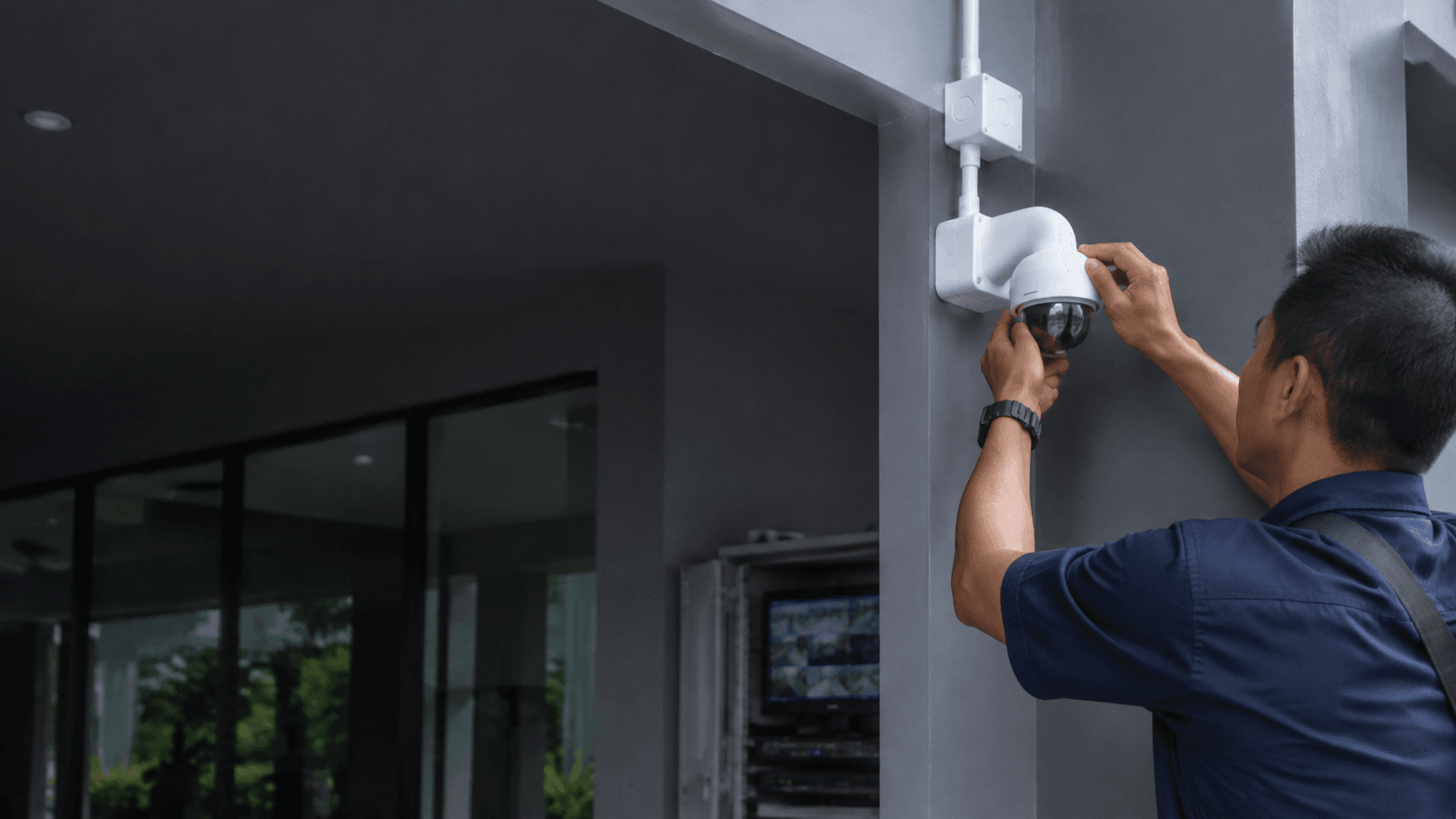
The exact-match query lorex nvr camera system describes a specific class of hardware: a recorder that stores footage from network cameras rather than analog ones. Buyers in Malaysia researching this term usually want to know what the box and cameras actually do together, how many cameras and how much storage a site needs, and what happens between deciding to buy and watching the first live feed.
This article explains the recorder-and-camera combination in plain terms, then covers how a wired system is planned and installed locally. It does not quote Lorex specifications, because no verified Lorex model data for the Malaysian market was available at the time of writing. Where a figure would normally appear, the article explains the decision instead.
What a Lorex Nvr Camera System Combines
A Lorex NVR camera system is two product categories sold as one package: a network video recorder and a set of IP cameras. The recorder is the box that receives video streams, writes them to a hard drive, and serves them to a phone or monitor. The cameras are the capture devices. Neither half works as a surveillance system on its own.
The defining feature of this category is that the cameras are IP cameras, not analog ones. An IP camera encodes video digitally and sends it as network data. That is what separates an NVR from a DVR, which accepts analog video from older coax cameras. The distinction matters at purchase time because the two recorder types are not interchangeable with the wrong camera family.
Most wired packages in this category use Power over Ethernet, usually shortened to PoE. A single Ethernet cable carries both the data and the electrical power the camera needs. That removes the separate power adapter that analog cameras typically require at each mounting point, which simplifies cabling and reduces the number of failure points on a wall.
Because the recorder and cameras are sold together, the package usually arrives pre-paired. Cameras are detected by the recorder when plugged in, and the recorder assigns them addresses automatically. That is a convenience for a straightforward installation, but it also means the package's channel count and camera count are fixed at purchase. Adding cameras later depends on whether spare channels exist on the recorder.
Wired NVR Recording and Camera Channels
A channel is one camera position on the recorder. An eight-channel recorder accepts up to eight cameras; a sixteen-channel recorder accepts up to sixteen. The channel count is the ceiling on how many views the system can record simultaneously, and it is the single most important number to get right before buying, because it cannot be expanded by software.
Wired NVR systems record continuously or on motion, depending on configuration. Continuous recording captures everything and consumes storage fastest. Motion-triggered recording saves space but can miss the seconds before movement is detected, which is often the most useful part of a clip. Many installations use continuous recording on entrances and motion recording on low-traffic areas, which balances coverage against storage life.
Recording without an internet connection is possible on wired systems because the recorder writes to its own local drive. Internet access is needed for remote viewing, not for recording. That distinction matters in Malaysia, where a site may have intermittent connectivity but still needs reliable local footage.
Remote viewing lets a phone or computer reach the recorder over the network. It is a convenience feature, not a security feature, and it depends on the recorder's app and the site's upload bandwidth. A slow upload connection will make remote playback sluggish regardless of camera resolution.
Storage, Channels and Camera Capacity
Storage capacity determines how far back the footage goes. The relationship is straightforward: more cameras, higher resolution, and continuous recording all shorten the retention window for a fixed drive size. A site that needs thirty days of history with eight cameras at high resolution needs substantially more storage than a site with four cameras recording on motion only.
Retention requirements usually come from the site's own policy rather than from the hardware. A shop may only need a week. A public office handling visitor movement may need longer. The practical approach is to decide the retention window first, then size the drive and channel count to match, rather than buying a package and discovering the history is too short.
Camera capacity and channel capacity are not the same thing. A recorder may support more cameras than it has channels if some are wireless, but wired systems are bounded by physical ports. Counting the actual camera positions on a floor plan before purchase avoids the common mistake of buying an eight-channel unit for a building that needs ten views.
Planning a Lorex Nvr Camera System in Malaysia
Planning a Lorex NVR camera system in Malaysia raises questions that a product page cannot answer: whether the hardware is available locally, who installs it, and what happens if a component fails. Those are supply and support questions, not specification questions, and they usually decide whether a project succeeds.
Availability is the first check. A package sold primarily through overseas retail channels may arrive without local warranty support or spare parts. Buyers should confirm where the unit would be serviced and how long a replacement would take, because a recorder that fails and cannot be repaired quickly leaves the site unmonitored.
Compatibility is the second check. NVR hardware and IP cameras generally need to speak the same protocol to work together, and mixing brands can limit features such as motion detection or two-way audio. Where a site already has cameras, the existing hardware should be identified before assuming a new recorder will accept it.
Eyonic supplies and installs Hikvision-based CCTV systems in Sarawak rather than Lorex hardware, so a buyer comparing the two should treat them as separate supply chains with separate support arrangements. The planning questions are the same either way: camera positions, cabling routes, recorder location, storage size, and who handles faults.
Lighting is a frequent oversight. Eyonic recommends checking actual lighting conditions before confirming placement for ColorVu-style cameras, because a position that looks adequate in daylight can produce unusable footage at night. The same principle applies to any camera chosen primarily for low-light performance.
Site Survey, Installation and Handover
A working system comes from a sequence, not a single purchase. Eyonic's CCTV installation process runs through four stages, and each one produces something the next stage depends on.
- Site survey. The property is inspected to identify camera positions, cable routes, recorder location, power availability, and lighting conditions at each proposed view.
- System proposal. The survey findings are turned into a recommended channel count, camera type per position, storage size, and cabling plan.
- Installation. Cameras are mounted, cable is run, the recorder is configured, and each channel is checked for framing and focus.
- Handover. Recording, playback, and remote viewing are demonstrated, and the site contact is shown how to review footage.
The survey stage is where most problems are prevented. A camera aimed at a gate needs a different height and angle than one covering a corridor, and a route that avoids exposed cable is easier to find before drilling begins than after. Skipping the survey usually shows up later as a blind spot or a camera that captures nothing useful at night.
Handover is the stage most often rushed. A system that records correctly but whose users cannot retrieve footage is only half delivered. Demonstrating playback and remote viewing at handover, and confirming the site contact can repeat the steps, is what turns an installation into a usable system.
What Installation Looks Like on a Real Site
Eyonic completed a project for the Kuching Immigration Office, focused on arrival flow, staff areas, visitor movement and dependable daily operation. That project illustrates the pattern: the camera positions followed the building's movement routes rather than a generic perimeter layout, and the priority was reliable day-to-day recording rather than maximum resolution.
A second project for KTA Sarawak Sdn Bhd covered a practical office setup in Kuching to support staff movement, visitor handling, tidy cabling and clearer daily site control. Tidy cabling is not a cosmetic detail. Exposed or poorly routed cable is the most common source of intermittent faults in a wired system, and it is also the easiest thing to get right during installation.
Approximate budgets for work of this kind have ranged from RM 8,000 to RM 18,000 for an office setup and RM 12,000 to RM 28,000 for a public office installation. Those figures reflect the scope of those projects, including camera count, cabling distance, and site conditions, and they are not a price list for a Lorex NVR camera system or any other specific package.
Questions Buyers Ask Before Committing
Can a wired system record without internet? Yes. Recording happens on the recorder's local drive. Internet is needed only for remote viewing, so a site with unstable connectivity still captures footage.
How many cameras are needed? The count follows the number of distinct views the site requires, not the size of the building. Entrances, cash handling areas, corridors, and perimeter access points usually define the list.
What shortens footage retention? Higher resolution, more cameras, and continuous recording all reduce how far back the drive reaches. Retention is a storage decision made before purchase, not after.
What happens if a camera fails? On a wired system, one failed camera affects one channel. The remaining channels keep recording, which is why channel count and camera count should not be identical unless spare capacity is not wanted.
Does brand matter more than installation? Both matter, but installation determines whether the chosen hardware performs as intended. Camera angle, height, lighting, and cable routing affect footage quality more than small specification differences between comparable units.
For a site in Sarawak, the practical next step is to share the location, property type and required system with Eyonic on WhatsApp at +60 11-5111 7959, so the survey and proposal stages can be scoped against the actual building rather than a package description.