
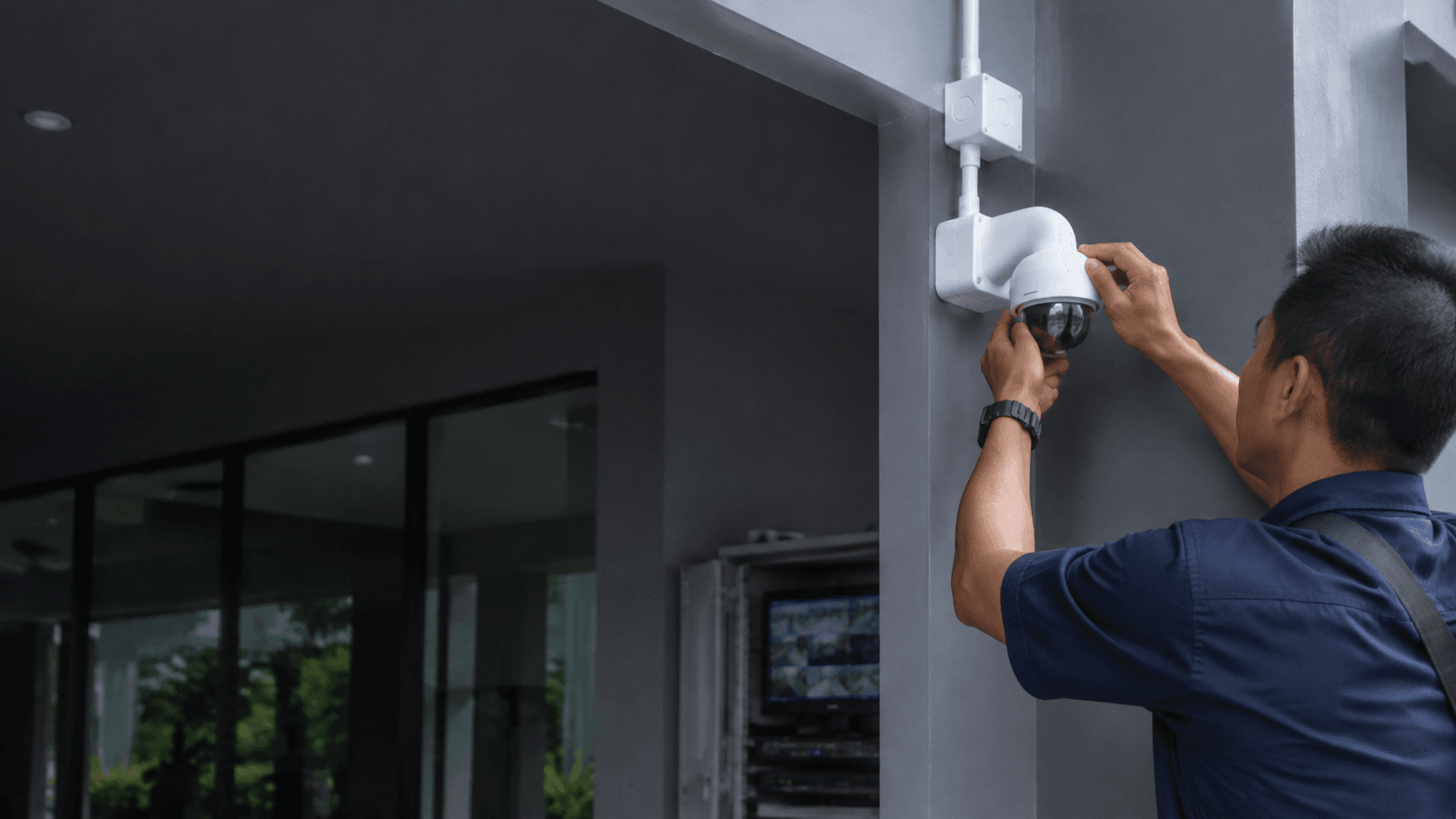
The exact-match query best wireless cctv system for home is a shopping question with a hidden engineering question underneath it. Buyers want a shortlist. What actually decides whether a system performs is placement, power, network load, and storage — the parts that never appear in a product title.
Eyonic Sdn Bhd is a security system supplier in Sarawak, Malaysia, working on CCTV and ELV systems for homes, offices, shops, and industrial sites. Its founder, Eric Yong, has more than 10 years in technical installation of digital security solutions for commercial businesses in Sarawak. That background shapes the guidance below: the camera is one decision among several.
Best Wireless Cctv System For Home: What Matters Before You Choose
Wireless in CCTV rarely means cable-free. It usually means the video travels over Wi-Fi or a wireless link while the camera still draws power from a socket, a battery, or a solar panel. That distinction changes cost, reliability, and where a camera can physically go.
Work through the decision in this order, because each answer constrains the next:
- Confirm what the property actually needs watched — entry points, driveway, gate, or interior rooms.
- Check power availability at each intended camera position.
- Test Wi-Fi signal strength at those positions, not at the router.
- Decide where recordings live. recorder hard drive, memory card, or cloud subscription.
- Confirm remote viewing works on the household's phones before handover.
- Verify night-time image quality under the real lighting at that location.
Eyonic's own installation process follows a comparable sequence: site survey, system proposal, installation, and handover. The survey exists because a proposal written before anyone has stood in the driveway is guesswork.
Why the survey comes before the shortlist
A camera that looks strong on a specification page can still fail in a specific house. A gate camera facing a streetlight will behave differently from the same model facing a dark perimeter wall. Eyonic recommends checking actual lighting conditions before confirming placement for ColorVu-style cameras, which is a placement decision rather than a product decision.
Choosing the Right Wireless Cctv System For Home
Three practical constraints separate systems more than brand names do: power, network, and storage. Each has a trade-off worth understanding before comparing models.
Power. battery, solar, or mains
Battery cameras install almost anywhere and remove the need to run cable to a distant corner. The trade-off is maintenance — batteries need recharging, and recharge frequency depends on how often the camera records and how cold or hot the mounting spot gets. Solar panels reduce that maintenance where the panel gets consistent daylight. Mains-powered cameras avoid the maintenance cycle entirely but require a power point near the camera, which is often the real constraint in an existing Malaysian terrace or semi-detached house.
Network. Wi-Fi load and range
Every wireless camera shares the home network. A single camera streaming continuously is manageable; four or more streaming at high resolution can compete with everything else on the same band. Range is the second issue — signal at the router is not signal at the back gate. A position-by-position check is more useful than a coverage claim on a box.
Storage. local versus cloud
Local recording on a recorder or memory card usually avoids an ongoing subscription and keeps footage on the property. Cloud storage adds off-site access and typically adds a recurring fee. Neither is universally better; the choice depends on whether the household wants to manage a device or pay a monthly cost.
What is
It is a camera setup where video is transmitted without a dedicated video cable to the recorder or viewing device. Power may still be wired, and the recorder itself may still be a physical unit on a shelf. The term describes the video path, not the whole installation.
Practical Considerations for
Two real project examples show how requirements differ by property type. Neither is a house, but both illustrate the same planning logic that applies to a home.
For the Kuching Immigration Office, the work focused on arrival flow, staff areas, visitor movement, and dependable daily operation. The approximate budget for that type of work was RM 12,000 to RM 28,000. For KTA Sarawak Sdn Bhd, an engineering consultancy, the requirement was a practical office setup in Kuching supporting staff movement, visitor handling, tidy cabling, and clearer daily site control, with an approximate budget of RM 8,000 to RM 18,000.
The pattern is consistent. coverage follows movement, not room count. A home version of the same exercise asks where people and vehicles actually pass, then places cameras to capture those paths.
Where wireless systems struggle
Dense walls, metal roofing, and long distances between camera and router degrade wireless video. In those conditions a wired camera or a hybrid arrangement often performs better, even though it costs more to install. A wireless system chosen purely to avoid cabling can end up with dropped frames and unreliable playback.
Budget expectations in Malaysia
Eyonic's published packages sit at RM 1,599 for a Hikvision CCTV package covering camera supply and setup, basic recording configuration, and mobile viewing handover. Alarm and autogate packages are listed at the same figure. Larger multi-camera or multi-site work scales well beyond that, as the project budgets above show.
Making an Informed Choice About
The strongest shortlist is the one that survives a site check. A buyer comparing the best wireless cctv system for home options should confirm three things before committing: that power is available or battery maintenance is acceptable, that Wi-Fi reaches every camera position, and that recorded footage can actually be retrieved when needed.
For households in Sarawak, local installation support matters because placement problems are physical. A supplier who surveys the property, proposes a layout, installs, and hands over the system closes the gap between a product listing and a working setup.
Share the property location, property type, and required system with Eyonic on WhatsApp at +60 11-5111 7959 for the next practical step.