
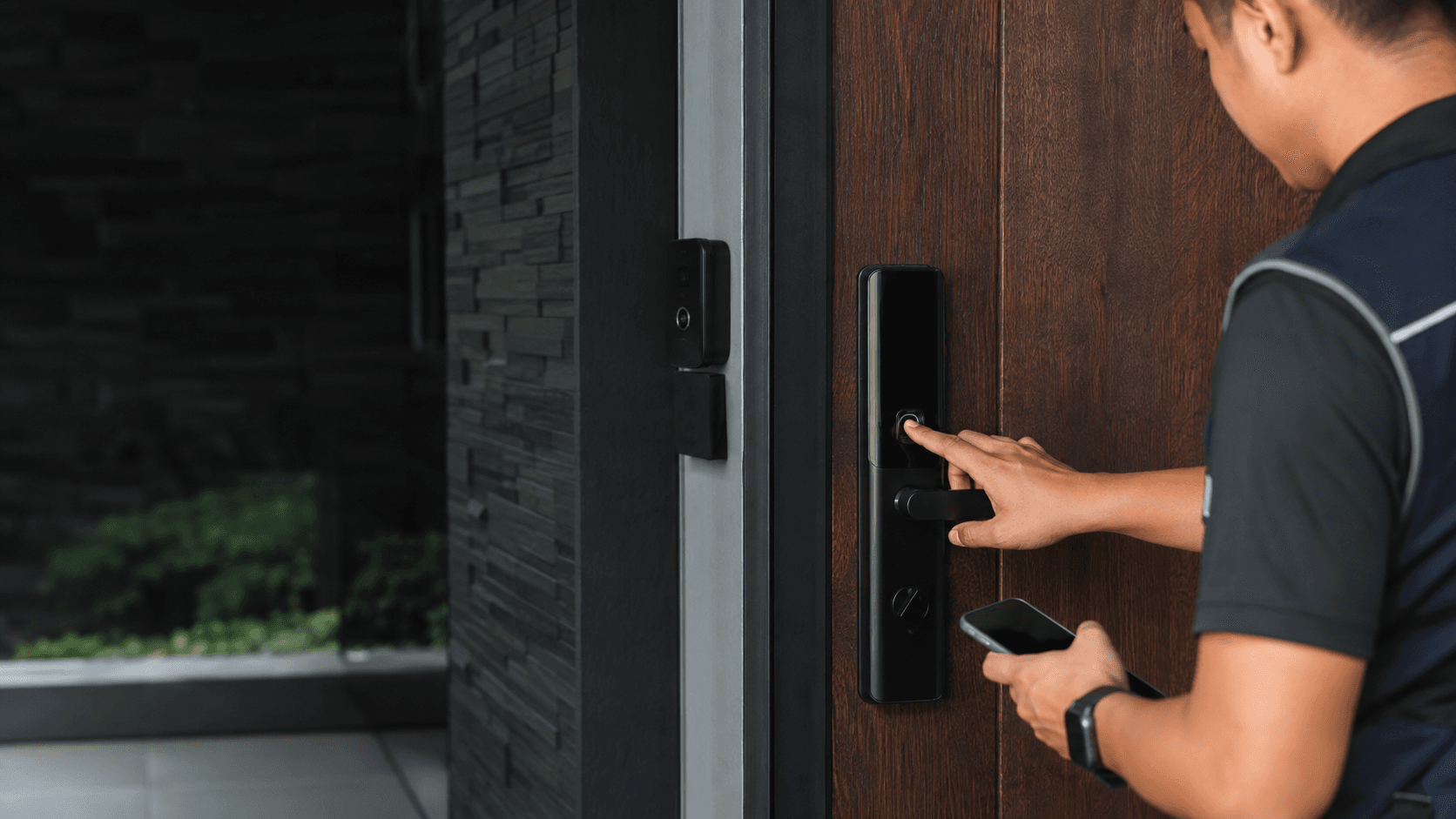
The exact-match query yale bluetooth door lock covers a family of Yale deadbolt replacements rather than one single product. Buyers in Malaysia usually meet this term while comparing keypad entry, app control, and whether a separate Wi-Fi bridge is needed for remote access.
Yale sells these locks under several names. The Assure Lock 2 line appears with pushbutton keypad or touchscreen input, and the Pro 2 line adds keyed or key-free variants. Bluetooth handles nearby phone control; Wi-Fi or a bridge extends that control beyond the door.
Yale Bluetooth Door Lock. What Matters Before Choosing
Three things decide whether a Yale Bluetooth Door Lock suits a property: how the door is built, who needs entry, and whether remote access is required.
- Confirm the door has a standard deadbolt bore and enough thickness for the lock body.
- Decide between pushbutton keypad and touchscreen input based on daily users.
- Check whether Bluetooth-only control is enough or a Wi-Fi bridge is needed.
- Plan entry codes for family, staff, or tenants, plus a backup entry method.
- Confirm the door closes and latches cleanly before relying on auto-lock.
Bluetooth range is short by design. A phone must be near the door for app unlock, which suits a home or a small office where people arrive at the entrance. Remote unlock from another location needs Wi-Fi, either built into the model or added through a bridge.
Battery life depends on motor use, keypad activity, and how often the lock cycles each day. A door that is opened dozens of times daily will drain cells faster than a residential entrance used a few times a day.
Choosing the Right Yale Bluetooth Door Lock
Model choice follows the entry habit, not the feature list. A household that wants keyless entry with a familiar keypad pattern leans toward a pushbutton model. A property that prefers a clean surface and code entry by touch leans toward a touchscreen model.
Keyed variants keep a physical cylinder, so a traditional key still works if the phone is unavailable or the battery is flat. Key-free variants remove the cylinder entirely and depend on the keypad, app, or a backup method. For a rental or a shop with changing users, the keyed option reduces lockout risk.
Yale also offers locks with Wi-Fi built in and locks that pair with a separate bridge. The difference matters at the point where someone needs to unlock a door while standing somewhere else, or where access logs must be reviewed away from the property.
What is yale bluetooth door lock in practice
In practice, a yale bluetooth door lock is a deadbolt replacement that communicates with a phone over Bluetooth for setup, code management, and nearby unlocking. The lock itself holds the codes, so entry works even when the phone is not present.
That local storage is the useful part. A family member or staff member can enter with a code while the owner's phone stays in a pocket. The app is used to add, change, or remove those codes rather than to open the door every time.
Yale Assure Smart Locks and Bluetooth Lock Options
The Assure Lock 2 family is the main line associated with Bluetooth entry. It appears in pushbutton keypad and touchscreen versions, and Yale positions it alongside Wi-Fi enabled models for buyers who want remote management.
Yale Pro 2 models extend the same idea with keyed and key-free configurations, and some bundles include a Wi-Fi Connect Bridge. The bridge is the part that turns a Bluetooth lock into a remotely managed one.
Integration matters for households already using a smart platform. Yale locks are commonly listed as working with voice assistants and smart home systems, which allows lock status checks and voice commands where the platform supports them.
Bluetooth versus Wi-Fi control
Bluetooth keeps the lock independent of the home network. There is no router dependency for everyday entry, and no internet outage can stop a code from working. The trade-off is that app control only works within close range.
Wi-Fi or a bridge adds remote unlock, access notifications, and code changes from anywhere. It also introduces a dependency on the network and on the bridge staying powered and connected.
Door and installation constraints
These locks replace an existing deadbolt on standard doors. Door thickness, bore size, and backset must match the lock's requirements, and the strike and latch must align so the bolt extends without binding.
Doors that swell in humid weather, gates, and non-standard openings are the usual edge cases. A lock that cannot throw its bolt freely will report errors and drain batteries faster, so the door hardware is checked before the lock is trusted.
Practical Considerations for
Access planning is where most installations succeed or fail. Permanent codes suit family members, scheduled codes suit cleaners or part-time staff, and temporary codes suit guests or contractors. Removing a code when someone leaves is the step that keeps the system meaningful.
Backup entry deserves a decision before installation, not after. A keyed model keeps a physical key as the fallback. A key-free model relies on a code, a charged phone, or a portable power source for a dead battery.
For business premises, the choice between a standalone smart lock and a wider access-control setup is worth reviewing. A single door with a handful of users fits a smart lock. Multiple doors, staff shifts, and audit requirements usually point toward a managed access-control panel instead.
Eyonic, a security system supplier in Sarawak, notes that smart locks work best when door condition, user roles, and backup method are reviewed before installation, and that business use sometimes calls for an access-control panel rather than a standalone lock. The same review applies to a Yale Bluetooth Door Lock on a shop or office entrance.
Making an Informed Choice About
A buyer who wants keyless entry at one door, a small set of users, and no remote management requirement can stop at a Bluetooth model. A buyer who needs remote unlock, guest access from another city, or access records for staff should include Wi-Fi or a bridge in the plan.
Property type shapes the rest. A terrace house entrance, a condominium unit door, and a shop lot frontage present different door conditions and different user counts. Reviewing those before purchase avoids a lock that fits the app but not the door.
For properties in Sarawak that combine door access with cameras, alarms, or intercoms, it helps to plan the lock as part of the wider setup rather than as a standalone purchase. Eyonic handles CCTV, alarm, autogate, and intercom work across Kuching and Sarawak, and completed a project for the Kuching Immigration Office covering arrival flow, staff areas, and visitor movement.
Share the location, property type, and required system with Eyonic on WhatsApp at +60 11-5111 7959 for the next practical step.