
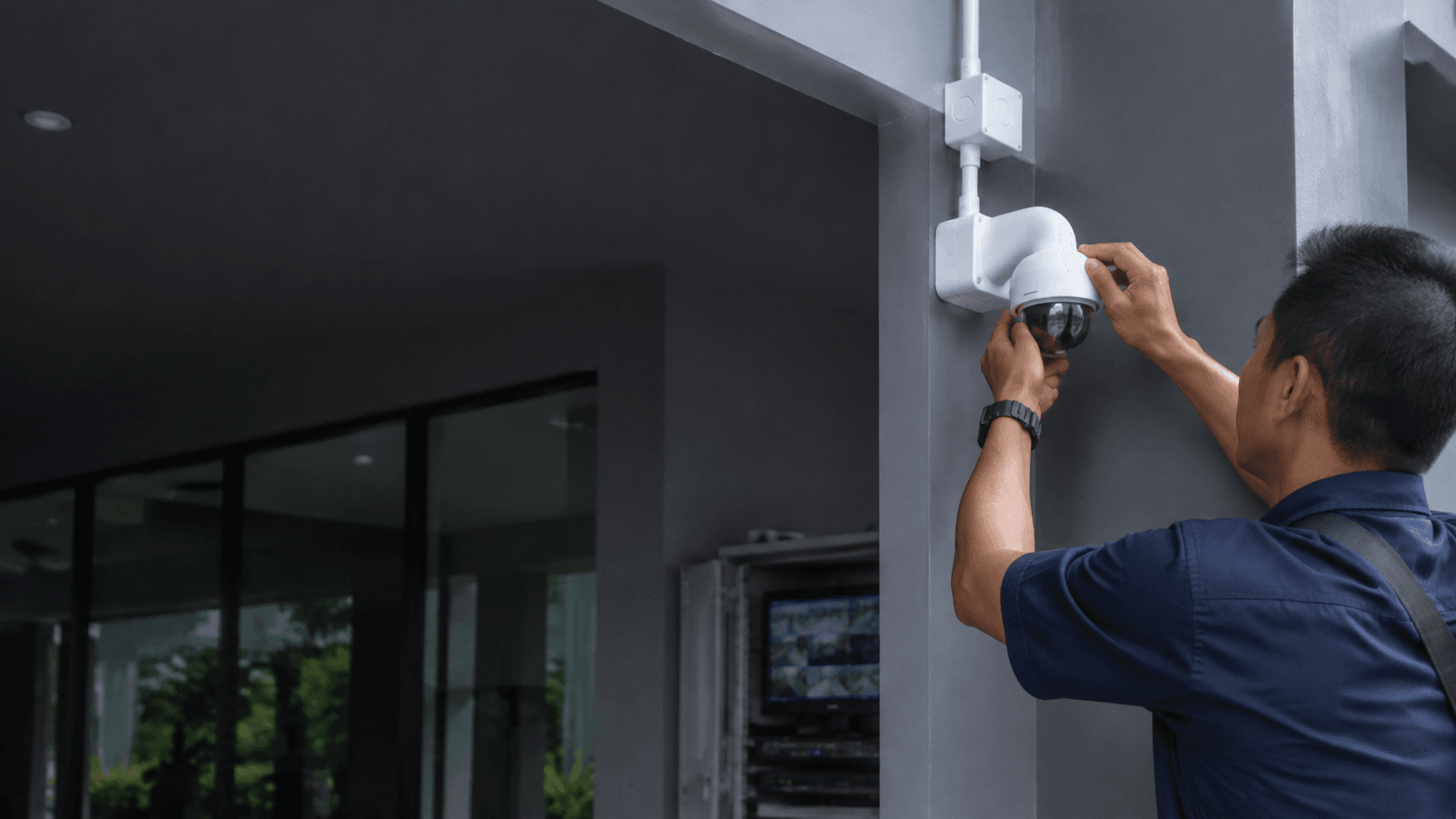
Wireless outdoor cameras remove the video cable, not the planning. A camera still needs a mounting point, a power decision, a signal path back to the recorder or router, and a field of view that actually covers the gate, driveway, or back lane it was bought for. In Malaysia, heat, rain, and the way light falls after dark decide whether that view stays usable.
Eyonic Sdn Bhd plans, supplies, and installs monitoring systems with camera placement, recording, and remote viewing for homes, offices, shops, and industrial sites in Sarawak. The company's own installation process runs through a site survey, a system proposal, installation, and handover, which is the order that keeps a wireless outdoor decision from being made on a product listing alone.
Why Cctv Wireless Outdoor Results Depend on Placement First
Most disappointing wireless outdoor installations are not camera failures. They are placement failures. A camera mounted where the installer could reach easily is often mounted where the signal is weakest and the view is most obstructed.
Three physical conditions decide the outcome:
- Signal path. Wireless video travels through walls, reinforced concrete, metal roofing, and foliage. Each of those reduces usable throughput, and a camera that streams fine at the front gate may drop frames at the rear of a shophouse.
- Field of view. A camera aimed at a wide open area captures a wide open area. Coverage of a specific entry point, gate, or walkway usually beats coverage of a general direction.
- Mounting height and angle. Too high and faces fall outside the frame. Too low and the camera becomes reachable. The useful band is narrow and depends on the distance to the subject.
Because wireless cameras are typically repositioned more easily than cabled ones, placement can be tested. A temporary mount and a live view at the actual time of day is a more reliable test than a specification sheet.
Where wireless outdoor cameras fit and where they do not
Wireless outdoor cameras suit sites where running cable is impractical, disruptive, or expensive: rented premises, completed renovations, detached structures, and locations across a driveway or lane from the main building. They also suit incremental coverage, where one or two additional viewpoints are added to an existing system.
They fit less well where continuous high-bitrate recording is required across many cameras, where the wireless path crosses several dense walls, or where power is genuinely unavailable at the mounting point. In those cases a cabled camera or a different power arrangement is usually the more durable answer, and a survey should say so before purchase.
Power, Weather, and Night Lighting in Malaysian Conditions
Malaysia removes the easy assumptions. There is no cold season to slow battery chemistry, but there is sustained heat, heavy rain, and high humidity. Those three conditions affect power, housing, and image quality in different ways.
Power choices and their trade-offs
Wireless outdoor cameras generally draw power in one of three ways. Each carries a different maintenance burden.
- Battery. No cable at the camera, but a recurring recharge or replacement cycle. Recording frequency, motion events, and night-time activity all shorten that cycle, and the cycle is shorter in practice than marketing figures suggest.
- Solar with battery. Reduces manual recharging, but performance depends on panel orientation and how many consecutive overcast days the site receives. Shaded mounting points undermine the panel.
- Mains power at the camera. The most predictable supply, at the cost of running a power cable to the mounting point. This is often the compromise that makes a wireless camera reliable.
The practical question is not which option is best in general, but which one the site can support without a maintenance routine that stops happening after a few months.
Weather exposure and housing
Outdoor cameras are built for outdoor use, but mounting position still matters. A camera under an eave sees less direct rain than one on an exposed wall. Upward-facing surfaces collect water and debris. Connectors and any exposed cable entry are common points of water ingress, and they are usually the first thing to check when a camera becomes intermittent after heavy rain.
Night lighting
Night performance is where expectations and results diverge most often. Infrared illumination produces monochrome images and can be limited by distance and by reflective surfaces close to the lens. Colour-at-night cameras depend on ambient light being present, which means a street lamp, porch light, or security light changes what the camera can actually deliver.
Eyonic's own guidance on ColorVu-style cameras is to check the actual lighting conditions at the site before confirming placement. That step exists because a location that looks adequately lit during a daytime survey can be effectively dark at 2am, and the camera choice or the lighting plan may need to change as a result.
Recording Storage and Remote Viewing Choices
A wireless camera produces a stream. What happens to that stream is a separate decision, and it is the one most often left until after installation.
Recording can sit on a local recorder, on a memory card at the camera, on a cloud service, or on some combination. Local recording through an NVR setup keeps footage on site and does not depend on an internet connection to keep recording, though remote viewing still does. Cloud recording survives the loss of the recorder but usually carries a recurring subscription and depends on upload bandwidth being available continuously.
Remote viewing depends on the site's internet connection, not on the camera being wireless. A weak or unstable broadband link will make remote viewing unreliable regardless of how good the wireless path between camera and recorder is. Upload speed matters more than download speed for this purpose, because video leaves the premises.
Retention is the other half of the decision. How many days of footage need to be kept determines storage capacity, and storage capacity determines whether a local recorder, a larger drive, or a cloud plan is the right fit. Retention requirements are usually driven by how long it takes to notice a problem, not by a general preference for more storage.
How Eyonic Plans a Wireless Outdoor Installation
Eyonic's installation process follows four stages, and the first one carries most of the risk reduction.
- Site survey. The property is reviewed for mounting positions, signal paths, power availability, lighting conditions, and the specific areas that need coverage.
- System proposal. The survey findings are turned into a proposed system covering camera positions, recording approach, and remote viewing.
- Installation. Cameras are mounted, power and network arrangements are completed, and the recorder or viewing setup is configured.
- Handover. The system is explained and tested with the people who will use it day to day.
This sequence matters for wireless outdoor work because the survey is where signal, power, and lighting constraints surface. A proposal built without that step tends to specify cameras by feature rather than by position, and the gap only appears after installation.
Eyonic's completed work includes the Kuching Immigration Office, where the focus was arrival flow, staff areas, visitor movement, and dependable daily operation. That project illustrates the same principle that applies to a wireless outdoor setup at a smaller site: coverage is designed around how a space is actually used, not around how many cameras fit the budget.
Eyonic is based in Sarawak and works across homes, offices, shops, and industrial sites. Eric Yong, the founder, has been in the industry for more than 10 years, with experience in technical installation of digital security solutions for commercial businesses in Sarawak.
. Practical Next Step
The decision that improves most wireless outdoor outcomes is the site survey, because it converts assumptions about signal, power, and night lighting into observed conditions. A survey also identifies the cases where a wireless camera is the wrong tool, which is cheaper to learn before installation than after.
Eyonic's published packages start at RM 1,599 for a Hikvision CCTV package covering camera supply and setup, basic recording configuration, and mobile viewing handover. Wireless outdoor requirements are quoted separately because power, mounting, and coverage vary by site.
Share the location, property type, and required system with Eyonic on WhatsApp at +60 11-5111 7959 for the next practical step.