
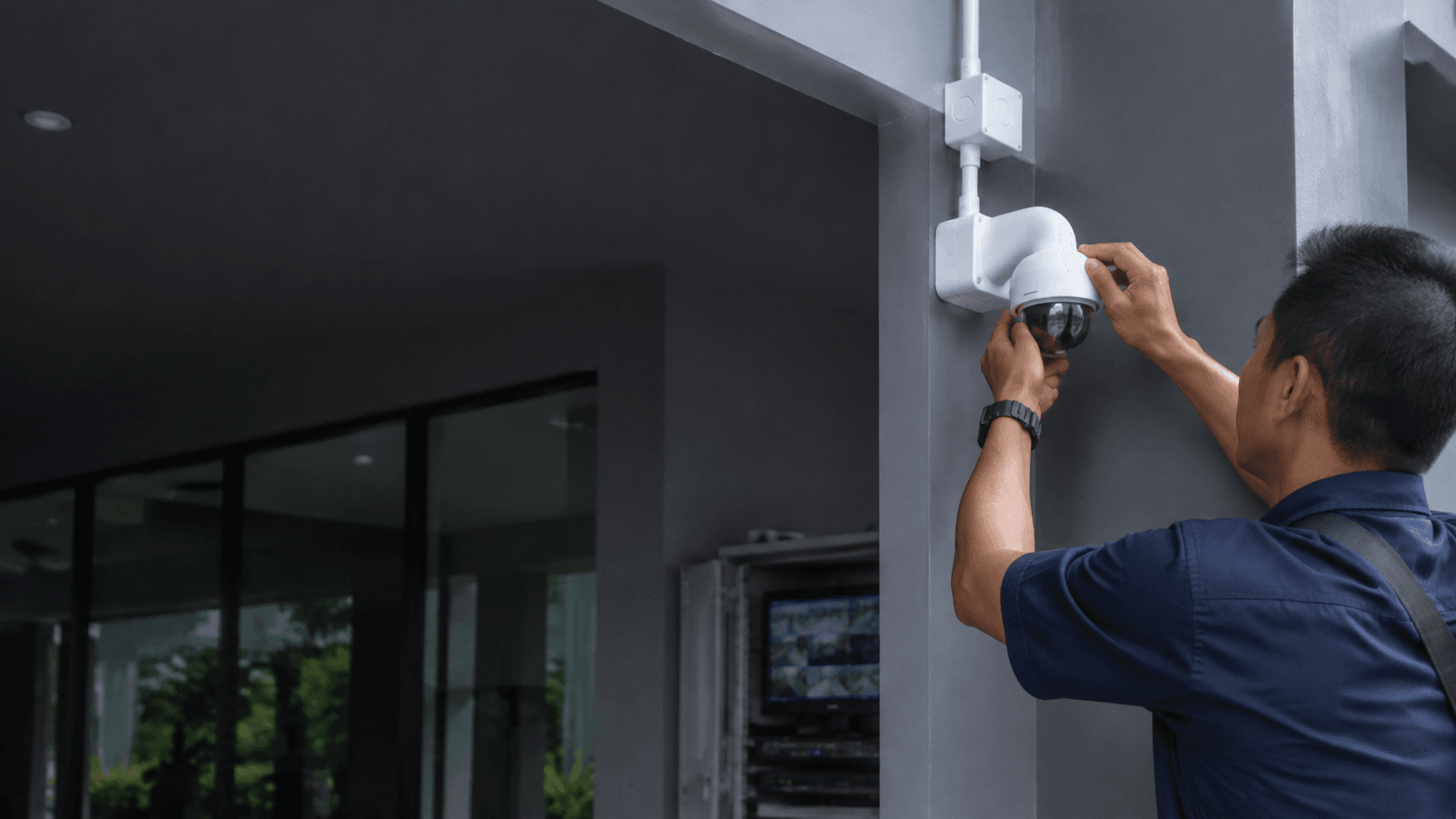
Eyonic Sdn Bhd, a security system supplier in Sarawak, plans, supplies and installs CCTV systems for homes, offices, shops and industrial sites. The company publishes a Hikvision CCTV Package at RM 1,599 covering camera supply and setup, basic recording configuration and mobile viewing handover. That package figure is the closest published reference point for what a small Hikvision-based system costs in Malaysia, and it is a package price rather than a standalone recorder price.
Anyone comparing quotations should understand one thing first: a recorder is a component, not a finished system. The figure that lands on a quotation depends on how many cameras the recorder must serve, how long footage must be kept, which camera technology is already on site, and how much labour the building demands.
What the Hikvision DVR Price Covers
A recorder price on its own covers the box and little else. A working system price covers the recorder, the storage drive inside it, the cameras feeding it, the cable runs between them, the power arrangement, configuration, and the handover that leaves someone able to view footage remotely.
Eyonic's published Hikvision CCTV Package at RM 1,599 lists camera supply and setup, basic recording configuration and mobile viewing handover. Those three items describe the shape of a complete small-system price: hardware, recording setup, and the point at which the owner can actually see the cameras from a phone.
Two practical consequences follow. First, a quotation that names only a recorder model is incomplete, because the recorder cannot record anything without cameras and a drive. Second, a quotation that names a total figure without listing channels, storage and camera type is difficult to compare against another quotation, because the two totals may describe very different systems.
Eyonic's installation process runs through site survey, system proposal, installation and handover. The proposal stage is where the recorder, camera count and storage decision are fixed together, which is why the recorder figure rarely exists in isolation.
Channel Count and Storage Drive
Channel count is the number of cameras a recorder can accept. It is the single largest driver of recorder cost, because a recorder built for more channels carries more processing and more connection points.
Storage is the second driver. A recorder needs a hard drive to hold footage, and the drive is often quoted separately from the recorder itself. The size of that drive depends on how many cameras run, at what resolution, and for how many days footage must be retained. A shop that wants a month of history needs a larger drive than a home that only reviews the last few days.
These two variables interact. Adding cameras increases both the channel requirement and the storage requirement, so a system that grows from a handful of cameras to a larger count does not simply add camera cost. It can push the recorder into a higher channel class and the drive into a larger capacity at the same time.
This is the main reason a published unit price for a recorder is a weak guide to a real project cost. The same recorder model can sit inside a modest system or a demanding one, and the surrounding hardware changes the total far more than the recorder alone.
Camera Type and Recorder Compatibility
Not every camera works with every recorder. Camera technology and recorder input type must match, and that match is decided before any price is meaningful.
Eyonic's product reviews note that smart locks work best when door condition, user roles and backup method are reviewed before installation, and the same principle of checking conditions first applies to camera selection. For ColorVu-style cameras, Eyonic recommends checking actual lighting conditions before confirming placement. Lighting conditions affect which camera suits a position, and the camera choice in turn affects what the recorder must support.
Where a site already has cameras, the existing camera type constrains the recorder choice. Replacing a recorder while keeping existing cameras means the new recorder must accept the signal those cameras produce. Replacing both together opens more options but raises the total.
Where a site is new, the camera decision comes first and the recorder follows. That order matters for budgeting, because choosing cameras on image quality alone and then discovering the recorder must be a higher class changes the figure after the fact.
Installation and Site Conditions
Labour is a real part of the figure and it varies with the building. Cable routes, ceiling type, wall construction, distance between camera positions and the recorder location all affect how long an installation takes.
Eyonic's project work shows how site purpose shapes the design. A completed project for the Kuching Immigration Office focused on arrival flow, staff areas, visitor movement and dependable daily operation. A project for KTA Sarawak Sdn Bhd needed a practical office setup in Kuching supporting staff movement, visitor handling, tidy cabling and clearer daily site control. Both descriptions point to the same pattern: camera positions and recorder placement follow the movement and control needs of the site, not a standard template.
Published project budgets give a sense of scale for larger work. The Kuching Immigration Office project carries an approximate budget of RM 12,000 to RM 28,000, and the KTA Sarawak Sdn Bhd project carries an approximate budget of RM 8,000 to RM 18,000. These are project budgets for office environments, not recorder prices, and they sit well above the RM 1,599 package because they cover more cameras, more cabling and more complex site conditions.
Tidy cabling is worth noting as a cost item rather than a finishing detail. Concealed and organised cable runs take longer than surface runs, and that time appears in the installation portion of the quotation.
What to Confirm Before Buying
A quotation is only comparable when it states the same things. The following sequence reflects how Eyonic approaches a CCTV installation, from first survey through to handover.
- Site survey to record camera positions, lighting conditions, cable routes and the intended recorder location.
- System proposal setting out camera count, camera type, recorder channel count, storage capacity and the resulting figure.
- Installation of cameras, cabling, recorder and storage drive, with configuration of recording settings.
- Handover covering mobile viewing setup and a walkthrough of how footage is reviewed.
Before committing, confirm the channel count and whether it leaves room for additional cameras later. Confirm the storage capacity and how many days of footage it holds at the chosen resolution. Confirm which camera type the recorder accepts, especially if existing cameras are being retained. Confirm whether the storage drive is included in the quoted figure or listed separately. Confirm what the handover includes, particularly remote viewing setup.
Where a quotation does not state these items, the gap is the risk. Two quotations can differ by a wide margin while describing systems of similar size, simply because one includes storage and configuration and the other does not.
Getting a Figure That Matches the Site
Because the Hikvision DVR price depends on channels, storage, camera type and site conditions, the useful next step is a survey rather than a catalogue comparison. A survey converts those variables into a specific proposal.
Eyonic's founder, Eric Yong, has worked in the industry for more than ten years and is experienced in technical installation of digital security solutions for commercial businesses in Sarawak. That experience is applied at the survey and proposal stage, where the recorder, camera and storage decisions are settled together.
Share your location, property type and required system with Eyonic on WhatsApp at +60 11-5111 7959 for the next practical step.