
The 2MP figure describes how much picture detail the camera captures, while ColorVu describes how the camera behaves when light drops. Buyers comparing options in Malaysia usually weigh three things at once: whether colour at night matters for the site, whether the recorder already in place can accept the camera, and whether the mounting position actually receives enough ambient light for colour to hold. Those three questions decide more outcomes than the resolution number alone.
Hikvision ColorVu 2MP: what the 2MP option covers
Resolution and low-light behaviour are separate decisions. A 2MP camera records roughly two million pixels of detail per frame, which is enough to recognise a person at a gate, read a vehicle plate area in good conditions, or monitor a shop entrance. ColorVu changes what happens after sunset: instead of switching to black-and-white infrared, the camera is designed to keep producing colour, which preserves clothing colour, vehicle colour and other detail that monochrome footage flattens.
That combination suits sites where colour carries meaning. A residential gate where a delivery rider's jacket colour matters, a shop front where staff need to distinguish a customer's vehicle, or an office entrance where visitor appearance helps confirm an incident — these are the cases where colour footage earns its place. Where the only question is whether something moved, a standard camera may be sufficient and cheaper.
Eyonic's CCTV work covers planning, supply and installation of monitoring systems with camera placement, recording and remote viewing for homes, offices, shops and industrial sites. The 2MP ColorVu option sits inside that scope rather than replacing it.
Hikvision ColorVu 2mp in low-light Malaysian settings
Malaysian lighting is not uniform. A shophouse corridor with a continuously lit ceiling, a covered porch with a single bulb, a back lane with no fixture at all, and a warehouse yard with floodlights on a timer each produce a different result from the same camera. Colour performance depends on how much light reaches the sensor, so the honest answer to "will this stay in colour at night" is that it depends on the position, not only the model.
Eyonic recommends checking actual lighting conditions before confirming placement for ColorVu-style cameras. That check is practical rather than theoretical: observe the position after dark, note whether a light source is present and how stable it is, and decide whether the camera should sit where existing light falls or whether a light needs to be added. A position that looks bright during a daytime survey can be almost dark at 2am if the nearby light is switched off.
Two constraints are worth stating plainly. First, colour footage in very low light can carry more visible noise than infrared footage, so a site with genuinely no light may not gain what it expects. Second, adding a light changes the site's appearance and running cost, which some property owners accept and others do not. Neither outcome is a fault of the camera; both are consequences of the lighting decision.
When a 2MP ColorVu camera fits, and when it does not
It fits when the position has some usable ambient light, when colour detail has investigative value, and when the recorder and cabling can support the camera. It fits less well when the position is completely unlit and no light can be added, when the priority is maximum pixel detail across a very wide area, or when the existing recorder cannot accept the camera's signal type. In those cases the practical alternatives are adding light, choosing a different camera class, or upgrading the recording end.
What to compare before choosing Hikvision ColorVu 2mp
Comparisons should start with the recording end, because a camera that cannot be recorded is not a working system. The checks below are the ones that change the outcome most often.
- Confirm the recorder accepts the camera. Signal type, channel count and recording resolution all need to line up with what is already installed or what will be installed alongside.
- Confirm the lens and housing suit the position. A wide view covers more area with less detail per person; a narrower view covers less area with more detail. Housing choice follows the mounting surface and exposure to weather.
- Confirm the lighting at the exact mounting point after dark, not the general brightness of the area.
- Confirm the cable route and power arrangement before drilling, since retrofitting a route later costs more than planning it once.
- Confirm what happens during a power interruption, and whether recording and remote viewing recover without manual intervention.
Model numbers, sensor details, aperture figures, light range and housing ratings for specific 2MP ColorVu units are not confirmed in the material available here, so those values should be taken from the supplier's current documentation for the exact unit being quoted rather than assumed from the family name.
Hikvision ColorVu 2mp placement and lighting checks
Placement decides whether the camera's low-light design is used or wasted. A camera aimed at a wall, a reflective surface or a light source will produce poor footage regardless of resolution. A camera mounted too high loses facial detail; too low invites tampering. The useful checks are about the scene, not the box.
Eyonic's completed work for the Kuching Immigration Office focused on arrival flow, staff areas, visitor movement and dependable daily operation. That framing is a useful model for any site: decide which movement matters, place cameras to cover that movement, and confirm the result is dependable day after day rather than impressive in a single test. A similar approach applied to an engineering consultancy office in Kuching covered staff movement, visitor handling, tidy cabling and clearer daily site control.
For a 2MP ColorVu position, the practical checks are whether the field of view includes the entry or exit point that matters, whether a face or plate would be large enough in frame to be useful, whether the position is reachable for cleaning and adjustment, and whether the light at that point is present when the site is unattended. If the answer to the last check is no, the placement or the lighting needs to change before installation, not after.
Installation sequence for a ColorVu camera
Eyonic's CCTV installation process follows four stages, and the lighting check belongs inside the first one.
- Site survey — review the property, the movement that needs covering, the existing recorder and cabling, and the actual lighting at each proposed position.
- System proposal — set out the camera positions, the recording arrangement and the scope of work so the plan can be reviewed before any drilling begins.
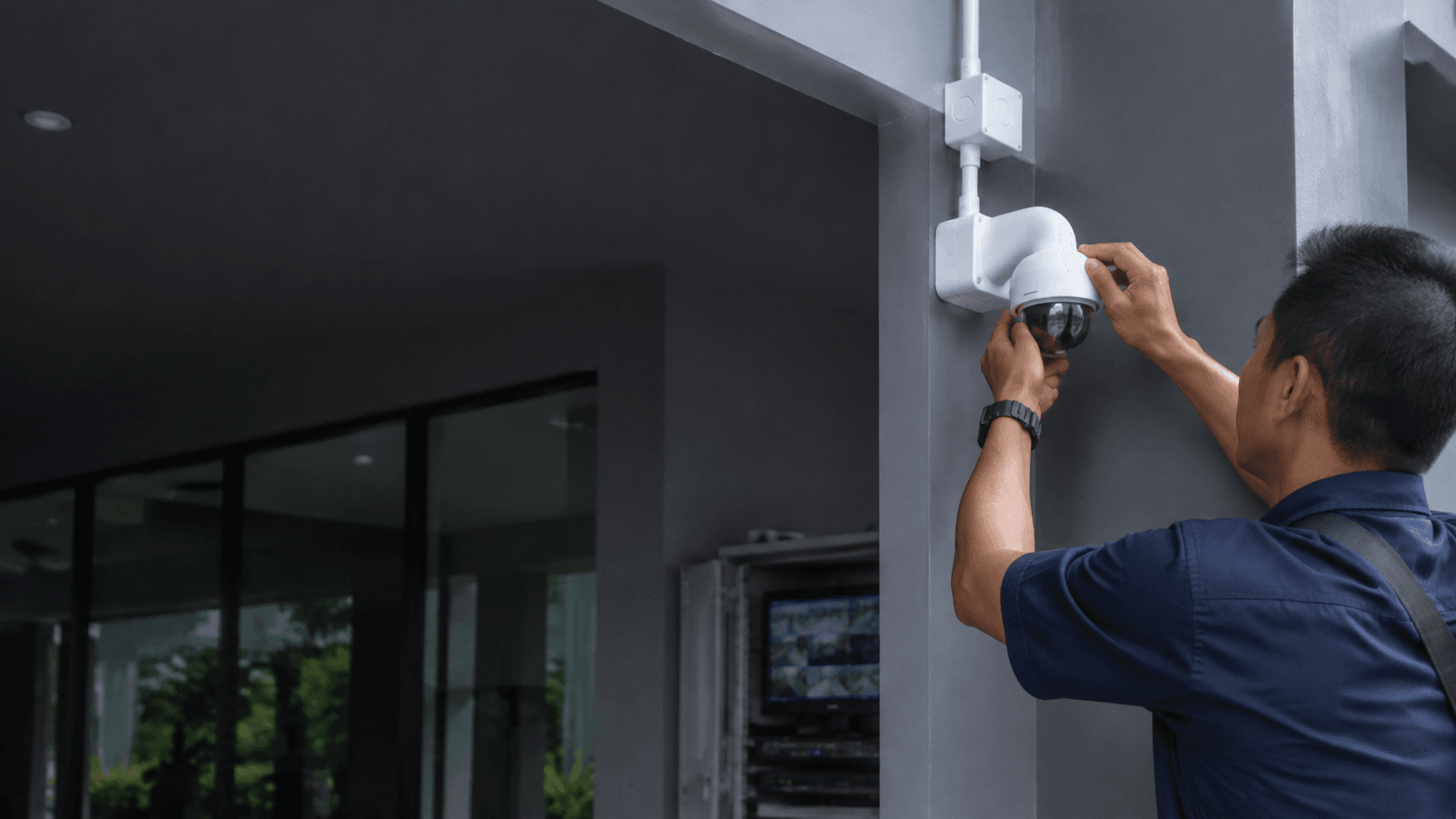
- Installation — mount and connect the cameras, configure recording, and keep cabling tidy and protected along the route.
- Handover — confirm recording works, set up remote viewing, and walk through the result so the system is usable without guesswork.
The sequence matters because each stage constrains the next. A survey that skips the after-dark lighting check produces a proposal that may not deliver colour at night. A proposal that ignores the existing recorder produces an installation that needs a second visit. A handover that skips remote viewing leaves the owner dependent on someone else to check footage.
Recorder compatibility and the limits of what can be confirmed here
Recorder compatibility is the single most common reason a camera purchase goes wrong. A 2MP ColorVu camera must match the recorder's supported signal type and channel capacity, and the recorder must be able to record at the resolution the camera outputs. A verified compatibility list for 2MP ColorVu cameras is not available in the material here, so compatibility should be confirmed against the specific recorder model in use before ordering. Where the recorder is older, replacing or adding a channel may be part of the work rather than an afterthought.
Evidence gaps and what to confirm with a supplier
Several details that buyers reasonably want are not confirmed here and should be verified directly rather than inferred. These include the technical specifications of any specific 2MP ColorVu model, confirmed model and part numbers for the Malaysian market, a recorder compatibility list, pricing for a ColorVu-specific package, warranty terms, measured low-light performance in Malaysian conditions, and current stock or lead time.
What is confirmed is narrower but useful. Eyonic plans, supplies and installs CCTV systems with camera placement, recording and remote viewing for homes, offices, shops and industrial sites, and its installation process runs through site survey, system proposal, installation and handover. Published package pricing starts at RM 1,599 for a Hikvision CCTV package covering camera supply and setup, basic recording configuration and mobile viewing handover. Project budgets for office-scale work have fallen in the RM 8,000 to RM 18,000 range for an engineering consultancy site and RM 12,000 to RM 28,000 for a public office, which gives a sense of scale without pretending a single camera price can be quoted from those figures.
Eric Yong, founder of Eyonic Security Systems, has worked in the industry for more than 10 years with a focus on technical installation of digital security solutions for commercial businesses in Sarawak. That background is relevant to the lighting question specifically, because the judgement about whether a position will hold colour at night comes from having stood in that position after dark.
Share the location, property type and required system with Eyonic on WhatsApp at +60 11-5111 7959 for the next practical step.