
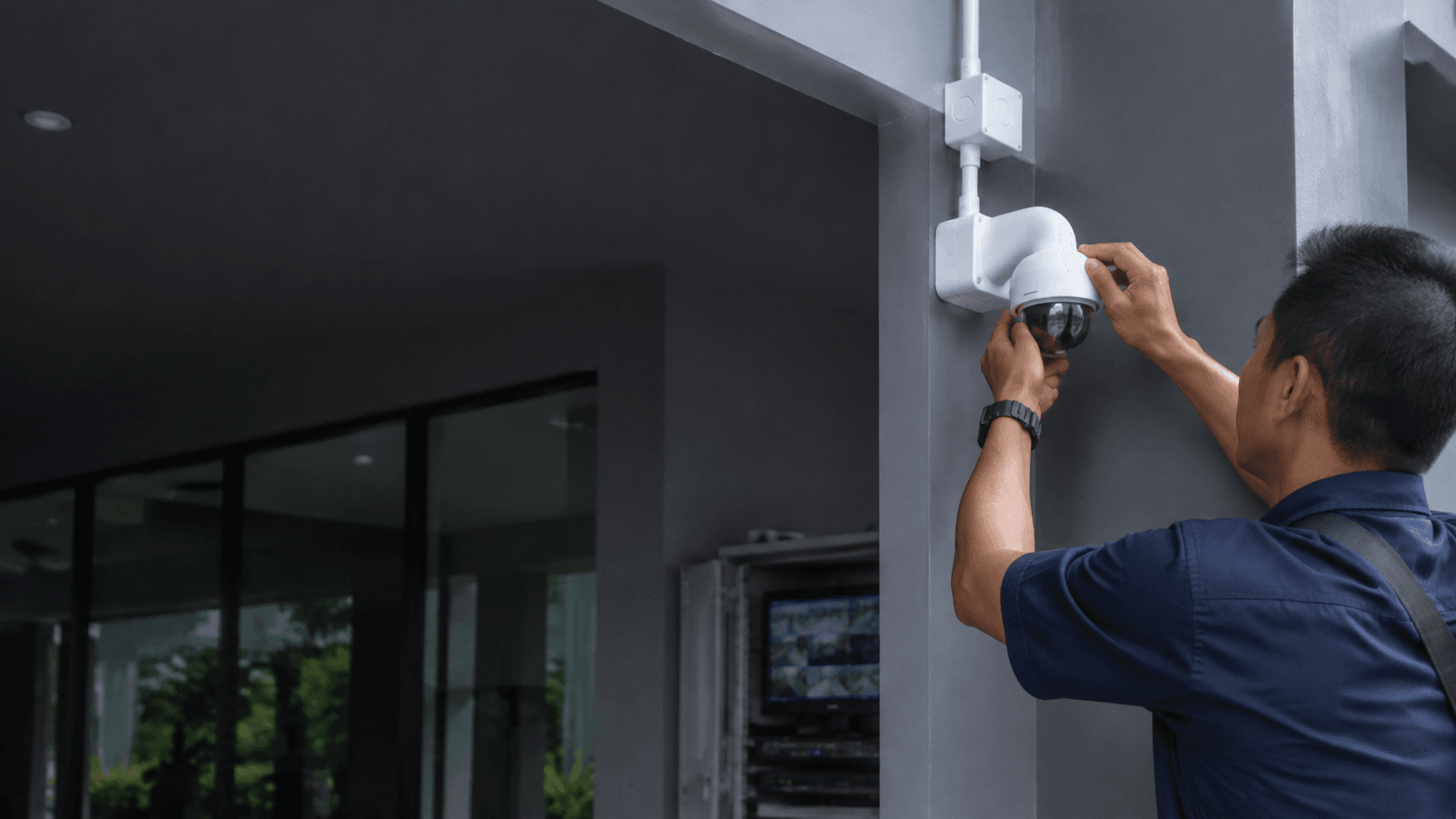
The extra pixels matter most where a face, plate, or document has to stay readable after the fact. They matter least where the camera already sits close to the subject or where the scene is too dark for any resolution to help. That trade-off, not the number on the box, decides whether a 5mp ip camera earns its place on a wall.
What the 5mp Ip Camera resolution changes in a real view
Resolution sets how much detail survives at distance. A 5 megapixel sensor packs more pixels into the same frame than a 1080p unit, so a person standing further from the lens still occupies enough pixels to be recognisable rather than a coloured shape. The practical gain shows up when footage is reviewed days later and a face or a vehicle needs to be identified, not merely noticed.
The gain is not free. More pixels per frame means more data to move across the network, more storage consumed per hour of recording, and more processing demanded from the recorder. A site that adds 5MP cameras to an existing recorder without checking its throughput can end up with dropped frames or a shorter retention window than expected. Retention is usually the first thing to give way, because storage fills faster at higher resolution.
Digital zoom is where the difference becomes visible. Cropping into a 5MP frame leaves more usable detail than cropping the same field of view from a lower-resolution frame. That is the honest case for choosing 5MP: not sharper live viewing on a phone screen, but more room to zoom into a recorded moment without the image falling apart.
Where 5MP is the wrong choice
A camera covering a doorway from two metres away gains little from 5MP, because the subject already fills the frame. A camera pointed at an unlit back lane gains nothing either, since resolution cannot recover detail that the sensor never captured. In both cases a lower-resolution unit with better low-light behaviour often produces the more useful recording.
Lighting and placement checks before confirming a 5mp Ip Camera position
Placement decides more outcomes than resolution does. A camera aimed into a bright window, a reflective shopfront, or a streetlight will produce glare and silhouette regardless of pixel count. Eyonic recommends checking actual lighting conditions before confirming placement for ColorVu-style cameras, because the manufacturer's low-light claim describes the sensor, not the scene. A site with mixed lighting needs the camera positioned so the subject is lit from the camera's side, not backlit from behind.
Field of view and identification distance pull against each other. A wide lens covers more ground but spreads the same pixels across a larger area, so each person occupies fewer of them. Narrowing the view raises the pixel count on the subject but creates blind spots at the edges. The workable compromise is usually a mix: wide coverage at entrances to see movement, tighter views at the points where identification actually matters, such as a counter, a gate, or a cash handling area.
Height and angle also shape the result. Mounting too high gives a steep downward view that hides faces under caps or hair. Mounting too low invites tampering. Cable routes, power availability, and whether the camera will run on Power over Ethernet all need settling before brackets go up, because moving a camera after installation costs more than placing it correctly the first time.
How a 5mp Ip Camera installation is scoped in Sarawak
Scoping starts with the site, not the product list. Eyonic's CCTV installation process runs through four stages, and each one produces something the next stage depends on.
- Site survey — the property is walked to record entry points, existing cabling, lighting at different hours, and where recording equipment can sit.
- System proposal — camera positions, resolution choices, recorder capacity, and storage are set out so the scope and cost are visible before work begins.
- Installation — cameras, cabling, and the recorder are fitted and configured, including recording schedules and network settings.
- Handover — live and recorded viewing are demonstrated, mobile access is set up, and the people who will use the system daily are shown how to review footage.
The survey stage is where a 5mp ip camera decision is actually made. A site that needs to identify people at a distance justifies the higher resolution; a site covering a small shop interior may not. Because the proposal follows the survey, the resolution choice is tied to a specific camera position and purpose rather than applied uniformly across every point.
Completed work in Sarawak includes the Kuching Immigration Office, where the focus was arrival flow, staff areas, visitor movement, and dependable daily operation, and KTA Sarawak Sdn Bhd, an engineering consultancy office in Kuching where staff movement, visitor handling, and tidy cabling shaped the setup. Both are office environments where the camera plan followed the movement pattern of the building. Approximate budgets for work of that type sit in the RM 12,000 to RM 28,000 range for the Immigration Office project and RM 8,000 to RM 18,000 for the KTA Sarawak project.
What the survey should capture
A useful survey records more than camera positions. It notes where power and network points already exist, whether cable runs can be concealed, which areas are public and which are restricted, and what hours the site is occupied. It also records the lighting at night, since a position that looks clear in daylight can be unusable after dark. These details determine whether a 5MP camera delivers identification or just a brighter version of an unusable image.
Recording, storage and remote viewing around a 5mp Ip Camera
Recording capacity is the constraint most often underestimated. Higher resolution consumes more storage per camera per day, so a recorder sized for 1080p cameras will hold fewer days of 5MP footage. Retention targets should be set before the recorder is chosen: if footage needs to be kept for a set number of weeks, the storage calculation has to start from that number and work backwards through camera count and resolution.
Network capacity matters alongside storage. Cameras running over Power over Ethernet share the same cabling for data and power, which simplifies installation but concentrates traffic. A recorder or switch that cannot handle the combined stream from several 5MP cameras will drop frames, and dropped frames are worse than lower resolution because the gap cannot be recovered later.
Remote viewing is the part most users judge the system by. Mobile access lets a site owner check a property from elsewhere, but the experience depends on the upload speed at the site, not the download speed on the phone. A slow connection at the property will make live viewing stutter even when the recording itself is intact. Handover should cover the difference between live view and playback, because the two behave differently under a weak connection.
Questions that come up before committing
Does 5MP need a different recorder? Not necessarily a different brand, but a recorder with enough channels, throughput, and storage for the resolution and camera count. The recorder is usually the limiting component, not the camera.
Is 5MP worth it for a small shop? It depends on whether identification at distance is needed. For a counter and a doorway covered closely, the benefit is small. For a car park or a long driveway, it is more likely to matter.
Can existing cameras be mixed with 5MP units? Mixed-resolution systems are common, and the recorder handles each stream separately. The practical limit is total throughput and storage, not uniformity.
What does a 5MP installation cost? No verified price for a 5MP-specific package is available. Eyonic's published Hikvision CCTV Package is RM 1,599 and covers camera supply and setup, basic recording configuration, and mobile viewing handover. Larger multi-camera projects are scoped individually after a survey.
Practical next step for a site
The decision that matters is not whether 5MP is better in general, but whether a specific camera position needs the extra detail. That question is answered by walking the site, checking the light at the hours that matter, and matching resolution to purpose rather than applying it everywhere.
Eyonic Sdn Bhd plans, supplies, and installs monitoring systems with camera placement, recording, and remote viewing for homes, offices, shops, and industrial sites, and the founder, Eric Yong, has worked in the industry for more than ten years on technical installation of digital security solutions for commercial businesses in Sarawak. Share the location, property type, and required system with Eyonic on WhatsApp at +60 11-5111 7959 for the next practical step.