
That figure is a starting point, not a ceiling. A home with four outdoor positions, long cable runs, and a gate camera will land well above a two-camera terrace setup, because the package price reflects a defined scope rather than an open-ended installation. Understanding which parts of a quote move — and which stay fixed — is what turns a number into a budget.
Cctv Cost For Home. What Shapes the Number
Three things separate a modest installation from an expensive one: how many cameras are needed, how far cable has to travel, and how much of the property must be covered without blind spots. Everything else — resolution, storage, remote viewing — sits on top of those three.
Eyonic's published package sits at RM 1,599 for a Hikvision CCTV setup covering camera supply and setup, basic recording configuration, and mobile viewing handover. That structure matters because it shows what a defined scope looks like: cameras, a recorder, and a working phone view at the end. When a quotation climbs, the climb usually comes from scope added beyond that baseline.
Camera count and placement drive most of the budget
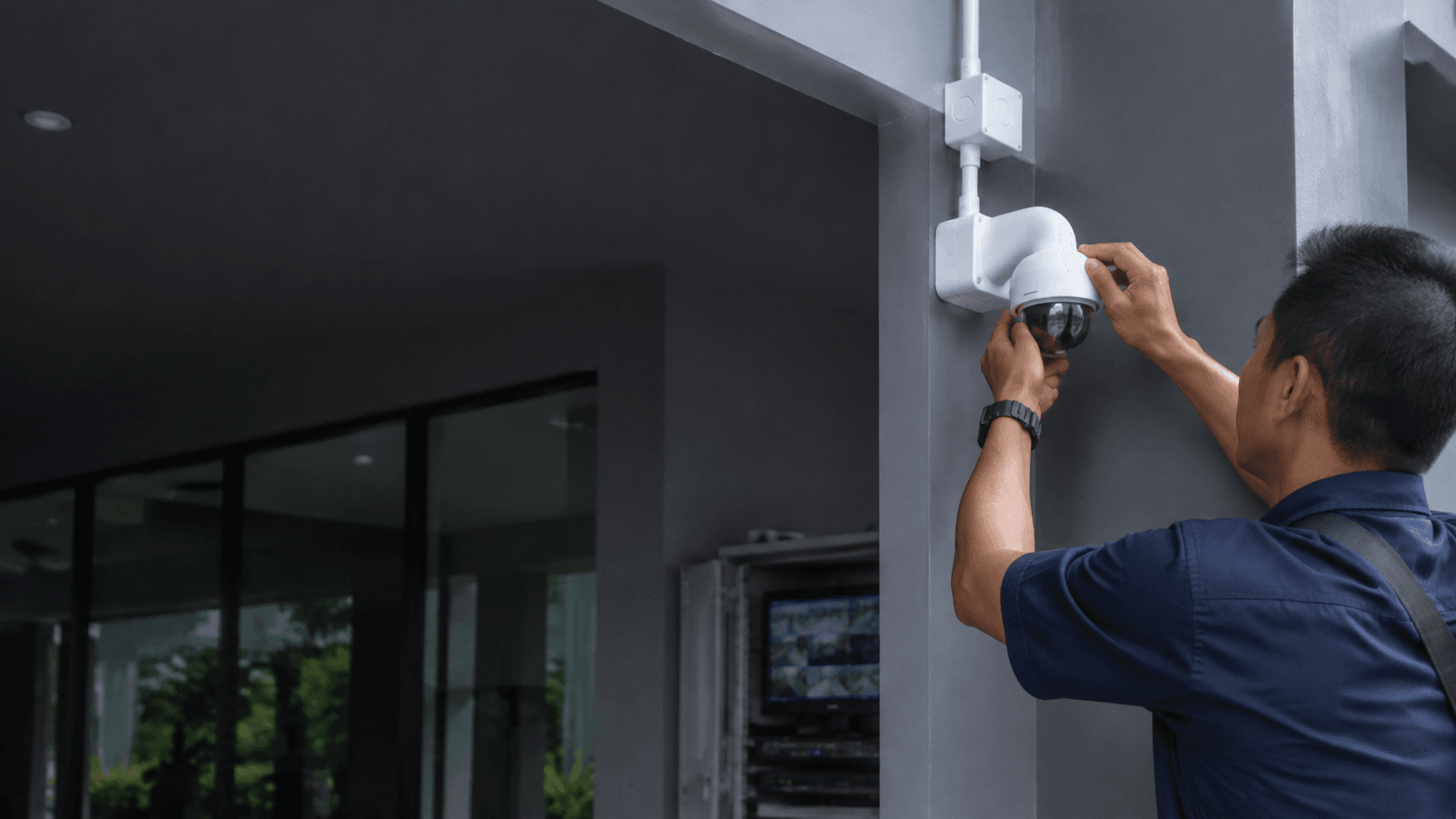
Each additional camera adds hardware, a mounting position, a cable route, and a recording channel. Placement decides how much of that cable route is difficult. A camera above a front door on an accessible wall is straightforward. A camera covering a rear boundary across a tiled roof, or one mounted where no existing power or network path exists, changes the labour content of the job.
Eyonic's own guidance on ColorVu-style cameras is to check actual lighting conditions before confirming placement. That is a cost-relevant instruction, not a technical footnote. A position chosen on assumption rather than observation often gets revisited, and revisiting a mounted camera means re-running cable and re-patching a wall.
Practical placement questions that affect the final figure:
- Which entry points genuinely need continuous coverage, and which can share one camera angle?
- Does the property have an existing cable path, or does every run start from scratch?
- Are outdoor positions sheltered, or exposed to direct rain and afternoon sun?
- Is there a gate, porch, or side alley where a single wide-angle position replaces two narrow ones?
Recording, storage and remote viewing choices
Recording is where home CCTV cost quietly diverges. A recorder with a local hard drive keeps footage on the property and involves no recurring fee. Cloud or subscription-based storage trades an upfront cost for an ongoing one. The choice affects both the initial quotation and the monthly budget, so it belongs in the same conversation as camera count rather than a later add-on.
Remote viewing is the part most homeowners actually use daily. Eyonic's installation scope includes NVR setup and remote viewing handover, which means the phone view is configured and demonstrated before the job closes. A system that records correctly but cannot be checked from outside the house has not delivered what most households are paying for.
Storage capacity determines how far back footage can be reviewed. Retention length depends on camera count, recording resolution, and whether recording runs continuously or on motion. Those three variables interact, so retention is a design decision rather than a specification to pick off a list.
What a Home CCTV Project Looks Like in Practice
Eyonic's CCTV installation process follows four stages: site survey, system proposal, installation, and handover. The sequence exists because a proposal written before a survey is a guess.
- Site survey. The property is assessed on location — entry points, existing cabling, lighting conditions, and where a recorder can sit.
- System proposal. Camera positions, recorder and storage approach, and remote viewing are set out as a defined scope.
- Installation. Cameras are mounted, cable is run, and the recorder is configured.
- Handover. Recording is confirmed and mobile viewing is set up and explained.
The survey stage is where most cost uncertainty gets resolved. Two houses of identical size can produce different quotations because one has a clear cable route and the other does not. A survey converts those unknowns into a fixed scope before installation begins.
Eyonic's completed work includes the Kuching Immigration Office, a project focused on arrival flow, staff areas, visitor movement, and dependable daily operation. That is a commercial site rather than a home, and it is cited here only to show the kind of coverage planning involved — positioning cameras around movement through a space rather than simply counting entry doors. The same logic applies at smaller scale in a house: coverage follows how people and vehicles actually move through the property.
Questions to Settle Before Confirming a System
Most budget surprises come from decisions deferred until after installation. Settling these beforehand keeps the quotation and the final invoice aligned.
Is the recorder staying on site? Local recording avoids recurring storage fees. Cloud storage adds a monthly line that continues for as long as the system is used.
How many days of footage are needed? Retention drives hard drive size, and hard drive size is a real cost line. A household wanting a month of history needs more storage than one wanting a week.
Who checks the system, and how often? A camera that has shifted or a recorder that has stopped writing is only discovered when someone looks. Remote viewing makes that check quick, but someone still has to do it.
What happens when the internet drops? Local recording continues; remote viewing does not. Households that rely on checking footage while away should understand that distinction before installation rather than after.
Is the scope written down? Camera count, positions, recorder, storage approach, and remote viewing should all appear in the proposal. A quotation that lists only a total leaves the boundaries undefined.
Where the Package Price Ends and the Project Price Begins
The RM 1,599 Hikvision CCTV Package is a defined scope: camera supply and setup, basic recording configuration, and mobile viewing handover. It is a useful reference point because it shows what a complete, working small system includes. It is not a quotation for every home.
Properties that typically sit above that baseline share recognisable traits: multiple outdoor positions, long or difficult cable runs, a gate or perimeter camera, or a requirement for extended footage retention. Properties that sit close to it tend to have a compact footprint, accessible mounting positions, and a clear idea of which entry points matter most.
Eyonic also supplies alarm systems, autogate packages, keyphone intercoms, and Starlink internet installation in Sarawak. Households planning more than one of these often sequence the work together, since cabling and mounting decisions overlap. That is a scheduling consideration rather than a discount structure, and it is worth raising during the survey rather than after the CCTV work is finished.
For households in Kuching and across Sarawak, the practical next step is a survey. Share the location, property type, and the system required with Eyonic on WhatsApp at +60 11-5111 7959, and the scope can be defined against the actual property rather than an assumed one.