
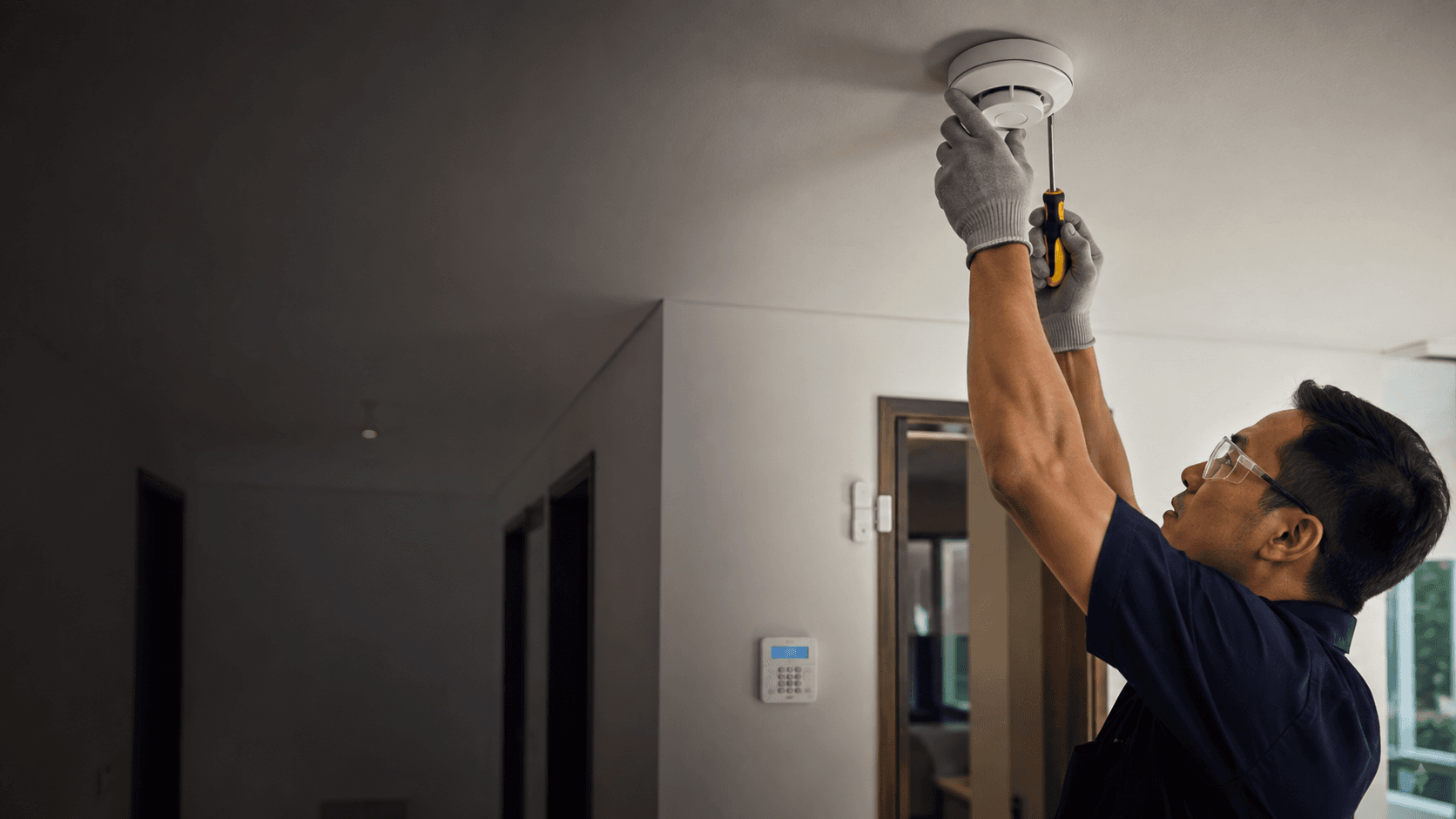
Wireless Home Alarm Systems Do It Yourself: What Matters Before You Choose
Choosing wireless home alarm systems do it yourself requires weighing installation effort against the protection level needed. A self-installed system removes technician fees but shifts responsibility for correct sensor placement and network reliability onto the owner. Properties with thick walls, long distances between entry points, or existing smart-home ecosystems demand extra planning before purchase.
The decision sequence below reflects how most buyers approach wireless home alarm systems do it yourself, based on patterns seen across major security retailers and review sites.
- Define the perimeter. list every entry door, ground-floor window, and high-traffic interior zone that needs coverage.
- Check the wireless environment. confirm Wi-Fi signal strength at each planned sensor location and note any metal obstructions or thick concrete walls.
- Match the communication protocol: choose between proprietary mesh systems, Z-Wave, Zigbee, or cellular backup based on existing smart-home devices.
- Decide monitoring depth. select self-monitoring with push alerts, professional central-station monitoring, or a hybrid that allows switching.
- Compare starter kit contents. verify whether the base price includes door sensors, motion detectors, and a siren or whether those are separate purchases.
- Confirm expansion capacity. check the maximum number of zones or sensors the hub supports before committing to a brand ecosystem.
Choosing the Right Wireless Home Alarm Systems Do It Yourself
The market for wireless home alarm systems do it yourself spans several distinct approaches. Some kits ship with a pre-configured hub and adhesive sensors that install in minutes. Others use a panel that requires programming each sensor into the system. A third category integrates fully with smart-home platforms like Alexa, Google Home, or Apple HomeKit, allowing automation rules beyond basic intrusion detection.
Brand ecosystems matter more than individual component specs. A sensor from one manufacturer rarely communicates with another brand's hub unless both support a common open standard such as Z-Wave or Zigbee. Buyers who already own smart speakers or hubs should verify compatibility before selecting a security kit, since a closed ecosystem may require replacing existing devices.
What is wireless home alarm systems do it yourself?
Wireless home alarm systems do it yourself refers to security setups where the owner handles installation, configuration, and often monitoring without a professional installer. The core components include a central hub or panel, door and window contact sensors, motion detectors, and usually a siren. Communication between components happens over radio frequencies rather than physical cabling, which simplifies retrofitting into existing homes.
The practical distinction from professionally installed systems lies in who assumes responsibility for system integrity. A DIY installer must verify that every sensor reports correctly, that the hub has reliable power and connectivity, and that the monitoring path works during an actual event. Professional installers typically perform signal strength tests and walk-throughs that a first-time DIY user might overlook.
Home And Business DIY Alarm Systems
The same wireless technology serves both residential and commercial settings, though the requirements diverge significantly. Home systems typically protect a limited number of entry points with a handful of sensors. Business installations often need more zones, scheduled arming and disarming, user access codes for multiple staff members, and integration with access control or CCTV systems.
Eyonic Sdn Bhd, a security system supplier in Sarawak, Malaysia, handles both home and business installations. Their completed projects illustrate how requirements scale with property type. The Kuching Immigration Office project focused on arrival flow, staff areas, visitor movement, and dependable daily operation, with an approximate budget of RM 12,000 to RM 28,000. A separate project for KTA Sarawak Sdn Bhd, an engineering consultancy, addressed staff movement, visitor handling, tidy cabling, and clearer daily site control at a budget of RM 8,000 to RM 18,000.
These examples show that wireless home alarm systems do it yourself suits smaller, simpler properties, while larger or higher-traffic sites often benefit from professional planning. Eyonic's CCTV installation process includes site survey, system proposal, installation, and handover, a sequence that mirrors what a thorough DIY installer should replicate independently.
Practical Considerations for Wireless Home Alarm Systems Do It Yourself
Sensor placement determines whether a wireless system detects intrusions reliably. Door and window contacts should sit on the moving edge with the magnet aligned to the sensor body. Motion detectors need a clear line of sight across the protected area, positioned away from direct sunlight, heating vents, and moving objects like curtains or pets that could trigger false alarms.
Connectivity testing deserves attention before final mounting. Wireless sensors communicate with the hub over dedicated radio frequencies or Wi-Fi, and signal strength varies with building materials. Concrete walls, metal doors, and large appliances can block or weaken signals. Eyonic recommends checking actual lighting conditions before confirming placement for ColorVu-style cameras, a principle that extends to any security device where environmental factors affect performance.
Power management presents another trade-off. Battery-powered sensors offer placement freedom but require periodic replacement. Some systems use lithium batteries rated for several years, while others draw more power and need more frequent changes. Hardwired options eliminate this concern but reintroduce the installation complexity that DIY buyers often want to avoid.
Monitoring choices and their trade-offs
Self-monitoring sends alerts to a smartphone when a sensor triggers, leaving the response decision to the owner. This costs nothing monthly but depends on the owner noticing alerts promptly. Professional monitoring routes signals to a central station that contacts emergency services when an alarm cannot be verified as false. This adds a recurring fee but provides response even when the owner is away, asleep, or unable to act.
Cellular backup addresses a critical weakness of Wi-Fi-dependent systems. If an intruder cuts the internet connection or a power outage disables the router, a system relying solely on Wi-Fi goes silent. Cellular communicators maintain the monitoring path independently, though they add hardware cost and often require a monthly data plan.
Expansion and long term flexibility
Starter kits typically include enough sensors for a small apartment or a few key entry points in a house. Most systems allow adding sensors later, but the maximum capacity varies widely. Entry-level hubs may support only a dozen zones, while professional-grade panels handle dozens or hundreds. Buyers planning to secure a large home or add environmental sensors for smoke, water leaks, or carbon monoxide should confirm expansion limits before purchase.
System portability matters for renters. Wireless home alarm systems do it yourself appeal strongly to tenants because adhesive-mounted sensors remove cleanly without damaging walls. This portability also means the investment moves to a new residence, unlike hardwired systems that remain with the property.
Making an Informed Choice About
The right wireless home alarm systems do it yourself setup balances upfront cost, monthly fees, installation effort, and the specific risks a property faces. A single occupant in a ground-floor apartment needs different coverage than a family in a detached house with multiple entry points and valuable contents.
Comparing starter kit contents reveals significant variation in value. Some kits include two or three door sensors and one motion detector, while others bundle additional sensors, key fobs, and indoor sirens at a similar price. The table below summarizes typical trade-offs across common system configurations.
| System Type | Typical Components | Best Fit | Key Trade-off |
|---|---|---|---|
| Basic hub kit | Hub, 2-3 contact sensors, siren | Small apartments, single entry points | Low cost, limited coverage |
| Expanded residential kit | Hub, 4-6 sensors, motion detector, key fob | Family homes, multiple entry points | Balanced coverage, moderate price |
| Smart-home integrated | Hub with Z-Wave/Zigbee, camera compatibility | Existing smart-home users | Automation flexibility, higher complexity |
| Cellular backup system | Hub with LTE communicator, sensors | Homes needing reliable monitoring | Continuous monitoring, recurring data fee |
Professional guidance remains valuable even for DIY-oriented buyers. Eyonic's founder, Eric Yong, has more than 10 years of experience in technical installation of digital security solutions for commercial businesses in Sarawak. His team's process of site survey, system proposal, installation, and handover demonstrates the structured approach that prevents common installation errors.
For properties where the DIY route falls short, professional installation services provide an alternative. Eyonic offers alarm system installation services in Sarawak alongside CCTV, autogate, and intercom solutions. Their Hikvision alarm system package is priced at RM 1,599, a reference point for comparing professional installation against self-installed kits.
The decision ultimately rests on property size, technical comfort, and the value placed on professional verification. Wireless home alarm systems do it yourself delivers genuine savings and flexibility for capable owners, while professional installation provides assurance that every sensor, connection, and monitoring path has been tested and confirmed before daily operation begins.