
What Defines the Aosu Security Camera Range
Aosu builds its reputation on wire-free outdoor cameras that pair small solar panels with rechargeable batteries. The product family includes the SolarCam D1 Classic, the dual-lens SolarCam T2 Pro, and the WirelessCam systems, all of which connect over 2.4GHz Wi-Fi rather than through a wired network cable. Most models record to a local base station called the aosuBase, which removes the monthly cloud fee that many competing brands charge.
Resolution options span 2K, 3K, and 5MP across the lineup, with full-color night vision and automatic person or vehicle tracking appearing on the higher-tier units. The cameras also support two-way talk and integrate with Amazon Alexa and Google Assistant for voice control and live viewing on smart displays.
Key Features to Evaluate Before Buying an Aosu Security Camera
Because official Aosu specifications for Malaysia are not verified from primary sources, buyers should confirm each feature against the specific model page before purchase. The following checklist covers the points that matter most for local installation.
- Assess the property layout and identify the entry points, blind corners, and high-traffic zones that need coverage.
- Check Wi-Fi signal strength at each proposed camera location, since Aosu units require a stable 2.4GHz connection.
- Determine solar exposure across the day, as shaded walls or covered porches will reduce the solar panel's charging ability.
- Choose the camera model and kit size based on the number of coverage zones and the desired resolution.
- Plan placement for overlapping fields of view so that one camera's detection zone covers another camera's blind spot.
- Schedule professional installation if the mounting points sit above two storeys or require drilling into reinforced concrete.
The solar panel is the defining feature of the Aosu security camera system. A camera mounted under a deep roof overhang or beside a tall fence may receive only a few hours of direct sunlight, which forces the battery to carry the load through the night. Malaysian weather adds another variable: the heavy afternoon thunderstorms common in Kuala Lumpur and Sarawak can leave panels covered in debris or shaded for days at a time.
Installing an Aosu Security Camera in Malaysia
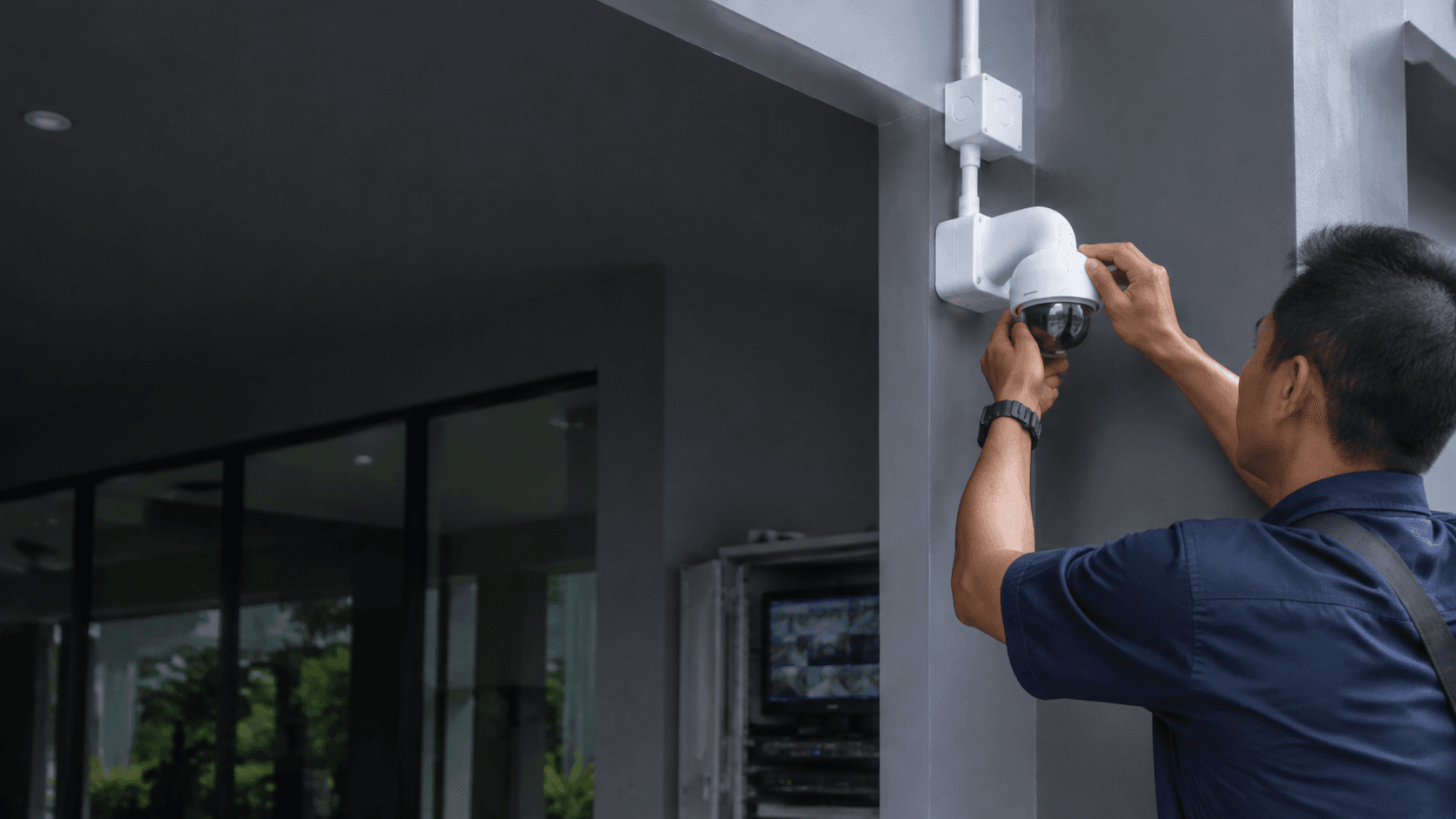
Eyonic's CCTV installation process for conventional systems runs through site survey, system proposal, installation, and handover, and the same sequence applies when fitting an Aosu security camera. The site survey matters more for solar cameras than for wired units because the installer must verify both the Wi-Fi coverage and the solar path before fixing the bracket.
Mounting height changes the detection performance. A camera placed at 2.5 metres above ground captures faces and vehicle plates clearly, while a unit mounted at 4 metres widens the overview but reduces the detail available for identification. The Aosu pan-tilt models can compensate with their motorised heads, but the fixed-lens SolarCam D1 units need careful aiming during installation.
Local conditions in Malaysia create specific installation constraints. The heat inside an unventilated roof space can shorten battery life, and the frequent rain means the camera body and solar connector must sit clear of standing water. Eyonic recommends checking actual lighting conditions before confirming placement, a practice that applies to Aosu's color night vision just as it does to Hikvision's ColorVu cameras.
Comparing the Aosu Security Camera with Wired CCTV
The Aosu security camera suits properties where running cables is difficult or disruptive. A terrace house with a tiled roof, a rented shop lot, or a landed property with a long driveway all benefit from the wire-free design because the installer avoids chasing walls and lifting floorboards. The trade-off appears in reliability: a wired CCTV system draws continuous power from the mains, while an Aosu camera depends on its battery state and solar input.
Recording behaviour also differs. Wired systems typically record 24 hours a day to a network video recorder, which gives complete footage but fills storage quickly. Aosu cameras use motion-triggered recording by default, so they capture events rather than continuous video. This approach extends battery life but can miss the few seconds before the motion sensor activates, a gap that matters when a vehicle passes quickly across the driveway.
For a business environment such as the Kuching Immigration Office project that Eyonic completed, dependable daily operation was the priority. That project focused on arrival flow, staff areas, and visitor movement, which called for continuous recording and a wired power supply. An Aosu security camera would struggle to match that duty cycle because its solar panel cannot guarantee enough charge during prolonged overcast weather or when the camera faces away from the sun.
Aosu Security Camera Limitations and Edge Cases
The wireless design introduces a single point of failure that wired systems avoid. If the home router drops its connection, the Aosu camera cannot stream live video or send push alerts, although the local storage on the aosuBase continues recording. Buyers in areas with frequent broadband outages should weigh this risk against the convenience of the wire-free installation.
Battery life depends heavily on event frequency. A camera overlooking a busy street will trigger constantly, draining the battery faster than the solar panel can recharge during a short Malaysian rainy season day. The 5MP sensors on the D1 Classic draw more power than the 2K models, so a six-camera kit on a large property may need periodic manual charging if the solar exposure is poor.
Privacy and data handling deserve attention. Aosu markets local storage as a security benefit, but the camera still sends alerts and preview thumbnails through the cloud to reach the mobile app. Buyers who require footage to remain entirely on-site should confirm the data path with the retailer before purchase, as the local storage claim does not mean the device operates fully offline.
Getting Professional Help with an Aosu Security Camera
Professional installation adds value for the Aosu security camera in three situations: multi-storey mounting, complex Wi-Fi environments, and mixed systems that combine Aosu units with wired CCTV. An installer can run a site survey to map the wireless coverage, confirm the solar exposure at each mounting point, and recommend the kit size that matches the property's actual risk profile rather than the marketing images.
Eyonic's experience with government and engineering consultancy clients shows the value of matching the system to the operational need. A home owner protecting a single entrance may find a two-camera Aosu kit sufficient, while a business with stock, staff, and visitor flow needs the continuous recording and central management that a wired NVR system provides. The right choice depends on whether the priority is easy installation or uninterrupted coverage.
Share the property location, building type, and the number of entry points with Eyonic on WhatsApp at +60 11-5111 7959 to confirm whether an Aosu security camera fits the site or whether a wired system serves the property better.