
Eufy Camera Basics. Local Storage and No Monthly Fees
The central appeal of a Eufy camera is its local-first design. Instead of uploading footage to a cloud server that requires a recurring payment, most Eufy models store video on hardware the owner controls. The HomeBase 3, for example, acts as a central hub with built-in storage, while standalone models like the SoloCam series accept microSD cards. This architecture means the base recording, playback, and alert functions operate without a monthly fee, a point that competitor reviews consistently highlight as the main reason buyers compare Eufy against brands like Ring or Arlo.
That said, "no monthly fees" does not mean every feature is free forever. Eufy has introduced optional cloud storage plans for users who want off-site backup, and some AI features such as advanced facial recognition may require a subscription on newer models. The practical takeaway for a Malaysian buyer is that the core security function—recording and reviewing footage—remains subscription-free, but the full feature set may carry costs.
What to Check Before Buying a Eufy Camera
Choosing the right Eufy camera starts with matching the hardware to the physical environment, not just the spec sheet. The following checklist covers the decisions that matter most for a home or small business in Malaysia.
- Define the coverage area as indoor or outdoor, since weatherproofing ratings and night vision needs differ sharply between the two.
- Decide on the power source. battery for flexible placement, wired for constant recording, or solar for remote spots without nearby outlets.
- Confirm the resolution requirement, knowing that 2K is now the practical minimum for identifying faces or number plates while 4K suits larger open areas.
- Verify the storage path, whether footage goes to a HomeBase unit, a microSD card inside the camera, or both, and check the maximum supported capacity.
- Check smart home compatibility with Alexa, Google Assistant, or Apple HomeKit before purchase, because not every Eufy model supports all three ecosystems.
A common mistake is buying a battery camera for a location that needs continuous recording. Battery-powered Eufy models conserve power by sleeping between motion events, which means they miss footage that occurs before the sensor triggers. For a driveway or a shared entrance where constant coverage matters, a wired or solar-powered model is the better fit.
Eufy Camera Models for Indoor and Outdoor Use
Eufy's lineup splits cleanly into indoor, outdoor, and doorbell categories, and each has a representative model that appears across buyer guides. The table below compares three frequently recommended units based on the features that competitor research shows buyers weigh most heavily.
| Model | Resolution | Power Source | Storage | Best Use Case |
|---|---|---|---|---|
| eufyCam S330 (eufyCam 3) | 4K | Battery with solar option | HomeBase 3 | Outdoor perimeter with local storage |
| Indoor Cam S350 | 4K with pan/tilt | Wired | microSD or HomeBase | Room monitoring with dual lenses |
| SoloCam S340 | 3K | Battery with built-in solar panel | microSD | Standalone outdoor spot without a hub |
The eufyCam S330 suits a landed property in Malaysia where the owner wants a multi-camera system without drilling for power cables. The Indoor Cam S350 works well for monitoring a living area, a home office, or a space where the pan-and-tilt function lets one camera cover a wide room. The SoloCam S340 fits a single point such as a back gate or a parking area, and its solar panel reduces the need to recharge the battery manually.
For a video doorbell, Eufy offers models that record to a HomeBase rather than relying on cloud storage. This matters in Malaysia because doorbell cameras sit at the property boundary where reliable evidence of visitor identity is the main purpose. A doorbell that records locally keeps that footage private and accessible without a subscription.
How Eufy Camera Privacy and Security Work
Eufy markets its cameras around data privacy, and the local storage model is the core of that claim. Footage that never leaves the property cannot be accessed by a cloud provider, which addresses a concern that some buyers have about subscription-based cameras from other brands. The HomeBase encrypts recorded video, and the Eufy Security app controls access through the owner's account.
The privacy picture is not without caveats. Eufy faced criticism in late 2022 when security researchers found that some video thumbnails were accessible without authentication, and the company responded with firmware updates and a bug bounty program. Buyers should keep the camera firmware updated to maintain the security fixes that Eufy has issued since that incident.
For a Malaysian user, the practical privacy question is about who else can view the feed. Local storage means Eyonic or any installer does not need cloud access to set up the system, and the property owner controls account sharing. This makes a Eufy camera a reasonable choice for a home where the owner wants direct control over footage rather than relying on a third-party service.
Eufy Camera Installation Considerations in Malaysia
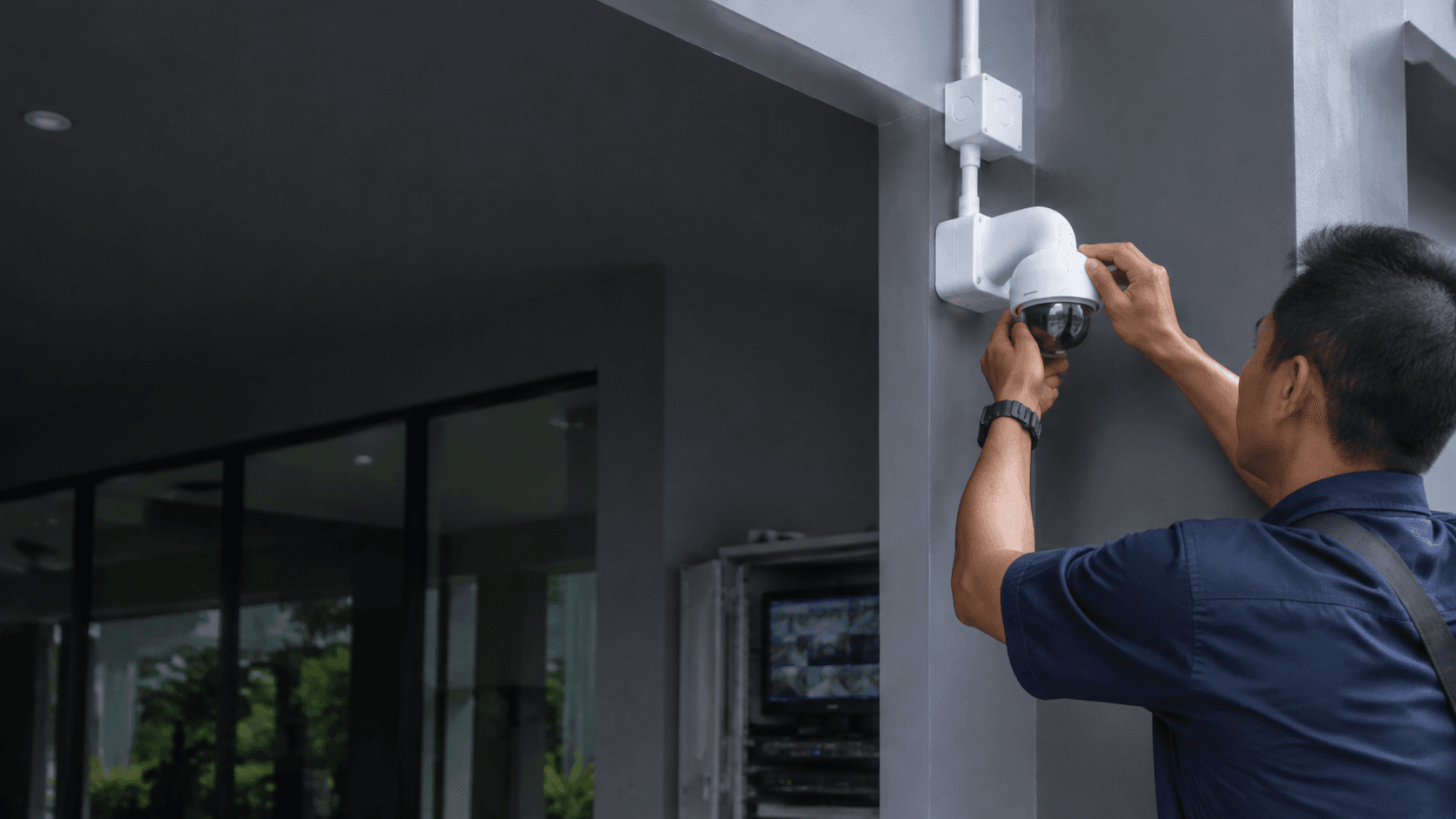
Installing a Eufy camera in Malaysia involves the same physical planning as any security camera, and the local climate adds specific constraints. Eyonic's CCTV installation process for other camera brands includes a site survey, system proposal, installation, and handover, and that sequence applies equally to a Eufy deployment. The site survey matters because camera placement determines whether the field of view actually covers the intended area.
Heat and humidity are the main environmental factors. Outdoor Eufy cameras carry weatherproofing ratings, but direct afternoon sun can shorten battery life and cause image sensor overheating in extreme cases. Mounting an outdoor camera under an eave or a covered porch reduces heat exposure while still covering the approach to the property. Eyonic recommends checking actual lighting conditions before confirming placement for cameras with colour night vision, and the same logic applies to a Eufy model that advertises colour footage in low light.
Wi-Fi signal strength is another installation factor that Malaysian homes often overlook. A Eufy camera that relies on a HomeBase needs a stable connection between the hub and the camera, and thick concrete walls common in Malaysian construction can weaken that signal. A site survey that tests signal strength at the proposed mounting point prevents the common problem of a camera that drops offline during heavy rain or when the network is under load.
Eufy Camera vs Other Security Cameras
Comparing a Eufy camera against alternatives such as Hikvision, Ring, or Arlo comes down to three trade-offs: subscription cost, installation complexity, and ecosystem fit. Eufy wins on the first point because its local storage removes the recurring fee that Ring and Arlo charge for cloud recording. Hikvision, which Eyonic supplies and installs in Sarawak, also offers local recording through an NVR, but its setup is more involved and typically requires professional installation.
The table below summarises how a Eufy camera stacks up against the main alternatives that Malaysian buyers consider.
| Brand | Storage Model | Subscription Required | Installation | Best Fit |
|---|---|---|---|---|
| Eufy | Local via HomeBase or microSD | No for core recording | DIY-friendly | Homeowners wanting no monthly fees |
| Hikvision | Local via NVR | No | Professional recommended | Businesses needing multi-camera coverage |
| Ring | Cloud | Yes for recording | DIY-friendly | Users already in the Amazon ecosystem |
| Arlo | Cloud or local | Yes for advanced features | DIY-friendly | Users wanting optional cloud backup |
For a Malaysian homeowner who wants a camera they can install themselves and run without monthly costs, a Eufy camera is the stronger choice. For a business that needs a dependable multi-camera system with professional placement and ongoing support, a Hikvision setup through a local installer like Eyonic offers a more robust path. Eyonic's project for the Kuching Immigration Office, which focused on arrival flow, staff areas, and visitor movement, shows the kind of site-specific planning that a commercial deployment requires—planning that goes beyond what a consumer camera can deliver on its own.
The decision also depends on whether the buyer values the smart home ecosystem. A Eufy camera works with Alexa and Google Assistant, but not every model supports Apple HomeKit. A buyer who uses HomeKit exclusively should verify model compatibility before purchase, because the local storage advantage disappears if the camera cannot integrate with the home automation system already in place.