
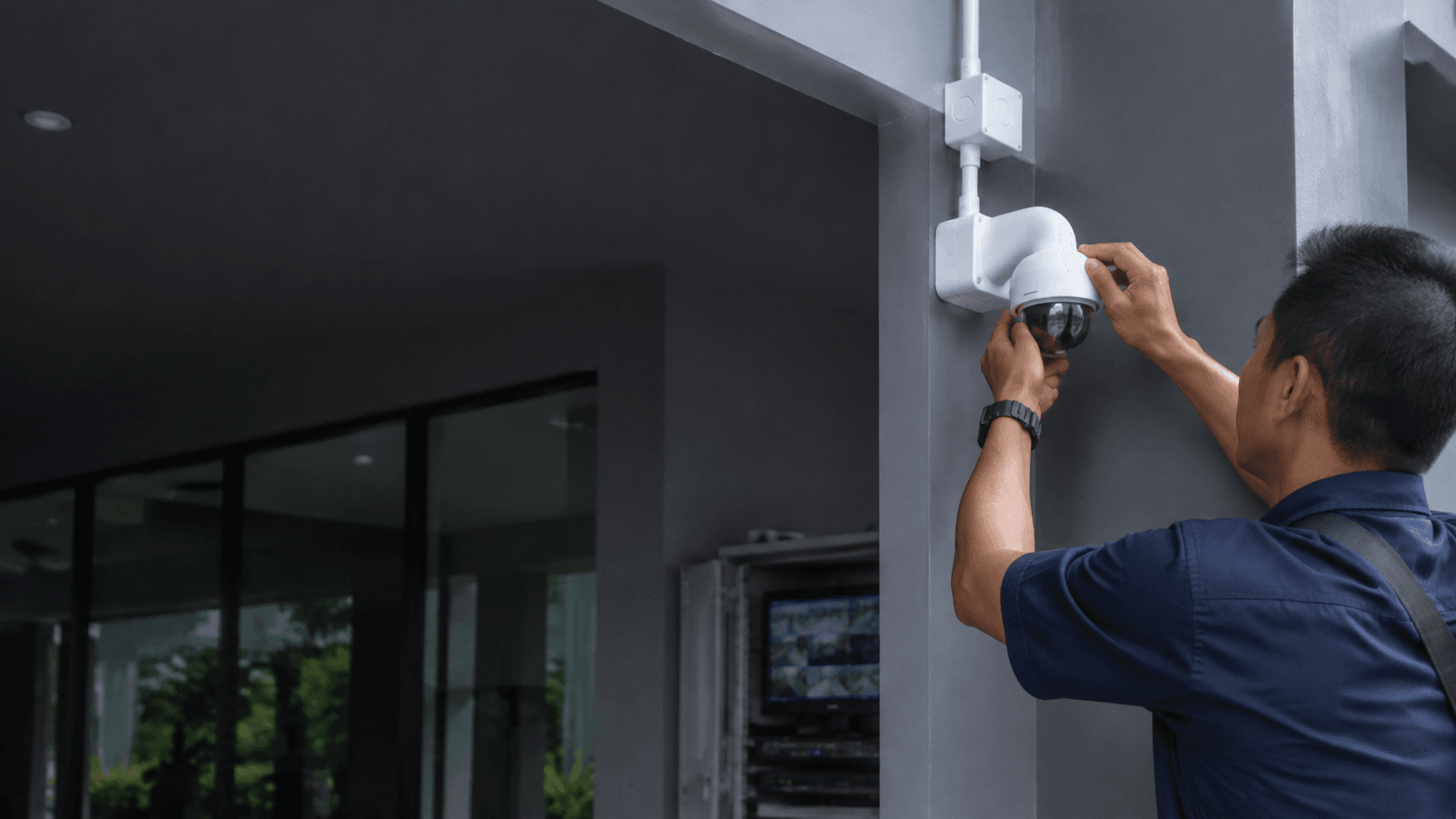
The choice facing most Malaysian buyers is not really about who holds the most stock. It is about who takes responsibility when a camera points at the wrong spot, when the recorder fills up, or when nobody can pull the footage after an incident. A supply-only distributor ships boxes. A distributor that also installs carries the outcome.
That distinction matters more in Malaysia than in markets where buyers install their own hardware. Commercial premises here often combine older wiring, mixed lighting and shared building management, so the equipment list alone rarely decides whether a system works.
Cctv Distributors. Supply, Planning and Installation
A distributor that only supplies competes on price and availability. A distributor that plans and installs competes on whether the finished system does what the buyer needed. Both models exist in Malaysia, and both are legitimate depending on who is doing the work.
Buyers with an in-house technician usually want supply only. They know the site, they know the cable runs, and they want the hardware at a workable price. Buyers without that capability need the planning and installation wrapped into the same purchase, because splitting supply from installation creates a gap where faults get passed between two parties.
Eyonic Sdn Bhd operates as a security system supplier in Sarawak, covering CCTV and ELV systems for homes, offices, shops and industrial sites. The company plans, supplies and installs monitoring systems that include camera placement, recording and remote viewing.
Where supply-only breaks down
Supply-only works when the buyer can answer three questions before ordering: how many cameras are needed, where each one points, and how long footage must be retained. If those answers are guesses, the hardware order is a guess too.
Common failures include cameras aimed at a corridor that is already covered by another unit, recorders sized for fewer channels than the site will eventually need, and network switches that cannot carry power to every camera. None of these are product faults. They are planning faults, and they surface after the invoice is paid.
What Cctv Distributors Supply in Malaysia
The hardware side of the category is fairly consistent. Cameras, network video recorders, storage drives, power over ethernet switches, cabling and connectors form the core of most commercial orders. Brand availability varies by distributor, and Hikvision appears frequently across the market.
Eyonic's product range includes Hikvision cameras and smart locks, alongside CCTV and ELV work. The company's published service scope covers camera placement, NVR setup and remote viewing configuration, which means the supply decision and the installation decision sit with the same party.
For buyers comparing cctv distributors, the practical question is whether the quoted hardware matches the site. A distributor that asks about ceiling height, entry points and lighting before quoting is doing planning work. One that only asks for a camera count is filling an order.
Access control and adjacent systems
CCTV rarely stands alone in commercial premises. Door access, alarms and intercoms often share the same cabling routes and the same power planning. Eyonic's published guidance on smart locks notes that door condition, user roles and backup entry method should be reviewed before installation, and that business use sometimes calls for an access-control panel rather than a standalone lock.
Buyers sourcing CCTV and access control from separate suppliers inherit the coordination problem. Cable routes get duplicated, power budgets get missed, and fault diagnosis splits across two vendors.
How Eyonic Handles Supply and Installation
Eyonic's CCTV installation process runs through four stages, published on its Sarawak installation services page. The sequence matters because each stage feeds the next, and skipping the first one pushes guesswork into the quotation.
- Site survey, covering the property layout, existing wiring and the areas that need coverage.
- System proposal, setting out the equipment and configuration matched to the surveyed site.
- Installation, including camera mounting, cabling, recorder setup and network configuration.
- Handover, covering recording checks, mobile viewing setup and a walkthrough of the finished system.
The handover stage is where many supply-only purchases end early. A buyer receives cameras and a recorder, connects them, and discovers that remote viewing does not work because the router, the recorder and the mobile app were never configured together. Eyonic's scope explicitly includes remote viewing, which places that configuration inside the delivered work.
Eric Yong founded Eyonic Security Systems and has worked in the industry for more than ten years, with a background in technical installation of digital security solutions for commercial businesses in Sarawak. That experience sits on the installation side rather than the resale side, which shapes how the company scopes work.
What the four stages change for a buyer
A surveyed site produces a camera count that reflects actual coverage needs rather than a round number. A written proposal makes the equipment list reviewable before purchase. Installation by the same party that supplied the hardware removes the argument about whether a fault belongs to the product or the fitting. Handover confirms the system records and can be viewed remotely before the job closes.
For a buyer comparing cctv distributors on price alone, this structure looks like overhead. For a buyer who has already paid once for a system that did not deliver usable footage, it looks like the difference between a purchase and a working installation.
Kuching Immigration Office. A Public Sector Installation
Eyonic completed a project for the Kuching Immigration Office, a public office in Kuching. The published scope focused on arrival flow, staff areas, visitor movement and dependable daily operation.
Public-sector sites bring constraints that residential work does not. Footage may need to support official processes, so retention and retrieval matter as much as image quality. Staff areas and public areas carry different privacy expectations, which affects where cameras can point. Daily operation has to survive shift changes, so the system cannot depend on one person knowing how to retrieve a recording.
The published approximate budget for this type of work is RM 12,000 to RM 28,000. That range reflects a multi-area public office rather than a single-room installation, and it gives buyers a reference point for what a comparable commercial project involves.
A second published project, for KTA Sarawak Sdn Bhd, covered a practical office setup in Kuching supporting staff movement, visitor handling, tidy cabling and clearer daily site control. The approximate budget for that type of work is RM 8,000 to RM 18,000. Both projects point to the same pattern: the scope is defined by how the site is used, not by a fixed package size.
Lighting Conditions Before Confirming Camera Placement
Camera placement decisions depend on light. Eyonic's published review of Hikvision ColorVu cameras recommends checking actual lighting conditions before confirming placement, because a camera that performs well in one lighting environment may not suit another.
This is where a site survey earns its place. A distributor working from a floor plan cannot see that a loading bay is lit by a single sodium lamp, or that a corridor has no light at all after 8pm. Those conditions determine whether a standard camera, a low-light model or additional lighting is the right answer.
Buyers who order cameras before checking the site often end up adding lighting or replacing units. The cost of the survey is usually smaller than the cost of the second purchase.
Other conditions that affect placement
Coverage overlaps waste channels and storage. Gaps at entry points defeat the purpose of the system. Cable routes determine where cameras can physically go, and in older Malaysian commercial buildings those routes are often the binding constraint rather than the camera specification.
Recording retention also shapes placement indirectly. More cameras at higher settings fill storage faster, so the retention period the buyer needs feeds back into how many units the recorder can support.
Packages Budgets and the Next Practical Step
Eyonic publishes three packages at RM 1,599 each. The Hikvision CCTV Package covers camera supply and setup, basic recording configuration and mobile viewing handover. The Hikvision Alarm System covers a control panel and sensors, siren and zone setup, and user testing and handover. The Autogate Package covers motor recommendation, remote-control setup and safety testing and handover.
These packages suit smaller premises with straightforward requirements. Larger sites, multi-area offices and industrial premises generally fall into project pricing, which is why the published project budgets sit well above the package figure.
Buyers weighing cctv distributors should match the quote structure to the site. A package price works when the site is simple. A surveyed proposal works when the site is not, and the difference in outcome usually shows up months later when someone needs to find a specific recording.
For buyers in Sarawak, the practical next step is to share the location, property type and required system with Eyonic on WhatsApp at +60 11-5111 7959. That information is enough to establish whether a package fits or whether the site needs a survey first.