
Most buyers start with the lock and work backwards. The stronger approach is to start with the door. A heavy-grade deadbolt mounted into a soft frame with a short strike plate still fails at the frame, not at the cylinder. That is why the shortlist below is built around checks that happen before any model is compared.
Best Deadbolt Door Lock. What to Check Before Buying
Work through these checks in order. Each one can remove options from the shortlist before price or brand enters the conversation.
- Confirm the door and frame condition, including cracks, rot, warping, and whether the frame timber is solid enough to hold screws under load.
- Confirm door thickness and backset, because these decide which deadbolt bodies physically fit the existing bore holes.
- Choose the cylinder type. single cylinder, double cylinder, or a keyless cylinder.
- Confirm the security grade and bolt throw against the level of risk at that door.
- Confirm the strike plate and frame reinforcement, since this is where many forced entries succeed.
- Decide between keyed, keypad, and smart operation based on who needs daily access.
- Confirm the backup entry method before installation, so a flat battery or lost credential does not lock out the people who need in.
Two of these checks carry more weight than the rest. Door thickness and backset decide whether a deadbolt door lock fits at all, and the strike plate decides whether it holds. Everything else is a preference layered on top of those two constraints.
Why the door comes before the lock
A deadbolt is only as strong as the material it is anchored into. A hollow or degraded frame gives the bolt nothing to resist against, so the lock can be rated highly and still fail in practice. Checking the frame first avoids paying for security the door cannot deliver.
Deadbolt Door Lock Basics That Change the Shortlist
The deadbolt door lock category splits along a few lines that matter more than finish or brand. Cylinder type controls who can operate the lock from each side. Grade controls how much abuse the hardware is built to survive. Bolt throw controls how far the bolt extends into the frame. Strike plate and frame reinforcement control whether the bolt stays engaged during a forced attempt.
For a home, shop, or office door in Malaysia, the practical question is usually not which lock is strongest in isolation. It is which lock suits the door, the daily traffic, and the people who need access. A back entrance used by staff all day has different needs from a front door used twice a day.
Cylinder type, grade, and bolt throw
A single cylinder deadbolt is operated by a key from outside and a thumb turn from inside. It allows fast exit from inside, which matters for fire safety and daily use. The trade-off is that anyone who breaks a nearby glass panel can reach in and turn the thumb turn.
A double cylinder deadbolt needs a key on both sides. That removes the reach-in weakness, but it also means the lock cannot be opened from inside without a key. In an emergency, that is a serious constraint, and it is the main reason double cylinder locks are often restricted or discouraged on exit doors.
Security grade describes how the hardware performs under repeated force and cycle testing. Higher grades generally mean heavier materials and better resistance to drilling, prying, and picking. Grade alone does not guarantee performance on a weak door, but it sets the ceiling on what the hardware can take.
Bolt throw is the distance the bolt extends past the door edge into the frame. A longer throw engages more of the frame, which spreads force across a larger area. A short throw that barely clears the frame edge gives the bolt less to hold onto.
Door condition, frame, and strike plate
The strike plate is the metal plate on the frame that receives the bolt. A small plate held by short screws is a common weak point, because the screws can pull out of the frame under a hard impact. A longer plate with screws that reach into the structural framing behind the jamb distributes that load far better.
Frame condition matters just as much. Split, rotted, or thin jamb timber will not hold screws under load regardless of plate size. On older doors, the frame is often the limiting factor, and no lock upgrade fixes it on its own.
Door thickness and backset are fit constraints rather than security ones. If the existing bore holes do not match the new deadbolt body, installation means drilling or patching, which changes the scope of the job. Confirming these two measurements early prevents buying a lock that cannot be fitted without extra work.
Keyed, Keypad, and Smart Deadbolt Door Lock Options
Keyed deadbolts are the simplest option. There is no battery, no pairing, and no app. The trade-off is key management. lost keys mean rekeying or replacing the cylinder, and shared keys are hard to track.
Keypad deadbolts replace the key with a code. They suit doors where several people need access without issuing physical keys, such as a shop entrance or a staff door. The constraint is code hygiene. Codes shared too widely stop being a control, and the backup key still needs a secure storage plan.
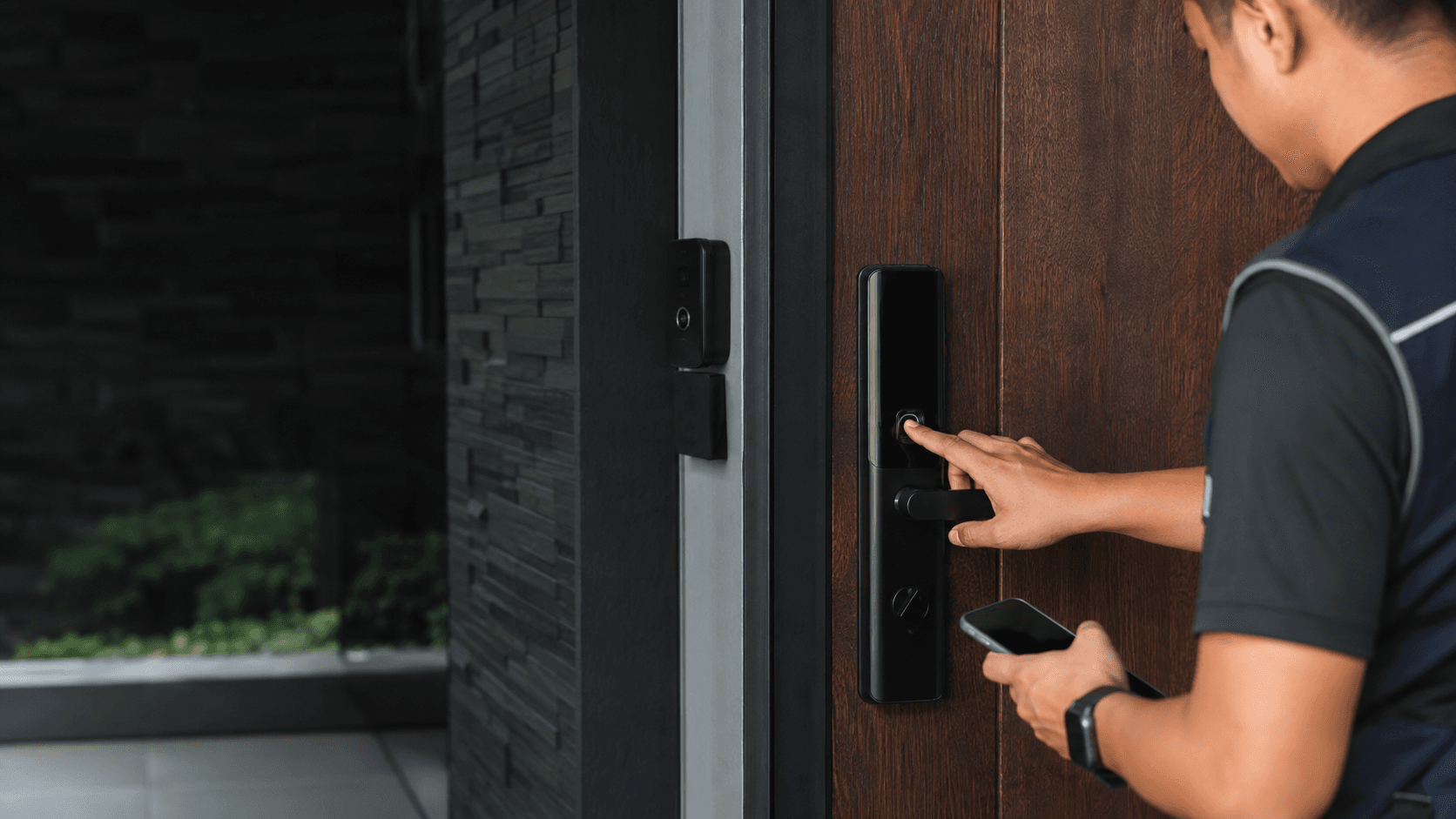
Smart deadbolts add remote control, access logs, and time-limited credentials. They suit offices and rental properties where knowing who entered and when has value. They also add dependencies. power, network, app support, and firmware. A smart deadbolt door lock with no working backup method is a liability, not a convenience.
Eyonic's own product guidance notes that smart locks work best when door condition, user roles, and backup method are reviewed before installation, and that for business use the choice between a standalone smart lock and an access-control panel should be checked first. That is the same logic that applies to any deadbolt door lock decision: match the operating model to the door and the people using it.
Where each option fits
A single home entrance with light traffic usually suits a keyed or keypad deadbolt. A shop with rotating staff suits a keypad or smart lock with per-user codes. An office with visitor movement and a need for records suits a smart lock or a wider access-control setup, depending on how many doors are involved.
Where a site already runs CCTV, alarms, or intercom systems, door access is often planned alongside them rather than as a separate purchase. Eyonic's project work at the Kuching Immigration Office focused on arrival flow, staff areas, visitor movement, and dependable daily operation, which is the same set of concerns that shapes door hardware choices on a busy site.
Installation Handover and Ongoing Checks
Installation quality decides whether the rated performance shows up in practice. A deadbolt that binds, sits misaligned, or is anchored into a weakened frame will not deliver what its grade suggests. The strike plate position, screw length, and frame reinforcement all need checking at the point of fitting, not after.
Handover matters for anything with codes, users, or batteries. Whoever operates the door needs to know how to add and remove access, what happens when the battery runs down, and where the backup key is kept. Without that, a good lock becomes a support problem.
Ongoing checks are simple but easy to skip. Test the bolt action periodically, confirm the strike plate screws are still tight, and replace batteries before they fail rather than after. On a smart deadbolt door lock, confirm the backup entry method still works each time credentials change.
Eyonic's installation process runs through site survey, system proposal, installation, and handover, and the same sequence applies to door hardware work: confirm the site conditions first, propose what fits, install, then hand over with the operating details. For sites in Sarawak that need door access planned alongside CCTV, alarms, or intercom, Eyonic can be reached on WhatsApp at +60 11-5111 7959 with the location, property type, and required system.
What to confirm before signing off
Confirm the bolt fully engages the strike plate without binding. Confirm the plate is anchored into solid material, not just the jamb face. Confirm every user who needs access has a working method, and that at least one backup method exists and has been tested. Confirm the person responsible for the door knows how to manage users and batteries.
If any of those four checks fail, the installation is not finished, regardless of how the lock is rated.