
The jump from 1080p to 5 megapixel resolution is not a small one. A 1080p camera captures about two million pixels per frame. A 5mp cctv camera captures roughly five million, which is why the format sits between standard full HD and 4K in the current market. More pixels give the recorder more detail to store, and give anyone reviewing footage more to work with when a face, a plate or a doorway needs to be identified rather than merely noticed.
That extra detail only survives if the rest of the system carries it. Resolution is one link in a chain that runs from the lens through the recorder, the cabling and the storage, and a weak link anywhere in that chain pulls the final image back down toward the weakest component.
What a 5mp cctv camera actually records
A 5mp cctv camera records a wider and denser frame than a 1080p unit, which matters most when the subject is far from the lens. A person walking through a gate at 15 metres occupies a small portion of any frame. At 1080p that person may be recognisable as a figure. At five megapixels the same person occupies more pixels, so clothing, posture and facial structure survive the distance better.
The practical gain shows up in three situations. Wide entrances where a single camera must cover a full doorway and the approach to it. Perimeter runs where the camera looks down a long boundary rather than across a short one. And any position where the camera cannot be moved closer to the subject because of wiring, mounting height or building structure.
Resolution does not fix a bad angle. A camera pointed at a wall, or mounted so that a pillar blocks half the frame, records five million pixels of the wrong thing. Placement decisions come before resolution decisions, and they are made on site rather than on a product page.
How 5mp cctv camera resolution compares with 1080p and 4K
Higher megapixel counts produce clearer images, and that general relationship holds across the range. The trade-offs sit underneath it.
Against 1080p, a 5mp cctv camera delivers more detail per frame, which helps identification at distance and helps digital zoom stay usable. The cost is file size. More pixels per frame means more data written per second, which consumes recorder capacity and hard drive space faster than a 1080p system doing the same job.
Against 4K, five megapixels sits lower on the resolution ladder. A 4K camera captures roughly eight million pixels per frame. That is more detail again, and more storage pressure again. For many sites the question is not which number is largest but which number the recorder, the network and the budget can sustain across every channel at once.
A mixed system is common and reasonable. Higher-resolution cameras go where identification matters, such as an entrance or a cash handling area. Lower-resolution cameras cover corridors and back-of-house routes where presence is the point rather than identity.
Recorder, cabling and storage the camera depends on
A camera that outruns its recorder produces nothing useful. Three dependencies decide whether five megapixels reaches the screen intact.
- Site survey — Eyonic reviews the property, the existing infrastructure and the actual lighting conditions before confirming camera positions.
- System proposal — the camera, recorder, cabling and storage are specified together so the recording resolution matches what the hardware can sustain.
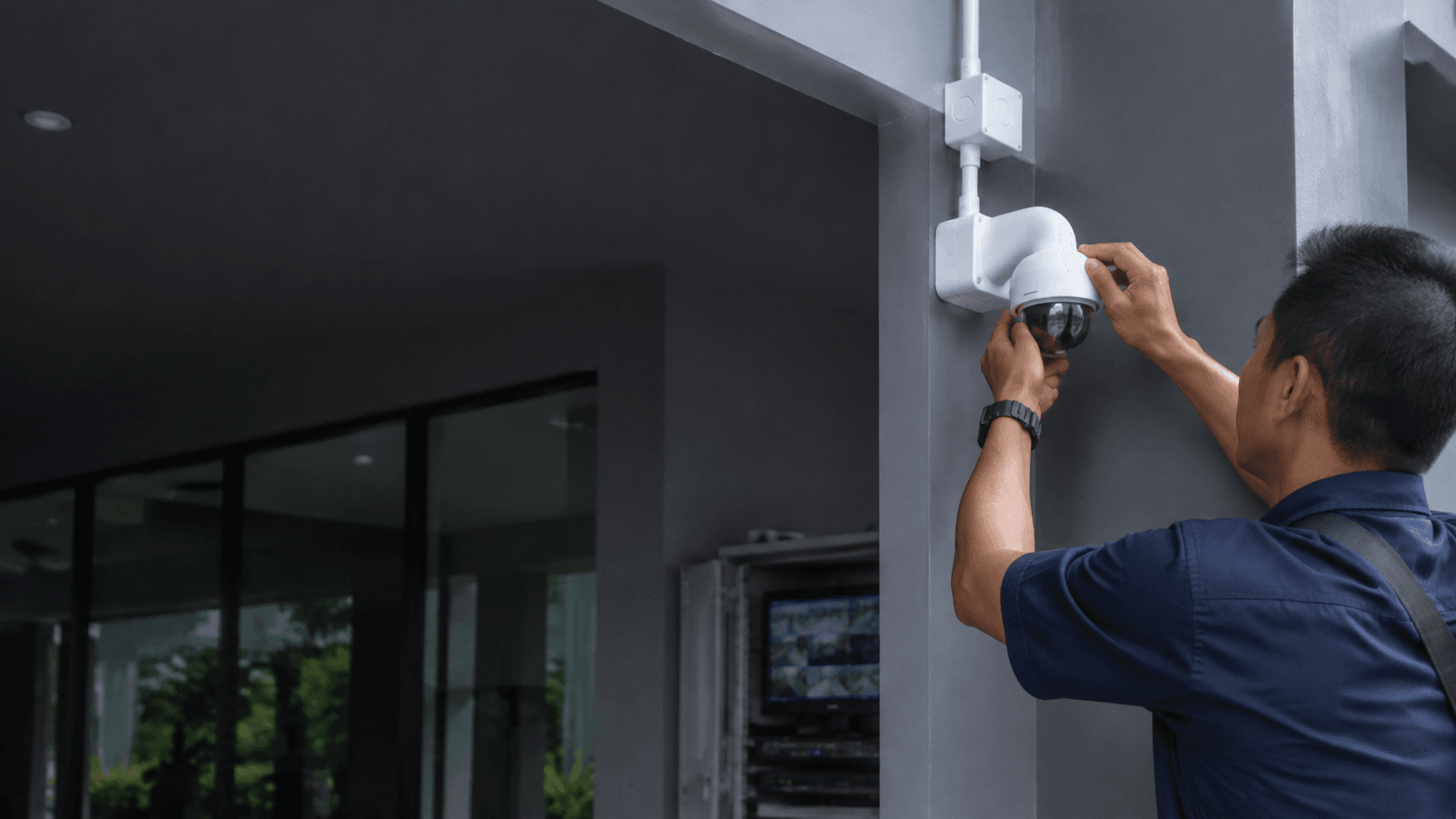
- Installation — cameras are mounted, cabled and configured, with recording and remote viewing set up as part of the same visit.
- Handover — the system is tested and the people who will use it are shown how to review footage and access it remotely.
Recorder compatibility comes first. A recorder must accept the resolution the camera outputs, and it must do so on every channel that will run at that resolution. A recorder rated for a lower total throughput will either drop channels, reduce frame rates or record at a lower resolution than the camera captures.
Cabling and power come next. The cable type, the run length and the power method all have to suit the camera and the building. Long runs over unsuitable cable degrade the signal before it reaches the recorder, and no amount of sensor resolution recovers a signal that arrived damaged.
Storage closes the loop. Retention depends on how many cameras run, at what resolution, for how many hours a day, and how much drive space the recorder holds. A site that needs thirty days of history needs more storage than a site that needs seven, and the difference is calculated rather than guessed.
Lighting conditions that decide placement
Light decides more about final image quality than the megapixel count does. A five megapixel sensor in a dark corridor produces a noisy, soft image. The same sensor in a well-lit entrance produces a sharp one.
Eyonic recommends checking actual lighting conditions before confirming placement, particularly for cameras chosen for low-light colour performance. A position that looks adequate in daylight can be unusable after dark if the only light source faces the lens, sits behind the subject, or switches off when the premises close.
Three conditions change placement decisions. Backlight, where a bright doorway or window sits behind the subject and pushes the subject into silhouette. Deep shadow, where a corner or covered walkway receives no ambient light at night. And glare, where a reflective surface or a directly opposing light source washes out part of the frame.
Where lighting cannot be changed, placement can. Moving a camera a metre to the side, lowering it, or aiming it along a wall instead of into a light source often does more for image quality than any specification upgrade.
Where a 5mp cctv camera fits in a Sarawak installation
Eyonic Sdn Bhd plans, supplies and installs CCTV and ELV systems in Sarawak for homes, offices, shops and industrial sites, with camera placement, recording and remote viewing handled as one scope. The company's founder, Eric Yong, has worked in technical installation of digital security solutions for commercial businesses in Sarawak for more than ten years.
Completed work includes the Kuching Immigration Office, where the focus was arrival flow, staff areas, visitor movement and dependable daily operation. A second project for KTA Sarawak Sdn Bhd covered a practical office setup in Kuching supporting staff movement, visitor handling, tidy cabling and clearer daily site control.
Those two projects show where five megapixels earns its place. Public-facing buildings with a steady arrival flow need cameras that can distinguish one visitor from another across a lobby or counter. Offices with mixed staff and visitor movement need coverage of entrances and internal routes without a camera on every wall.
Budget expectations vary with scope. Comparable project work has ranged from RM 8,000 to RM 18,000 for an office setup and RM 12,000 to RM 28,000 for a public office installation. A basic Hikvision CCTV package covering camera supply and setup, basic recording configuration and mobile viewing handover is listed at RM 1,599. A five megapixel system is specified against the site rather than sold as a fixed bundle, because channel count, cabling runs and storage all move the figure.
For sites outside Kuching, the same sequence applies. Survey, proposal, installation and handover do not change with distance, though travel and logistics affect scheduling.
Site survey, proposal, installation and handover
The sequence above is the same one Eyonic follows on every CCTV installation in Sarawak, and it exists because resolution decisions cannot be made without seeing the site.
The survey establishes what needs to be seen, from where, and under what light. It also establishes what already exists — conduit routes, power points, network points and any previous camera infrastructure that can be reused. The proposal then matches cameras, recorder, cabling and storage to those findings, with the recording resolution stated against the hardware that will carry it.
Installation covers mounting, cabling, configuration and the recording and remote viewing setup. Handover covers testing and a walkthrough of the system for the people who will use it day to day.
Two constraints shape what is possible. Existing building structure limits where cable can run without surface trunking, and existing power and network points limit where cameras can sit without new circuits. Both are cheaper to resolve at survey stage than after installation.
Share the location, property type and required system with Eyonic on WhatsApp at +60 11-5111 7959 to move from specification to a site-specific plan.