
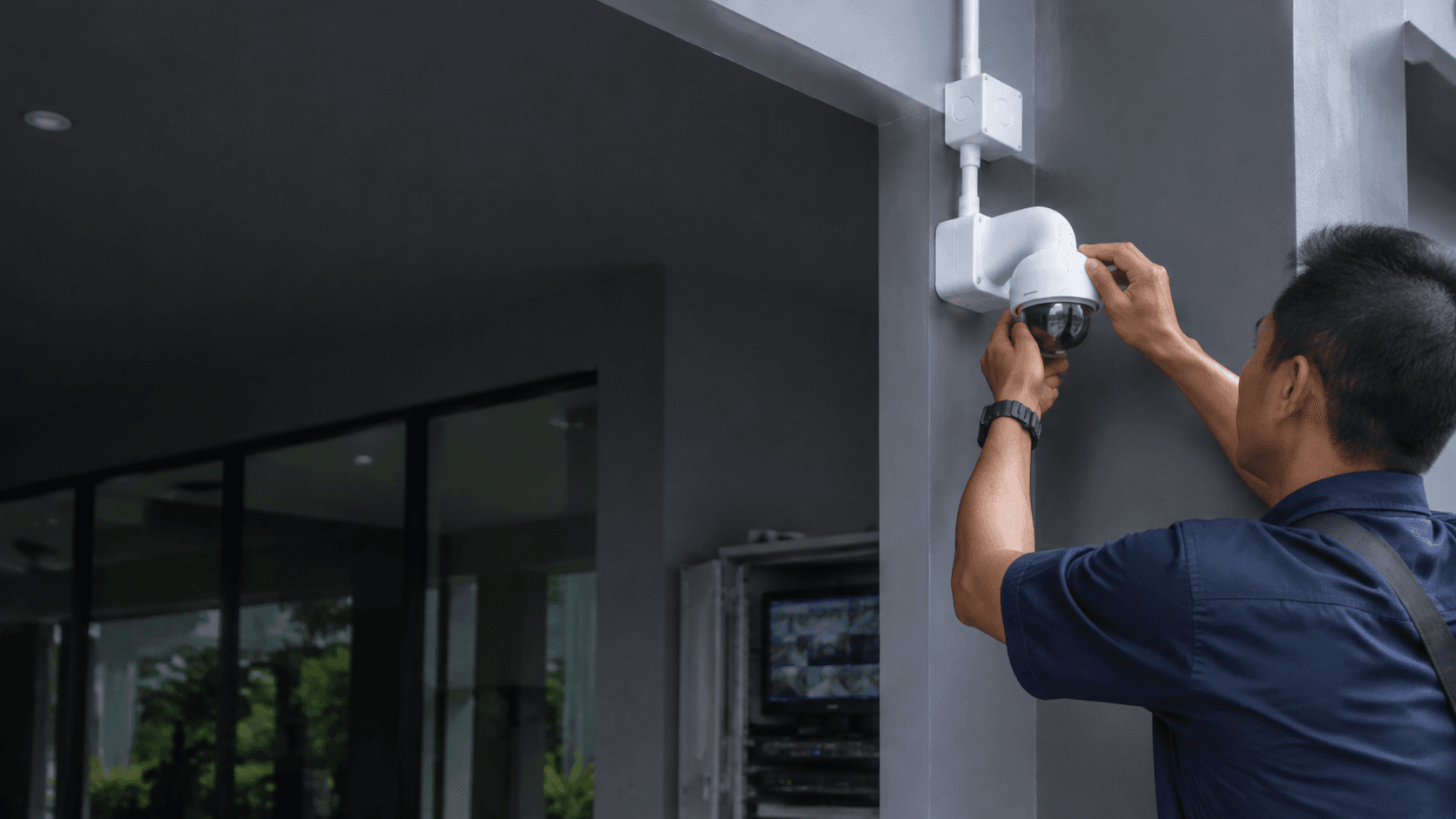
Wire Free Security Cameras. What They Are and How They Work
Wire free security cameras combine a battery power source with a wireless network connection. Each unit contains its own power supply, usually a rechargeable battery, and transmits video and audio over Wi-Fi to a recorder, hub, or cloud service. The absence of a cable run means the camera can be mounted on walls, fences, or posts where a wired connection would be impractical. The camera records when its motion sensor detects activity. This event-based recording conserves battery power compared with continuous recording. Live viewing is still possible on demand, but the camera typically stays in a low-power standby state between events. Video is stored either on a local memory card, a hub with a hard drive, or a cloud subscription.Where Wire Free Security Cameras Fit Best
Wire free security cameras work well for rental properties, temporary sites, and areas far from power outlets. A guardhouse, a detached store room, or a back alley behind a shop are common examples where running a cable would be expensive or require structural work. For homes, these cameras suit gate areas, car porches, and garden perimeters. The cameras also fit situations where the installation must be reversible. Because there are no cables to conceal or remove, the unit can be taken down and relocated without leaving holes for conduit or power lines. This makes them practical for tenants who cannot modify a property permanently. For a small business in Malaysia, wire free security cameras can cover entry points and stock areas quickly. However, the monitoring needs of a busy office or shop often exceed what a battery camera can deliver. Eyonic's project for the Kuching Immigration Office focused on arrival flow, staff areas, and visitor movement, which required dependable daily operation. That level of continuous coverage is typically handled by a wired system with a network video recorder rather than individual battery cameras.Comparing Wire Free and Wired Security Cameras
The main trade-off is convenience against continuous reliability. Wire free security cameras offer fast installation and flexible placement, while wired cameras provide uninterrupted power and a dedicated data connection.| Factor | Wire Free Security Cameras | Wired Security Cameras |
|---|---|---|
| Installation | Mount and connect to Wi-Fi | Run cables, mount, and configure recorder |
| Power source | Internal rechargeable battery | Power over Ethernet or mains adapter |
| Video quality | Good, but limited by battery and Wi-Fi | Higher and more consistent bitrates |
| Reliability | Depends on battery level and signal strength | Continuous operation without power concerns |
| Maintenance | Periodic battery charging or swapping | Minimal after installation |
Key Features to Check Before Buying Wire Free Security Cameras
Battery capacity is the first specification to examine. A larger battery extends the interval between charges, but the actual life depends on how often the camera triggers. A camera facing a busy street will record more events and drain faster than one pointed at a quiet wall. Resolution determines how clearly faces and vehicle plates can be identified. Higher resolution uses more data and battery, so the setting should match the distance between the camera and the area it monitors. Night vision matters for Malaysian properties that are active after dark, and colour night vision performs better when some ambient light is present. Weather resistance is essential for outdoor units exposed to tropical rain and heat. Look for a unit rated for outdoor use rather than an indoor model placed under an eave. Storage options also vary, so confirm whether the camera accepts a memory card or requires a hub.Installation and Placement Tips for Wire Free Security Cameras
Planning the installation before mounting anything prevents weak signals and poor coverage. Eyonic's CCTV installation process begins with a site survey, followed by a system proposal, installation, and handover. The same sequence applies to wire free security cameras, even though the physical work is lighter.- Walk the property and note every entry point, blind spot, and high-traffic area that needs coverage.
- Check the lighting conditions at each proposed camera position, since low light affects image quality and triggers night mode.
- Confirm the camera placement gives a clear, unobstructed view of the target area without pointing into direct sunlight.
- Test the Wi-Fi signal strength at each mounting height and distance from the router before fixing the camera.
- Schedule battery maintenance by noting the charge interval for each unit and setting a reminder for recharging.