
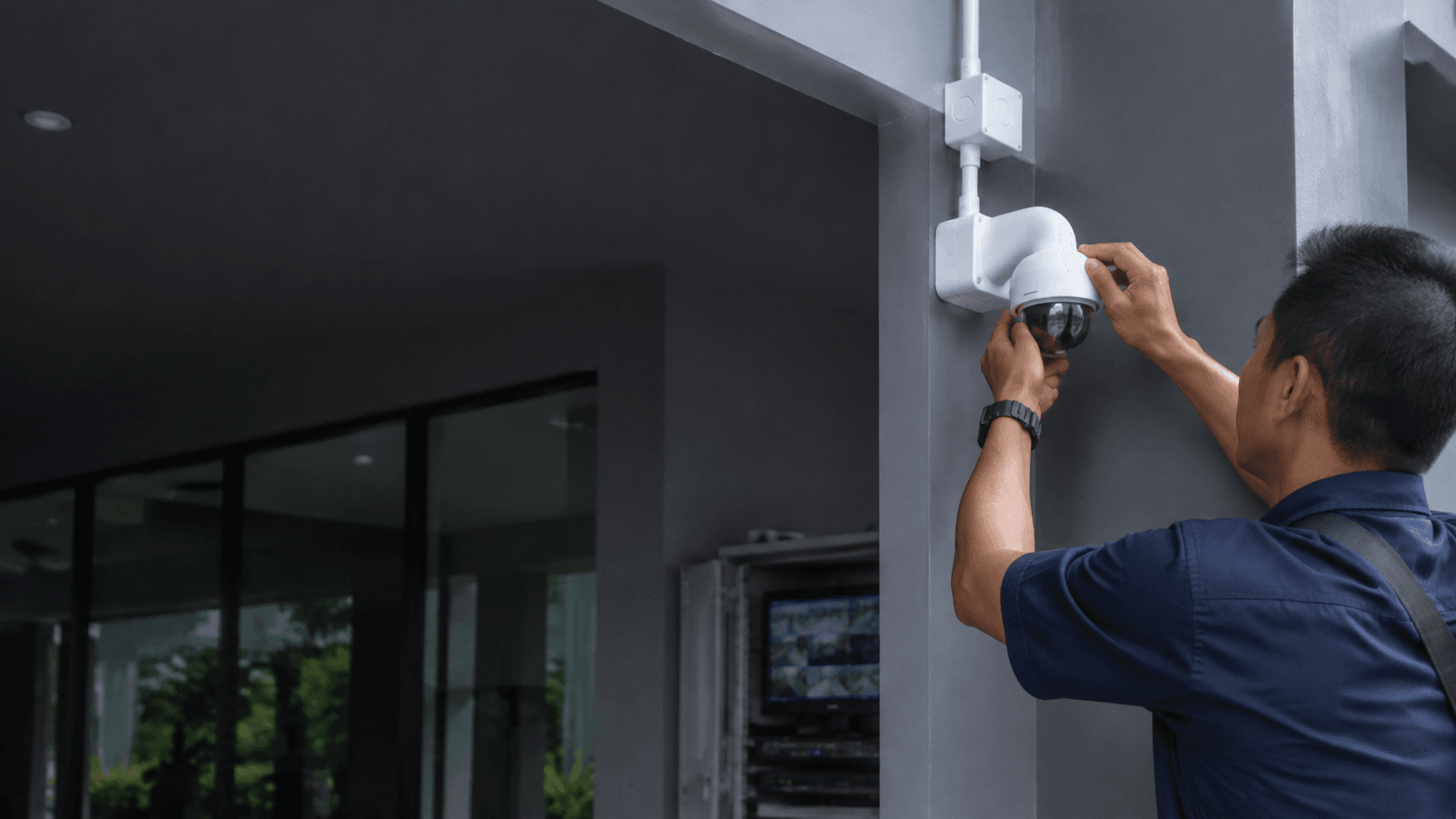
Xfinity publishes its camera range across several product pages, and the models differ in where they can be mounted, how they are powered, and which service plan unlocks recording. That structure matters because the camera hardware and the recording service are separate purchases in most cases.
- Confirm which Xfinity camera model is being considered, since indoor and indoor/outdoor units support different placements.
- Check whether 24/7 Video Recording is required, because continuous recording depends on an eligible service rather than the camera alone.
- Decide between professional installation and self-installation based on the property and existing wiring.
- Plan camera positions around entry points, driveways, and any area where activity needs to be reviewed later.
- Verify the internet connection and gateway can support streaming and cloud storage before committing.
What the Xfinity Camera System Includes
Xfinity lists indoor cameras, indoor/outdoor cameras, and a video doorbell as part of its camera range. The indoor/outdoor model is described as weather resistant, which allows mounting outside where rain exposure is a concern. Night vision is listed among the camera features, so low-light viewing is part of the standard capability rather than an add-on.
Live video monitoring is available through the Xfinity app, and the X1 voice remote can be used to call up camera views on a TV. That integration is one of the clearer differences between an Xfinity Camera System and a standalone camera kit, because the viewing surface is not limited to a phone.
Choosing the Right Xfinity Camera System
The choice usually comes down to three variables: where the camera goes, whether recording needs to be continuous, and how the device connects to the rest of the home setup.
Indoor versus indoor/outdoor placement
An indoor camera suits hallways, living areas, and rooms where pets or children are monitored. An indoor/outdoor camera suits porches, driveways, and side passages. The weather-resistant rating on the indoor/outdoor model is what makes exterior mounting viable, so an indoor unit placed outside would not carry the same expectation of durability.
Recording and retention
24/7 Video Recording is a service feature rather than a camera feature. Xfinity states that customers can use it with eligible Xfinity Smart Home, Xfinity Home Security, and Shield Select services. Retention is limited, with Xfinity describing the ability to record, rewind, and review up to ten days of footage. That retention window is a planning constraint: anything needed beyond it has to be downloaded or saved separately.
Detection and notifications
Xfinity describes AI detection of people, vehicles, and pets alongside motion notifications. Detection categories reduce the volume of irrelevant alerts compared with plain motion sensing, though the usefulness depends on camera angle and how much of the frame is occupied by passing traffic or moving foliage.
Practical Considerations for Xfinity Camera System Setup
Placement decisions made before installation are harder to reverse than most people expect, because cabling, mounting height, and field of view all get fixed at the same time.
Xfinity's own guidance treats placement as central: whether there is one camera or several, position determines what the system actually captures. A camera aimed at a wide open area records a lot of empty space, while a camera aimed at a doorway records the moment that matters. Height matters too, since a camera mounted too low is easy to obstruct and one mounted too high loses facial detail.
Lighting is the other variable that is often assumed rather than checked. Eyonic, a Sarawak-based security system supplier, recommends checking actual lighting conditions on site before confirming placement for ColorVu-style cameras, because low-light performance claims depend on the real environment rather than the specification sheet. The same principle applies to any camera system: the recorded result depends on what the lens actually sees at night.
Connectivity is a further constraint. Cloud recording and remote viewing both depend on a stable internet connection, and a weak signal at the camera position will affect stream quality regardless of camera resolution.
Home Security Cameras and Surveillance Cameras Compared
Xfinity's camera range sits alongside its broader home security offering, which includes sensors, a touchscreen controller, and professional monitoring options. The camera portion can be treated as a standalone addition or as one part of a wider system.
| Consideration | What Xfinity documents | Practical implication |
|---|---|---|
| Camera types | Indoor, indoor/outdoor, video doorbell | Exterior mounting needs the weather-resistant model |
| Live viewing | Xfinity app and X1 voice control | Viewing is not limited to a phone screen |
| Continuous recording | 24/7 Video Recording on eligible services | Recording depends on the service tier, not the camera |
| Retention | Up to ten days of footage | Longer retention requires separate saving |
| Detection | People, vehicles, and pets | Fewer irrelevant alerts than plain motion sensing |
| Installation | Professional and self-installation options | Choice depends on wiring and mounting height |
The comparison that matters most is between a camera-only purchase and a camera-plus-service purchase. A camera without an eligible recording service still provides live viewing, but the review-later capability that most people associate with surveillance depends on the service layer.
Making an Informed Choice About Coverage
Coverage is a count-and-position problem rather than a resolution problem. A single camera at the main entrance covers one approach; a driveway, a side gate, and a rear door each need their own field of view if the goal is to see arrivals and departures rather than just one path.
For properties where the camera system is one part of a wider installation, the same planning sequence applies as for any security project. Eyonic's CCTV installation process runs through site survey, system proposal, installation, and handover, and that order exists because placement and cabling decisions are cheapest to change before anything is mounted. A comparable project for the Kuching Immigration Office focused on arrival flow, staff areas, visitor movement, and dependable daily operation, which illustrates how camera positions get chosen around movement patterns rather than around wall space.
Two edge cases are worth naming. Renters may face restrictions on drilling and cabling, which pushes the decision toward self-installation and cameras that do not require permanent mounting. Properties with unreliable internet will see degraded remote viewing and cloud recording regardless of camera quality, so connection stability deserves checking before the camera choice is finalised.
Budget expectations vary widely by scope. Eyonic's published package pricing starts at RM 1,599 for a Hikvision CCTV package, an alarm system, or an autogate package, while larger office projects have carried approximate budgets in the RM 8,000 to RM 28,000 range depending on site size and requirements. Those figures describe a different product line and market, but they show how much scope affects cost in security installations generally.
For readers in Sarawak comparing options, Eyonic can be reached on WhatsApp at +60 11-5111 7959 with the property location, property type, and required system.